
 Fences
 Gates
 Signage & Boards
 Car Parking Shades
 Block and Foundation
 Spare Parts
What Information Should You Send a Fence Supplier for an Accurate Quote

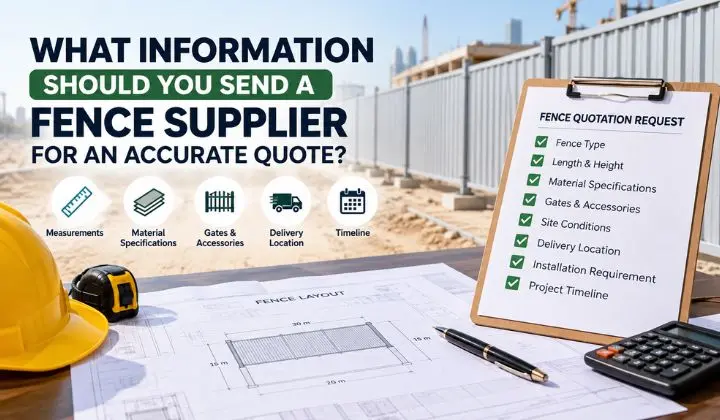
Getting a fence quotation is easier when you share the right details from the start. If you only tell a supplier that you need 100 metres of fencing, they may still need to ask about the fence type, height, materials, gates, posts, and delivery location.
These details affect the products, quantities, and work required for your project. Missing information can lead to changes in the quotation, delays, or extra costs later.
Whether you are fencing a construction site, factory, warehouse, commercial property, or residential area, preparing a clear fence quotation request helps the supplier understand what you need.
This guide explains the information to prepare, the technical details that matter for different fence types, and how to compare quotations before making a decision.
What Information Does a Fence Supplier Need for an Accurate Quote?
A fence supplier usually needs the fence type, total length, required height, material specifications, number of panels and posts, gate details, site conditions, delivery location, and required timeline. You should also explain whether you need materials only or both supply and installation.
You do not always need a complete engineering drawing to request an initial quote. However, accurate measurements and clear specifications help the supplier prepare a more reliable quotation.
Quick checklist:
- Fence type and intended use
- Total fence length and required height
- Panel dimensions and layout
- Material, thickness, and surface finish
- Number of posts, gates, and accessories
- Quantities or a bill of quantities (BOQ), if available
- Site conditions and installation requirements
- Project location, delivery date, and quotation scope
Use this fence quote checklist before contacting a supplier. If some details are not confirmed, mark them as provisional instead of guessing.
8 Essential Details to Include in Your Fence Quotation Request
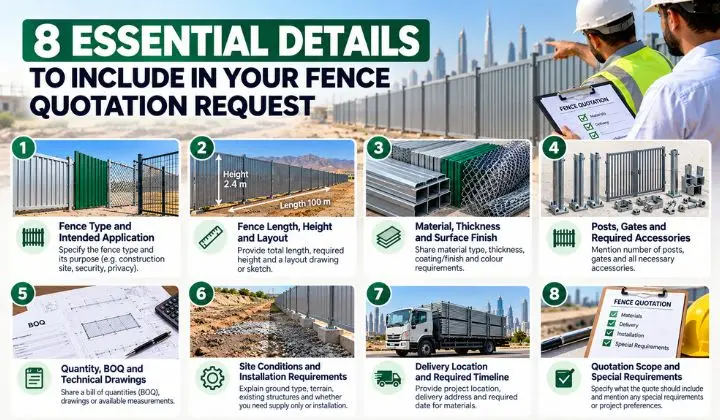
1. Fence Type and Intended Application
Start by telling the supplier which type of fence you need and what it will be used for. Different projects have different requirements, so the intended application helps the supplier suggest a suitable product.
For example, a construction site may need temporary fencing that can be moved when work is complete. A factory or warehouse may need a stronger perimeter fence to control access. A residential property may require a fence that offers privacy and fits the appearance of the building.
Common options include PPGI temporary fence, ECO PVC fence, anti climb fence, and chain link fence. If you already know the required product, name it in your request. If you are unsure, explain your main purpose and ask the supplier which options suit your project.
You should also mention any special requirements, such as restricted access, additional security, outdoor exposure, or a need to move the fence later.
2. Fence Length, Height, and Layout
Measurements are among the most important fence quotation requirements. Share the total length of the fence and the required height. If the fence follows several sides of a property, provide the measurement of each section where possible.
For example, a site may need 40 metres along the front, 30 metres along one side, and 30 metres along the other side. Giving these separate measurements helps the supplier understand the layout instead of relying only on a total of 100 metres.
Also include the required fence panel dimensions, the number of corners, changes in direction, and the planned gate positions. A simple sketch, site plan, or aerial image marked with the fence line can make the layout easier to understand.
Use the same unit throughout your request, such as metres and millimetres. If your measurements are approximate, label them clearly. The supplier may need confirmed perimeter measurements before finalising the quantities and price.
3. Material, Thickness, and Surface Finish
The fence material affects its strength, appearance, maintenance needs, and cost. Tell the supplier which material you prefer, or explain the conditions the fence must handle if you need advice.
Depending on the product, useful fence material specifications may include:
- Material type and product grade
- Panel or sheet thickness
- Wire diameter and mesh aperture for mesh fencing
- Post dimensions and wall thickness
- Surface finish and coating
- Required colour or colour reference
For example, a mesh fence quotation may need the wire diameter and mesh opening size. A metal panel fence may require sheet thickness, coating details, and the support system. A PVC fence request may need the panel dimensions and colour.
If the project requires galvanized steel fencing or a powder-coated fence, state that clearly. These finishes are not the same, so the supplier should confirm the proposed specification rather than assume that all coatings provide the same protection.
For outdoor projects in the UAE, also explain the expected exposure to sun, heat, moisture, or coastal conditions. Ask the supplier to confirm whether the proposed material and finish are suitable for the site.
4. Posts, Gates, and Required Accessories
A fence is more than its panels. The quotation may also need posts, gates, supports, fixings, and other parts required to complete the system.
Tell the supplier how many gates are needed and provide their approximate width and height. If you have specific access needs, explain whether the gates should allow pedestrian entry, vehicle access, or both. Where relevant, mention the preferred opening direction and any locking requirements.
Depending on the fence system, the quotation may include:
- Fence posts and support pipes
- Fence gates, hinges, and latches
- Fence clamps and brackets
- Bolts, fasteners, and fixing parts
- Braces, base plates, or support feet
- Concrete fence blocks or RCC blocks, where required
Do not assume that every supplier includes all accessories in the panel price. Ask whether the quoted price covers a complete system or only the main fence panels.
If you already have some components on site, list them separately. This helps the supplier quote only the items you need and reduces the risk of ordering unnecessary parts.
5. Quantity, Bill of Quantities (BOQ), and Technical Drawings
If you have a bill of quantities (BOQ), share it with the supplier. A BOQ lists the items and quantities required for the project. It may include panels, posts, gates, supports, blocks, and accessories.
If you do not have a BOQ, provide your available measurements and ask the supplier to help estimate the required quantities. The final quantities may depend on panel width, post spacing, corners, gate openings, and the chosen installation method.
Attach any site layout drawing, technical specification sheet, or marked-up sketch you have. These documents help the supplier check the dimensions and identify missing details before preparing the quotation.
For larger or more technical projects, state whether the supplied dimensions are preliminary or approved. Do not present estimated quantities as confirmed quantities. If any detail is still unknown, mark it as “TBC” (to be confirmed).
A clear list of quantities and specifications makes it easier to review an itemised fence quotation and check that each supplier is pricing the same scope of work.
6. Site Conditions and Installation Requirements
The ground and site layout can affect the way a fence is supported and installed. Explain whether the fence will be installed on soil, sand, asphalt, or an existing concrete surface.
Tell the supplier about uneven terrain, slopes, changes in ground level, and any access limits that may affect delivery or installation. If there is an existing fence that needs removal, mention it in the request.
Also explain whether you need a supply-only quotation or a supply and installation quotation. These are different scopes and should be compared separately.
For an installation project, the supplier may need to confirm the post installation method, foundation requirements, fixing method, and whether excavation or concrete work is needed. Do not assume that one fixing method will suit every surface.
If underground services, restricted working areas, or site safety rules may affect the work, mention them early. A site inspection may be needed before the supplier can confirm the final installation scope.
7. Delivery Location and Required Timeline
Provide the project location and delivery address, or at least the area and site location if the exact address is not yet available. Delivery requirements can affect transport planning and the quotation.
Also state when the materials are needed. If your project has a fixed deadline, share the required delivery date and ask the supplier to confirm the expected delivery schedule and product availability.
For projects in the UAE, clarify whether the materials need to be delivered directly to the project site and whether there are any access restrictions for delivery vehicles. If the site has limited storage space or specific delivery hours, include those details.
Do not assume that the delivery date is confirmed simply because it appears in your request. Ask the supplier to state the expected lead time and confirm the schedule in writing.
8. Quotation Scope and Special Requirements
Before sending your request, make clear what you expect the quotation to include. This helps the supplier prepare a quote that matches your actual needs.
For example, specify whether you require materials only, delivery, installation, removal of an existing fence, or additional support components. If your project has special colour, size, security, or documentation requirements, include them in the request.
Ask for a breakdown of the main items where possible, including panels, posts, gates, accessories, delivery, and installation if applicable. The quotation should also identify important exclusions, payment terms, validity period, and any applicable warranty.
You do not need to disclose a fixed budget to request a quote. However, sharing your preferred specifications and project priorities can help the supplier suggest suitable options if alternatives are available.
A complete request gives the supplier a clearer basis for pricing and makes it easier for you to compare offers on equal terms.
What Specifications Should You Provide for Different Fence Types?
Different fence types need different technical details. Sharing the right specifications helps the supplier estimate the correct materials and avoid confusion about the product you need.
| Fence type | Important details to provide |
| PPGI Temporary Fence | Panel dimensions, sheet thickness, frame specifications, supports, and quantity |
| ECO PVC Fence | Panel size, colour, support pipes, total length, and intended use |
| Anti Climb Fence | Panel height, mesh aperture, wire diameter, post dimensions, and coating |
| Chain Link Fence | Fence height, mesh opening, wire diameter, coating, and gate requirements |
| RCC Blocks and Temporary Fence Supports | Required quantity, dimensions, support type, and delivery location |
PPGI Temporary Fence
For a PPGI temporary fence, provide the panel dimensions, required quantity, frame details, and support method. Explain whether the fence will be used at a construction site, an event, or another temporary work area.
If the system requires concrete blocks, braces, or other supports, list them in your quotation request. This helps the supplier estimate the complete setup instead of pricing only the panels.
You can review the PPGI temporary fence and other fencing options to identify a suitable product for your project.
ECO PVC Fence
For an ECO PVC fence, specify the panel dimensions, required colour, overall fence height, and support structure. Also explain where the fence will be used and whether you need any custom sizes.
If you are unsure about the technical details, share your intended application and ask the supplier to confirm the available specifications. You can review the ECO PVC Fence product page before preparing your request.
Anti Climb Fence
An anti climb fence requires clear technical and security details. Include the panel height and width, mesh aperture, wire diameter, post dimensions, and required surface finish.
If your project needs additional security features, such as special gates or security accessories, list them separately. Ask the supplier to confirm that the proposed system meets your project’s security requirements rather than assuming that every anti-climb fence offers the same level of protection.
Chain Link Fence
For a chain link fence, provide the required height, total length, mesh opening, wire diameter, and coating preference. Include the number of gates and any special requirements for corner posts, end posts, or supports.
These details help the supplier estimate the mesh, posts, tensioning components, and other materials needed for the project. If the fence will be installed on uneven ground, mention this before the quotation is prepared.
RCC Blocks and Temporary Fence Supports
If your project requires RCC blocks or temporary fence supports, provide the required quantity, dimensions if known, and the fence system they must support.
Explain whether the blocks will sit on an existing surface and whether you need additional braces or support components. The supplier can then check which items are suitable for the proposed setup.
You can review the RCC Blocks product page for relevant product information.
What If You Do Not Have Exact Measurements or Drawings?
You can request an initial quotation even if you do not have a complete technical drawing. Start with the information you know, including the approximate fence length, required height, intended use, preferred fence type, and project location.
A simple sketch or aerial image can help explain the layout. Mark the fence line, entrances, corners, gate positions, and approximate measurements for each section.
Clearly identify any details that are not confirmed. For example, write “estimated fence length: 100 metres” or “gate dimensions: TBC.” This helps the supplier distinguish preliminary information from final specifications.
For a large or complex project, arrange a site inspection or confirm the measurements before placing an order. Final quantities and installation requirements may change after the site has been checked.
How to Compare Fence Supplier Quotes Fairly
A lower price does not always mean a better deal. Two suppliers may quote for different materials, quantities, accessories, delivery arrangements, or installation work.
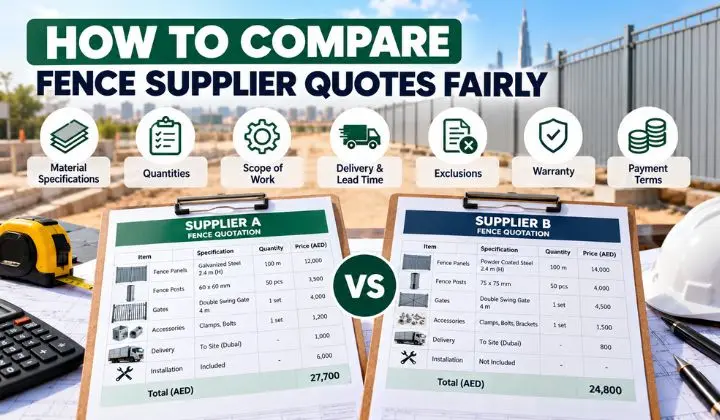
Use this checklist to compare quotations fairly:
- Material specifications: Check that the fence type, dimensions, thickness, coating, and other technical details match your requirements.
- Quantities: Confirm that both suppliers have priced the same number of panels, posts, gates, and accessories.
- Scope of work: Check whether the quote covers materials only or includes installation, foundations, excavation, and removal of an existing fence.
- Delivery and lead time: Compare transport charges, expected delivery dates, and product availability.
- Exclusions: Identify anything not included, such as extra supports, site preparation, or additional fixing work.
- Warranty and payment terms: Review the stated warranty, payment schedule, quotation validity, and other agreed conditions.
Ask for an itemised fence quotation if the pricing is unclear. A breakdown helps you see how much of the quoted amount relates to materials, accessories, delivery, and installation.
Before approving a quotation, confirm the final specifications, quantities, and scope in writing. This makes it easier to identify differences and reduces the risk of unexpected costs.
Fence Quotation Request Template
Use the following template when contacting a fence supplier. Fill in the details you know and mark anything uncertain as “TBC.”
Subject: Request for Fence Quotation — [Project Name or Location]
Dear Sales Team,
Please provide a quotation for the following fencing requirements.
1. Project Details
- Project name: [Enter project name]
- Project location: [Enter location in the UAE]
- Intended application: [Construction site, industrial property, residential area, etc.]
2. Fence Specifications
- Fence type: [Enter fence type]
- Total length: [Enter length in metres]
- Required height: [Enter height]
- Material and finish: [Enter specifications or TBC]
- Panel dimensions: [Enter dimensions or TBC]
3. Quantities and Accessories
- Number of panels: [Enter quantity or TBC]
- Number and type of gates: [Enter details]
- Posts and supports: [Enter requirements]
- Clamps, brackets, blocks, and other accessories: [Enter details or TBC]
4. Site and Installation
- Ground or surface type: [Enter details]
- Installation required: [Yes/No]
- Special site requirements: [Enter details]
5. Delivery and Timing
- Delivery location: [Enter location]
- Required delivery date: [Enter date or TBC]
Please confirm the proposed specifications, itemised pricing, delivery charges, lead time, quotation validity, warranty terms, and any exclusions. If further information or a site inspection is needed, please let me know.
Thank you.
Kind regards,
[Your Name]
[Company Name]
[Contact Details]
Attach your drawings, site photos, or bill of quantities if available. This gives the supplier more information to review before preparing the quotation.
Frequently Asked Questions
Should I send separate measurements for each section of my fence?
Yes. Separate measurements help the supplier understand corners, changes in direction, gate openings, and sections with different heights. A total length is useful, but measurements for each section can improve the quantity estimate.
What should I do if some fence specifications are still undecided?
Share the confirmed information and mark unknown details as “TBC” or provisional. Ask the supplier to identify any assumptions in the initial quotation so you can confirm them before agreeing to the final price and order.
Can a fence supplier revise the quotation after a site inspection?
Yes. A quotation may change if the inspection reveals different measurements, ground conditions, access limits, or installation requirements. Ask the supplier to explain the changes and provide an updated quotation before approving the work.
How can I check whether two fence quotations cover the same specifications?
Compare the fence type, material, dimensions, thickness, quantities, posts, gates, accessories, delivery, and installation scope line by line. Also check exclusions and warranty terms, because a lower total may cover fewer items or a different specification.
What should I confirm in writing before approving a fence quotation?
Confirm the final specifications, quantities, total price, included and excluded items, delivery schedule, installation scope, payment terms, and applicable warranty. Keep the approved quotation and any agreed changes in writing to reduce misunderstandings later.
Conclusion
An accurate fence quotation starts with clear project information. Share the fence type, dimensions, material specifications, quantities, gates, accessories, site conditions, delivery location, and required scope of work.
If you do not have every detail, provide the information available and clearly mark anything that still needs confirmation. Use drawings, photographs, or a BOQ where possible, and compare quotations based on matching specifications rather than price alone.
Taking these steps helps you request a more useful quotation, identify missing costs, and make a better-informed decision for your fencing project.