
 Fences
 Gates
 Signage & Boards
 Car Parking Shades
 Block and Foundation
 Spare Parts
How to Secure Temporary Fence Panels Against Strong Winds

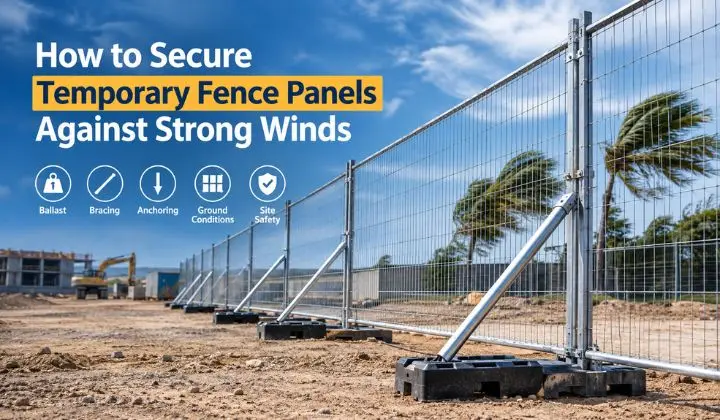
Temporary fencing helps protect construction sites, control access and keep the public away from dangerous areas. However, strong winds can push fence panels over if they are not installed and supported correctly. A fallen fence can damage equipment, block access routes and create safety risks for workers and people nearby.
Knowing how to secure temporary fence panels against strong winds helps site managers choose suitable bases, supports and fixing systems before problems occur. The right setup depends on the fence design, ground conditions, wind exposure and whether the panels use mesh, solid sheets or privacy screens.
This guide explains practical ways to improve fence stability, inspect weak points and prepare temporary fencing for windy weather.
Why Do Temporary Fence Panels Fall Over in Strong Winds?
Wind pushes against a fence panel and creates force that can make it lean or tip over. If the force becomes greater than the resistance provided by the base, ballast, anchors and braces, the fence may become unstable.
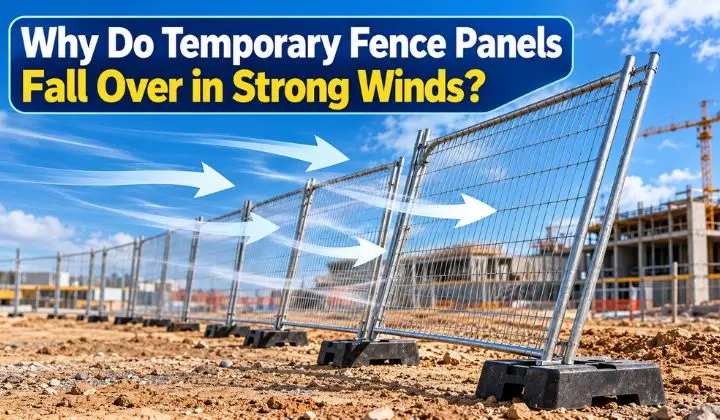
The risk can increase in open construction areas, around building corners and along long, exposed fence runs. These locations may face stronger or more direct winds than sheltered parts of a site.
Solid temporary fence panels and panels covered with privacy screens can catch more wind than open mesh designs. This creates a greater wind load and may increase the overturning force acting on the base. Loose clamps, damaged feet and poorly fitted supports can make the problem worse.
Before installing a fence, assess the site layout, panel height, panel type and expected weather. Do not assume that a heavy base alone will keep every fence secure.
7 Ways to Secure Temporary Fence Panels Against Strong Winds
The following methods can help improve fence stability. The right combination depends on the fence system, site conditions and manufacturer’s instructions.
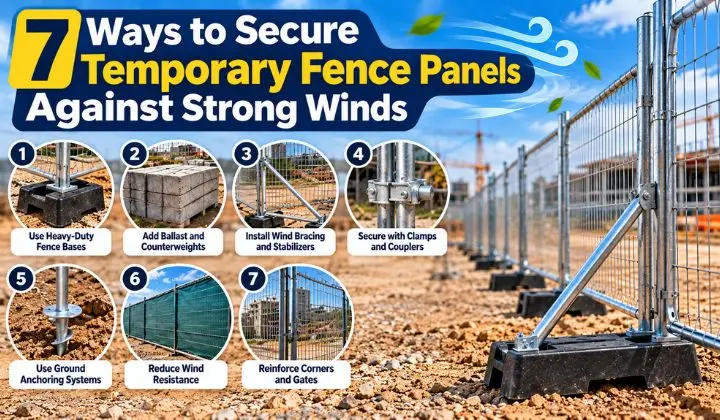
1. Use Heavy-Duty Temporary Fence Bases
The base supports each panel and helps prevent it from tipping over. Choose temporary fence feet or heavy-duty fence bases that are compatible with the panel system and suitable for the expected conditions.
A wider, stable base may improve the base footprint and help distribute forces more effectively. However, the base must still be suitable for the fence height, wind exposure and any screening attached to it.
Check that every panel sits correctly in its base. Replace cracked, bent or badly worn components instead of relying on damaged equipment.
2. Add Suitable Ballast and Counterweights
Temporary fence ballast adds weight to help resist movement and overturning. Depending on the system, this may include approved ballast blocks, ballast trays or other compatible counterweights.
Place and secure the ballast according to the manufacturer’s instructions. Make sure the weight cannot slide, tip or create a trip hazard.
There is no single ballast weight that suits every fence. The required amount depends on panel height, screening, ground conditions, wind exposure and the design of the support system. For highly exposed sites, obtain a suitable assessment rather than guessing the weight.
3. Install Temporary Fence Wind Bracing and Stabilizers
Temporary fence wind bracing helps support panels against sideways movement. Suitable diagonal fence braces and stabilizer struts can transfer forces through the support system and improve overall stability.
The type, position and spacing of these supports must match the fence system and site conditions. Long, straight fence runs and exposed corners may need particular attention, but there is no universal brace spacing for every installation.
Use approved supports and secure them correctly. Do not attach makeshift braces to nearby objects unless the connection and supporting structure have been checked for suitability.
4. Secure Panels with Clamps and Couplers
Panels can move apart or lift if their connections are loose or incorrectly fitted. Suitable temporary fence clamps, couplers and other approved connectors help keep adjacent panels joined.
Inspect every connection during installation. Look for missing fasteners, damaged fittings and gaps between panels. Secure gates and corners according to the manufacturer’s instructions.
Good panel connections help the fence work as a connected system, but clamps alone do not replace ballast, bracing or anchoring where those measures are required.
5. Use Appropriate Ground Anchoring Systems
Temporary fence anchoring can provide extra resistance to movement when the selected system is suitable for the ground. Depending on the site, this may involve approved ground pins, ground anchors or other designed fixing arrangements.
Before choosing an anchor, consider the ground material, buried utilities and the manufacturer’s installation requirements. An anchor that works in suitable soil may not work on concrete or asphalt.
Do not drive pins or drill into a surface until underground services and site restrictions have been checked. On hard surfaces, use a compatible system designed and approved for that application.
6. Reduce Wind Resistance Where Practical
The amount of wind a fence catches depends partly on its exposed surface area and design. Open temporary mesh fencing usually allows more air to pass through than a solid panel of similar size, although actual performance depends on the mesh and support system.
If privacy screening is required, check whether the fence system is designed to carry it in the site’s expected wind conditions. Avoid adding banners, sheets or extra coverings without assessing the effect on wind pressure on fence panels.
Where possible, remove loose materials and unsecured objects near the fence. Do not remove required screening or site barriers without approval from the responsible site manager.
7. Reinforce Vulnerable Areas, Including Corners and Gates
Corners, gates and long exposed sections deserve extra attention because their layout and use can create additional stability concerns.
Check that gates have suitable hinges, secure latches and compatible supports. Make sure they cannot swing freely in the wind or strike nearby panels. Follow the approved design for gate posts and support arrangements.
A suitable layout, including designed returns or angled sections where permitted, may help improve stability. However, changing the fence layout is not a substitute for proper bracing, ballast or anchoring.
How to Stabilize Temporary Fencing on Different Ground Surfaces
The best stabilization method depends on the surface beneath the fence. A system that works well on firm soil may not provide the same support on concrete or loose ground.
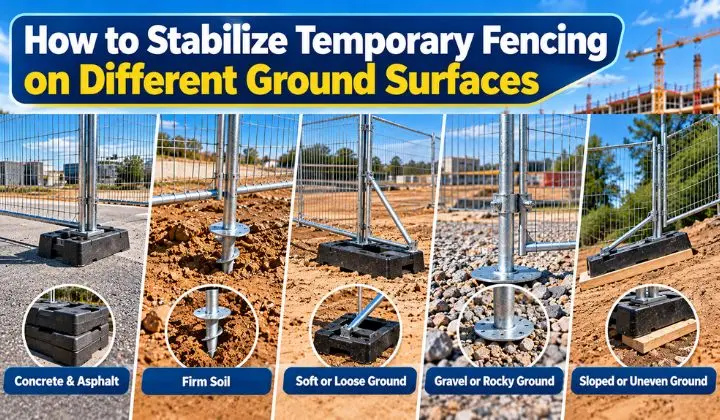
On concrete and asphalt: Consider compatible weighted bases or approved hard-surface fixing systems. Do not assume that ordinary ground pins will work on a paved surface. Check the surface condition and confirm that any mechanical fixing is permitted.
On firm soil: Suitable ground pins or anchors may be an option if the fence system allows them and the soil provides adequate holding strength. Installation should account for buried services and site restrictions.
On soft or loose ground: The ground may not hold an anchor securely, especially after rain or disturbance. A suitable designed support system or alternative installation method may be needed. Seek competent advice if the ground cannot provide reliable support.
In every case, check the manufacturer’s guidance and assess the actual site. Choosing the right combination of weighted fence bases, anchoring and bracing is more reliable than using the same setup everywhere.
Mesh vs PPGI Temporary Fencing in High-Wind Areas
Choosing the right panel type can help reduce wind-related risks. The best option depends on the level of security, privacy and visibility your site needs.
Temporary Mesh Fencing
Mesh panels have open spaces that allow some air to pass through. This can reduce wind resistance compared with a solid panel of similar size, depending on the mesh design and how it is installed.
Temporary mesh fencing can suit construction sites that need clear visibility and controlled access. However, mesh panels still require suitable bases, secure connections and any additional support needed for the site’s conditions.
Solid PPGI Temporary Fencing
PPGI temporary fencing uses pre-painted galvanized steel sheets to create a more enclosed barrier. It can offer greater privacy and help screen work areas from public view.
However, solid sheets can catch more wind than open mesh. This may increase the wind load, especially when panels are tall or installed along an exposed site boundary. The fence system must be suitable for the added pressure.
Privacy screens and banners can also change how much wind a fence catches. Before adding them, confirm that the panels, bases and supports are designed for that configuration.
Which should you choose? Mesh may be a practical choice when airflow and visibility are priorities. Solid PPGI panels may be better when privacy is important, but they require careful consideration of wind resistance and support requirements. Neither option is automatically safe in every windy location.
How Much Ballast and Bracing Does Temporary Fencing Need?
The required ballast and bracing depend on more than the weight of the fence panel. Several factors affect how wind forces act on the installation.
- Panel height and exposed surface area: Taller or more enclosed panels may catch more wind.
- Wind exposure: Open sites, corners and long fence runs may face different wind conditions from sheltered areas.
- Ground conditions: Soil strength and the type of hard surface affect the support and anchoring options available.
- Fence layout: Panel connections, gates, corners and support positions influence how forces are transferred.
- Screening and attachments: Privacy sheets, banners and other coverings may increase wind resistance.
There is no universal ballast weight or brace spacing that can safely be recommended for every temporary fence. Requirements should follow the fence manufacturer’s instructions and any project-specific design or risk assessment.
For exposed construction sites, tall solid panels or locations with significant public safety risks, seek advice from a competent professional. Do not rely on a rough online estimate when a site-specific assessment is needed.
Temporary Fence Safety Inspection Checklist
Regular inspections help identify problems before a panel falls. Check the fence when it is installed, during routine site checks and after strong winds or other events that may have affected its stability.
Use this checklist:
- Check that bases are correctly fitted and show no cracks or serious damage.
- Confirm that ballast is secure and positioned as instructed.
- Inspect braces, stabilizers and anchors for movement or damage.
- Check that clamps and couplers are fitted securely.
- Look for leaning panels, gaps, loose sections or signs of movement.
- Inspect gates, hinges and latches.
- Check exposed corners and long fence runs.
- Look for damaged mesh, bent frames or loose screening.
- Remove nearby loose items that could strike or damage the fence.
- Reinspect after strong winds and record any repairs or corrective actions.
If a fence section becomes unstable, keep people away from the affected area and follow the site’s safety procedures. Arrange a competent inspection before returning the section to service. Do not try to hold or repair a moving panel while strong winds are still creating a danger.
Frequently Asked Questions
Can temporary fence panels remain secure during sudden wind gusts?
They can remain secure when the fence system has been selected, installed and supported for the conditions it may face. However, sudden gusts can create changing forces, so no setup should be treated as safe in every wind condition.
Follow the site’s weather procedures, inspect vulnerable areas and take the required precautions when conditions become unsafe.
What should you do if temporary fencing starts leaning during high winds?
Keep workers and members of the public away from the affected section, and follow the site’s emergency and safety procedures. Do not attempt to straighten or repair a moving fence while dangerous winds continue.
Once the area is safe, have the fence inspected to identify the cause. Repair or replace damaged parts and restore suitable support before allowing access nearby.
Can temporary fence panels be joined at an angle to improve wind stability?
A suitable angled layout or return may help in some installations, but the result depends on the fence design, connections and ground conditions. An improvised zig-zag layout is not a guaranteed way to prevent a fence from falling.
Use only layouts permitted by the system’s manufacturer or approved site design. Keep the required bracing, ballast and anchoring in place.
Do temporary fence gates need additional wind protection?
Gates need particular attention because they move and rely on hinges, latches and their supporting structure. Wind can cause an unsecured gate to swing, strike nearby panels or place extra stress on its fittings.
Use suitable gate supports and secure the latch as instructed. Inspect the gate and adjacent panels regularly, especially before and after periods of strong winds.
When should temporary fencing be taken out of service because of wind damage?
A section should be isolated when it is leaning, unstable, has failed connections, damaged bases or bent structural parts that may affect its safety. Keep people away until a competent person has assessed the problem.
Repair or replace damaged components and confirm that the fence is stable before returning it to service. Follow the project’s safety procedures and the manufacturer’s requirements.
Secure Your Temporary Fencing with the Right Setup
Strong winds can put temporary fencing under significant pressure, but the right preparation can help reduce the risk of failure. Choose suitable bases, use the correct ballast and bracing, secure panel connections and select an anchoring method that matches the ground.
Consider the effect of mesh, solid panels and privacy screens before installation. Most importantly, inspect the fence regularly and respond promptly to signs of movement or damage.
For construction projects in the UAE, Vertex Fence can be a starting point for exploring temporary fencing solutions that match your site’s needs. Discuss the panel type, ground conditions and wind exposure with your supplier so you can select a suitable system for the project.
A stable fence starts with the right equipment, correct installation and ongoing site checks.