
 Fences
 Gates
 Signage & Boards
 Car Parking Shades
 Block and Foundation
 Spare Parts
Portable Potty Guide: Adult, Toddler & Seat Options

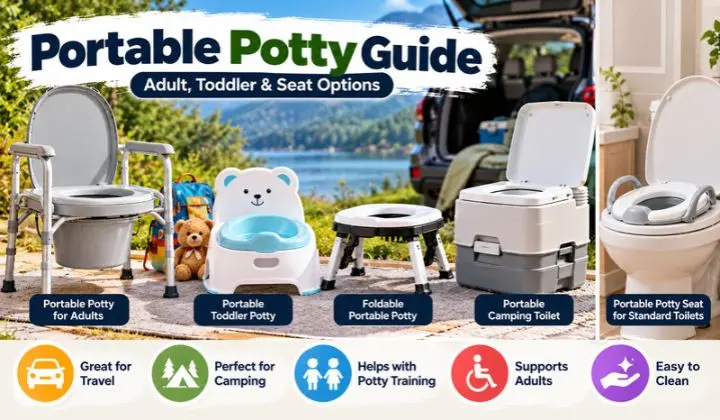
Finding a toilet when you are travelling, camping, or away from home is not always easy. This can be even harder for parents with young children and adults who need extra support. A portable potty offers a practical way to manage these situations when a regular bathroom is not available.
Portable potties come in several designs. Some are made for toddlers learning to use the toilet. Others are designed for adults, outdoor trips, or use with a regular toilet. Some models fold for easy storage, while others have a removable bowl or use disposable liners.
This guide from Vertex Fence explains the main types, what to check before buying, and how to use a portable potty safely. The aim is to help you compare your options and choose one based on comfort, size, cleaning needs, and where you plan to use it.
What Is a Portable Potty?
A portable potty is a toilet or toilet seat that can be moved from one place to another. Unlike a standard toilet, many models do not need a permanent plumbing connection. They may collect waste in a removable container, use a compatible liner, or fit over an existing toilet bowl.
The best design depends on who will use it and where it will be used. A toddler’s potty, for example, is different from a portable toilet designed to support an adult.
How a Portable Potty Works
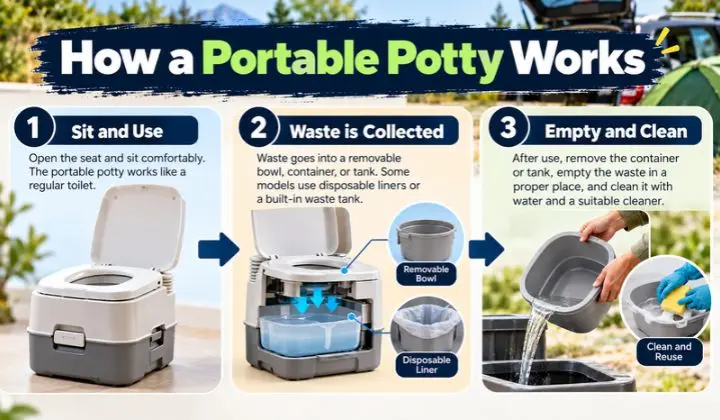
Most portable potties use one of three basic designs:
- Standalone potty: A small unit with its own seat and a bowl or container that collects waste.
- Portable toilet seat: A seat that fits over a regular toilet, often making it easier for a child to sit securely.
- Self-contained toilet: A portable toilet with a built-in waste tank or container. Some camping models also include a flushing system.
Some products are designed for one purpose, while others offer more than one use. For example, a portable potty chair may be suitable for toilet training at home and for short trips away from home.
Always read the product instructions before use. Do not assume that every model can hold the same weight, fit every toilet, or be used without a liner.
Portable Potty vs. Portable Toilet: Key Differences
The terms are sometimes used in similar ways, but they can describe different products.
| Feature | Portable potty | Portable toilet |
| Common users | Often toddlers, but adult models exist | Adults, campers, and outdoor users |
| Design | Small chair, seat, or compact unit | May have a larger seat and waste tank |
| Waste handling | Bowl, container, or liner | Tank, cassette, or other collection system |
| Common uses | Toilet training, travel, and emergencies | Camping, outdoor trips, and places without toilets |
These are general differences, not strict rules. Product designs vary, so check the manufacturer’s description before buying.
Types of Portable Potties
Choosing between different types becomes easier when you know what each one is designed to do.
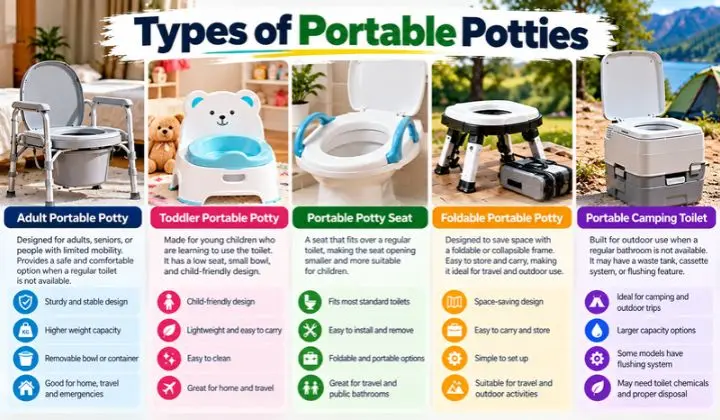
Portable Potty for Adults
A portable potty for adults may be useful during camping trips, long journeys, or when reaching a regular bathroom is difficult. Some models have a simple folding frame, while others have a seat above a removable waste container.
Adults who need extra help sitting down or standing up may want to consider a bedside commode. This is a chair-like toilet designed for use near a bed or in another suitable indoor space. It is not the same as every travel potty, and some models are made mainly for home or care settings.
Before buying an adult portable toilet, check the maximum weight capacity, seat height, opening size, frame strength, and base stability. A product that looks compact may not provide enough support for every adult.
If the potty is intended for someone with limited mobility, consider whether they can transfer onto the seat safely. Ask a healthcare professional or occupational therapist for guidance when additional support is needed.
Portable Toddler Potty and Potty Chairs
A portable toddler potty is made for young children who are learning to use the toilet. It usually has a low seat, a small bowl, and a shape that helps a child sit comfortably.
A portable potty chair can be useful at home, during visits, or on family trips. Some models have a lid or handle, while others fold and fit into a travel bag. These features can make carrying and storing the potty easier.
Look for a seat that feels stable on a flat surface, has smooth edges, and is easy for an adult to clean. A splash guard may help reduce spills, but its design should suit the child’s age and needs.
There is no single age when every child is ready for potty training. Choose a potty based on the child’s size, comfort, and stage of development. Always supervise young children during use.
Portable Potty Seats for Standard Toilets
A portable potty seat is different from a standalone potty. It is designed to sit on a regular toilet, often making the seat opening smaller and more suitable for a child.
A portable toilet seat may be useful when visiting family, staying in a hotel, or using public bathrooms. Some models fold, while others have handles or a carrying case.
Before buying, check toilet bowl compatibility. Not every seat fits every toilet shape or size. The seat should rest securely without rocking or slipping. Follow the product instructions, and help children get on and off safely.
A portable seat may be a good choice when a child already uses a regular toilet at home. However, it will not work as a standalone toilet unless the product is specifically designed for that purpose.
Foldable Portable Potties
A foldable potty is designed to save space when it is not being used. It may have folding legs, a collapsible frame, or a seat that folds flat. This can make it easier to store in a car or carry on family outings.
A foldable potty seat usually fits over a standard toilet, while some folding models work as standalone potties with a waste bag or container. Check which type you are buying because their functions are not the same.
Look for secure locks, a stable base, smooth folding parts, and clear cleaning instructions. Keep fingers away from moving joints when opening or closing the product. Never use a folding model if its legs or locking parts appear damaged.
Portable Camping Toilets
A portable camping toilet is designed for outdoor use when a regular bathroom is not available. It may collect waste in a removable container, use a cassette system, or include a flush tank. Some models are small and simple, while others are larger and more comfortable for longer trips.
A camping toilet is not always the same as a toddler’s travel potty. Adult camping models may need more storage space and a specific waste-disposal method. Some require suitable toilet chemicals or designated disposal points, depending on the design.
Before buying one, check its packed size, capacity, cleaning needs, and instructions for emptying it. Make sure you have a suitable place to store and clean it during your trip.
How to Choose the Right Portable Potty
The right choice depends on the intended user, where the potty will be used, and how waste will be handled. A compact design is helpful for travel, but comfort and stability should come first.
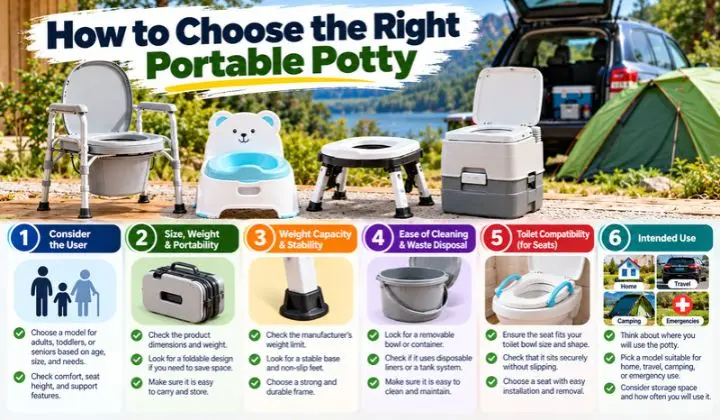
Size, Weight, and Portability
Think about where you will keep the potty when it is not in use. A folding model may fit into a car boot or storage cupboard, while a larger camping toilet may take up more space.
Check the product’s open and folded dimensions, weight, and whether a carry bag is included. A portable travel potty should be easy for the adult carrying it to manage, but it must still be suitable for the person using it.
Do not choose a model based on its size alone. A very small potty may be uncomfortable or unsuitable for the intended user.
Weight Capacity, Stability, and Comfort
Always check the manufacturer’s stated weight limit. Do not rely on appearance or assume that two similar-looking products have the same capacity.
A stable base, secure legs, and a comfortable seat are important features. A non-slip base may help reduce movement on suitable surfaces, but it does not make every floor safe. Place the potty on a level surface and follow the instructions for securing it.
For adults, consider seat height and the support needed to sit down and stand up. For children, make sure the potty is the right size and does not wobble during use.
Ease of Cleaning and Waste Disposal
Cleaning can be a major factor when choosing a portable potty. A removable bowl or container may be easier to empty than a design with hard-to-reach areas. Smooth surfaces and clear cleaning instructions can also make regular care simpler.
Check how the model handles waste before you buy it. Some use a removable container, while others are designed for specific liners or a tank system. Follow the manufacturer’s instructions for waste disposal and never empty waste into a storm drain or an area where disposal is not allowed.
Disposable Liners vs. Reusable Options
Disposable potty liners can make waste collection easier when used with a compatible model. Some products require specific bags or absorbent inserts, so check the size and type before purchasing replacements.
Reusable bowls and containers may reduce the need for single-use bags, but they must be emptied and cleaned properly after use. Not every potty supports both methods.
Compare the cost and availability of replacement supplies as well as the initial product price. Never assume that a liner is safe for every model or that a used liner can be placed in any waste bin.
Storage Space and Toilet Compatibility
If you are buying a potty seat, check the shape of the toilet it needs to fit. A seat that does not sit securely may move during use.
For a standalone potty, think about where you will keep it between uses and how you will transport it. If you plan to use it outdoors, check whether the manufacturer permits that type of use.
Finally, read the product’s instructions, care guidance, and weight limits. These checks can help you avoid buying a model that does not fit your needs.
Choosing a Portable Potty for Different Needs
The best portable potty depends on where you plan to use it and who will use it. A model that works well for a toddler may not be suitable for an adult or a camping trip.
For Toddlers and Potty Training
During toilet training, children often need a potty that feels familiar and comfortable. A kids potty may be easier for a toddler to use than a full-size toilet.
For outings, a portable kids potty seat can be helpful if your child is already comfortable using a regular toilet. A standalone travel potty may be more practical when a suitable bathroom is not available.
Choose a design that is easy to clean and carry. Let your child become familiar with it before a long journey, and never leave a young child unattended while using it.
For Road Trips and Family Travel
For road trips, look for a model that is easy to carry, simple to set up, and suitable for your available storage space. A folding potty or compact travel seat may work well for short journeys.
Pack any required liners, cleaning supplies, and hand hygiene products. Plan regular bathroom stops where possible, especially when travelling with young children.
A portable potty can provide another option during unexpected delays, but it should not replace safe driving practices or proper toilet facilities when those are available.
For Adults with Limited Mobility
Adults who have difficulty walking to a bathroom may need a different design from a standard travel potty. A suitable bedside commode may be more practical for home use, while a portable camping toilet may suit some outdoor situations.
Consider the user’s balance, strength, ability to sit and stand, and need for assistance. Check the seat height and weight limit carefully. If the person needs help transferring, ask a qualified healthcare professional about suitable equipment and safe use.
For Camping and Outdoor Activities
For camping, consider how long you will be away, how many people will use the toilet, and where waste can be disposed of safely and legally.
A portable camping toilet with a suitable waste container may be a better option for longer trips. A small travel potty may work for a toddler, but it may not offer the capacity or comfort required by adults.
Check campsite rules before your trip. Some sites provide toilet facilities or designated waste-disposal points, while others have specific requirements for portable toilets.
If you need facilities for a large gathering or worksite, a portable toilet rental may be more suitable than a personal travel potty. Rental units are a separate service and may include delivery, servicing, and waste removal, depending on the provider.
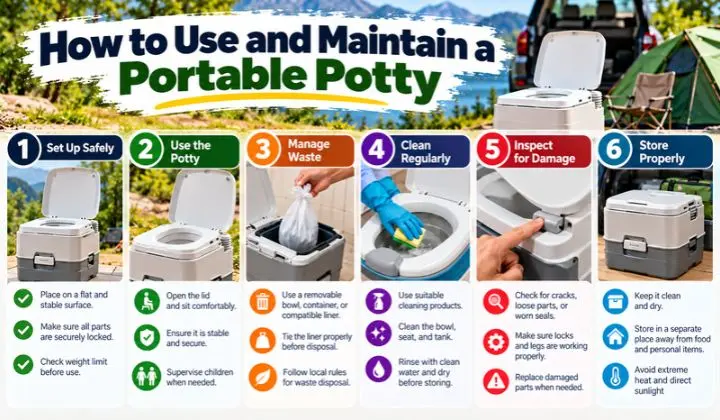
How to Use and Maintain a Portable Potty
Proper use and cleaning help keep a portable potty in good condition. Always follow the instructions for your specific model because different designs may require different care.
Setting Up and Using It Safely
Before use, place the potty on a level, stable surface. If it folds, check that the legs and locking parts are secure. For a toilet seat, make sure it fits firmly on the toilet before anyone sits down.
Follow the manufacturer’s weight limit, and do not use a product with loose parts, cracks, or a damaged frame. Help children use the potty safely, and supervise them as needed.
Managing Waste and Using Potty Liners
If your model uses a removable container, empty it according to the manufacturer’s instructions. If it uses a liner, use only a compatible type and follow the product’s disposal guidance.
Do not pour waste into storm drains, waterways, or places that are not approved for disposal. Camping toilets may have specific requirements, so check local rules and campsite guidance before travelling.
Cleaning and Sanitizing After Use
Empty the potty safely, then clean the bowl or container as directed. Use suitable cleaning products and allow the parts to dry before storing them. Wash your hands after handling waste or cleaning the potty.
Pay attention to hinges, removable parts, and other areas where dirt may collect. Do not mix cleaning chemicals, and never assume that a quick rinse is enough for every product.
Regular potty cleaning is especially important when the same unit is used repeatedly. Store it in a clean, dry place and keep it separate from food, clean clothing, and other personal items.
When to Inspect or Replace a Portable Potty
Check the potty before each use, especially if it has been folded, transported, or stored for a long time. Look for cracks, damaged seals, loose joints, unstable legs, and worn locking parts.
Replace damaged components only when the manufacturer provides suitable replacements. If the potty no longer sits securely or has damage that affects its strength, stop using it.
Benefits and Limitations of Portable Potties
A portable potty can make certain situations easier, but it is not the best solution for every user or location.
Main Benefits
- Convenience: Provides another toilet option when a suitable bathroom is not nearby.
- Travel support: Can help parents manage toilet-training needs during outings.
- Flexible designs: Options include seats, folding models, adult units, and camping toilets.
- Space-saving choices: Some models fold for easier storage and transport.
- Better planning: Users can choose a model that fits their trip, home, or care needs.
Common Limitations
Portable potties may need frequent cleaning, replacement liners, or careful waste disposal. Some models take up more space than expected, and folding designs still need to be checked for stability.
A small toddler potty may not suit an older child or adult. Likewise, a portable toilet designed for camping may be too large for a short family outing.
When Is a Portable Potty Worth Having?
A portable potty may be useful if you travel often, camp in places without toilets, have a toddler learning to use the bathroom, or need a suitable toilet option close to home.
Before buying, compare the product’s size, capacity, cleaning needs, and intended use. The right choice is not always the most expensive or feature-rich model. It is the one that safely meets the user’s needs.
FAQs
Can a portable potty fit inside a regular car or travel bag?
Some compact and folding models can fit in a car boot or travel bag, but sizes vary. Check the product’s folded dimensions and weight before buying. A standalone potty may need more space than a foldable toilet seat.
How can you prevent a portable potty from tipping over?
Place it on a level, stable surface and check that all legs or locking parts are secure. Follow the manufacturer’s weight limit and avoid uneven ground. For toilet seats, confirm that the seat fits firmly before use.
Can a portable potty be used without disposable liners?
Yes, some models have a removable bowl or container that can be emptied and cleaned. Other models are designed to use specific liners or absorbent inserts. Check the manufacturer’s instructions before using a potty without a liner.
What should you pack with a portable potty for an emergency stop?
Depending on the model, useful supplies may include compatible liners, disposal bags, cleaning wipes or suitable cleaning products, hand hygiene supplies, and spare clothes for a toddler. Check local rules for waste disposal and store used supplies safely until they can be disposed of properly.
How do you know when a portable potty needs replacing?
Replace a potty if it has cracks, unstable legs, broken locks, damaged seals, or other defects that affect safe use. Check the manufacturer’s guidance for replacement parts. Do not continue using a damaged model simply because it still appears to work.
Conclusion
Choosing the right portable potty starts with understanding who will use it and where it will be needed. A portable potty for adults, a toddler potty, a portable potty seat, and a camping toilet all serve different purposes.
Compare size, comfort, weight capacity, stability, cleaning needs, and waste-disposal requirements before making a decision. Read the manufacturer’s instructions and check that the product suits the intended user.
With the right choice and proper care, a portable potty can make travel, toilet training, camping, and some home-care situations easier to manage.