
 Fences
 Gates
Gates Signage & Boards
 Car Parking Shades
 Block and Foundation
 Spare Parts
Plastic Barriers in UAE: Types, Uses & Benefits for Roads, Safety and Parking

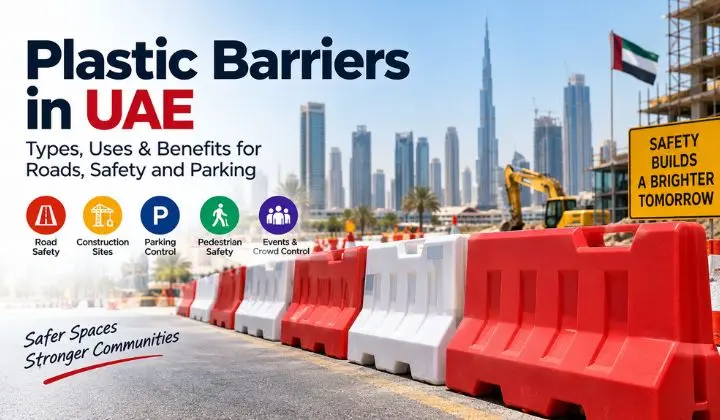
Plastic barriers are used to control movement, separate people from vehicles, and mark areas that should not be entered. They are common at construction sites, roadwork areas, parking spaces, events, and other places where temporary control is needed.
In the UAE, a barrier may need to handle strong sunlight, high temperatures, dust, and regular outdoor use. That is why choosing the right plastic road barrier is not only about color or price. The barrier should match the job, site conditions, required visibility, and level of stability.
This guide explains the different types of plastic safety barriers, where they are used, what sizes and weights mean, and what to check before buying them.
What Is a Plastic Barrier?
A plastic barrier is a physical barrier made from plastic materials and designed to control access, guide traffic, or separate people and vehicles. Depending on the design, it may be lightweight and portable or have a heavy base that can be filled with water or another approved ballast.
You may also see these products described as a plastic barricade, traffic barrier, safety barrier, pedestrian barrier, or plastic traffic barrier. The exact name usually depends on where and how the product is being used.
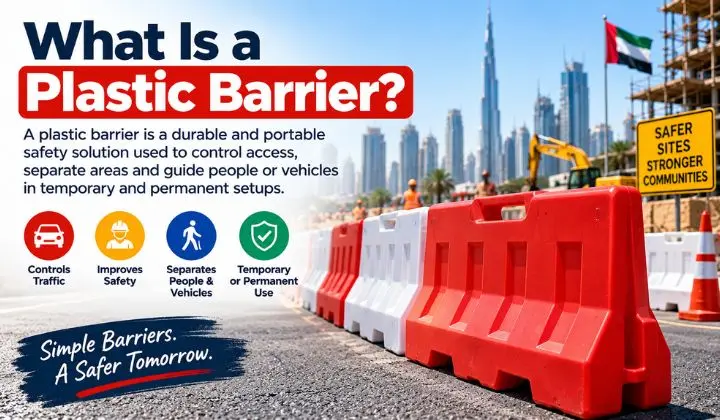
Unlike a permanent wall, most plastic barriers are made for temporary traffic control, site separation, or access management. They can be moved, stored, connected with other units, and set up again when the work area changes.
For example, a roadwork team may use a plastic road safety barrier to separate workers from moving vehicles. A business may use plastic parking barriers to control vehicle access, while an event organizer may use pedestrian barriers to guide people through a particular route.
The important point is that a plastic barrier is mainly a control and separation tool. It should not automatically be treated as a crash-rated road safety device unless the specific product has been designed and tested for that purpose.
What Is the Purpose of a Plastic Barrier?
The main purpose of a plastic barrier is to create a clear physical boundary between people, vehicles, equipment, or restricted areas. The right barrier can make a busy site easier to manage and help people understand where they should and should not go.
Traffic Control and Diversion
During road maintenance or construction, normal traffic routes may need to change. A plastic road barrier can help guide drivers around a work area or separate a temporary lane from the work zone.
Bright colors and reflective markings can also make the barrier easier to see, especially during low-light conditions. However, the exact traffic-control setup should always follow the requirements for the specific road and project.
Construction Site Safety
Construction areas often contain open work zones, equipment, materials, and temporary hazards. Construction plastic barriers can create a visible boundary around these areas and help reduce accidental access.
For larger outdoor work areas, stability becomes especially important. A barrier with a suitable heavy base, connection system, or ballast option may be more suitable than a very lightweight unit.
Pedestrian and Vehicle Separation
People walking through a work area should have a clear route away from moving vehicles and machinery. Plastic pedestrian barriers can be used to create walkways, guide foot traffic, and separate pedestrian areas from vehicle routes.
This type of separation is useful at construction sites, parking facilities, commercial properties, and public events.
Parking and Access Control
In parking areas, barriers can help prevent vehicles from entering a closed section or guide drivers toward the correct entrance or exit.
Plastic parking barriers can also be useful when access needs to change regularly. Since many plastic systems are portable, they can be moved when the parking layout or site requirements change.
Crowd and Event Control
Events may require temporary routes for visitors, queues, entrances, or restricted areas. Plastic crowd control barriers can provide a clear boundary without requiring a permanent installation.
For these applications, portability and quick setup can be more important than heavy-duty stability.
Types of Plastic Barriers for Different Applications
Not every plastic barrier is designed for the same job. The best option depends on the type of traffic, location, required stability, visibility, and how long the barrier will remain in place.
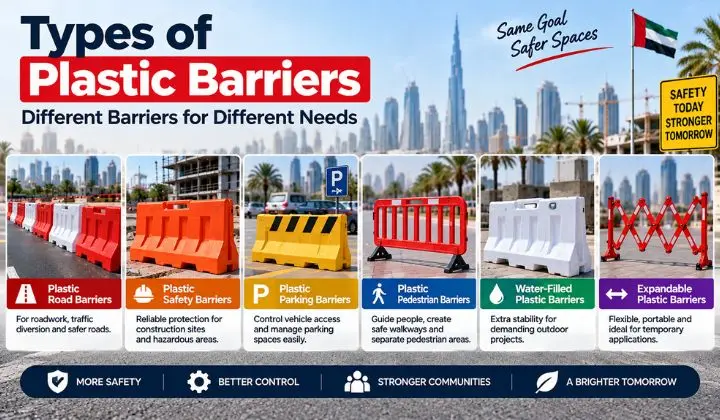
Plastic Road Barriers
Plastic road barriers are commonly used for temporary roadwork, maintenance, traffic diversion, and work-zone separation.
A good road barrier should be easy to identify from a safe distance. High visibility, bright colors, and reflective strips can help make the barrier more noticeable to drivers and pedestrians.
Some systems are also designed to connect together, allowing several units to create a continuous line. This can be useful when a work zone needs a longer boundary instead of one isolated barrier.
When selecting a road barrier, look beyond its appearance. Check the product’s plastic road barrier dimensions, base design, weight, connection method, and outdoor suitability.
Plastic Safety Barriers
Plastic safety barriers are used where a clear physical boundary is needed around a work area, hazard, restricted zone, or industrial space.
Their purpose can range from simple access control to separating pedestrians from vehicles. The required design will depend on the risk involved.
For example, a small portable barrier may be enough to keep people away from a temporary maintenance area. A larger barrier with a stable base may be more suitable for a busy outdoor work zone.
The term plastic safety barrier should not be confused with a certified vehicle crash barrier. If a project requires protection against vehicle impact, the required performance rating and applicable specifications must be checked before selecting a product.
Plastic Parking and Pedestrian Barriers
Parking and pedestrian applications often need barriers that are easy to move and reposition.
Plastic parking barriers can be used around closed parking bays, restricted spaces, entrances, loading areas, or temporary access points. Their bright appearance also helps drivers quickly recognize a controlled area.
Plastic pedestrian barriers are more focused on managing foot traffic. They can be used to create walking routes, control queues, or keep pedestrians away from vehicles and temporary hazards.
Water-Filled, Interlocking and Expandable Plastic Barriers
Some barriers have a hollow base that can be filled with water to increase their weight after installation. These are commonly known as plastic water barriers or plastic water filled barriers.
This design can make transportation easier because the barrier is lighter before filling. Once positioned, the ballast increases its stability. The actual filling method and capacity depend on the product design.
Interlocking plastic barriers can be joined together to form longer lines or different layouts. This is useful for roadwork, construction areas, events, and temporary access control.
Expandable plastic safety barriers provide another option when a barrier needs to be opened, closed, moved, or stored frequently. They are generally suited to applications where portability is a priority.
Which Plastic Barrier Is Right for Your Project?
Choosing a barrier should start with the job it needs to perform, not simply the product name.
| Application | Suitable Barrier Type | Main Things to Check |
| Roadwork | Plastic road barrier | Visibility, stability, reflectivity |
| Construction | Plastic safety barrier or suitable water-filled system | Base stability, separation, durability |
| Parking | Plastic parking barrier | Visibility, access control, portability |
| Pedestrian areas | Plastic pedestrian barrier | Clear separation, ease of movement |
| Events | Crowd-control or expandable barrier | Quick setup, portability, storage |
For a road project, visibility and stability may be the main concerns. For an indoor event, a lighter and easier-to-move system may make more sense.
Site conditions also matter. A barrier exposed to direct sunlight, outdoor weather, vehicles, and wind may need different features from one used inside a controlled building.
Before ordering, consider how long the barrier will be used, where it will be placed, what it needs to separate, and how often it will be moved.
Plastic Barrier Size, Dimensions & Weight: What Should You Know?
There is no single standard plastic barrier size that works for every application. Dimensions vary according to the barrier’s purpose, design, base, and connection system.
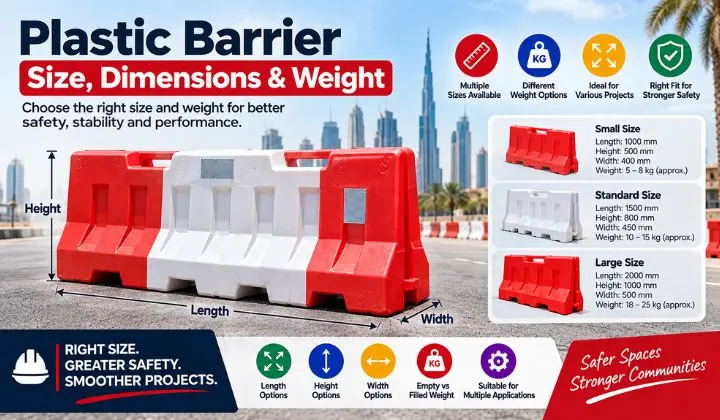
The three basic measurements to check are:
- Length: affects how much area one barrier unit can cover.
- Height: affects visibility and the level of separation provided.
- Width: can affect stability, storage, and how much space the barrier takes up.
For a road project, you may need to check the plastic road barrier dimensions carefully to make sure the units fit the planned layout. For pedestrian or event use, the height and ease of handling may be more important.
Weight is another important factor. When comparing plastic barrier weight, always check whether the listed weight refers to the empty product or a filled/ballasted unit.
A lightweight barrier may be easier to transport and reposition, while a heavier or ballasted barrier may provide greater stability. Neither is automatically better, the right choice depends on the site.
For outdoor projects, also consider wind exposure and the surface where the barrier will stand. A product’s base design and connection system can be just as important as its stated weight.
Always ask the supplier for the actual technical specifications of the product you are buying rather than relying on a general size or weight found online.
What Features Should You Look for in a Plastic Barrier?
The right features depend on the application, but several points are worth checking before placing an order.
Durable Plastic Construction
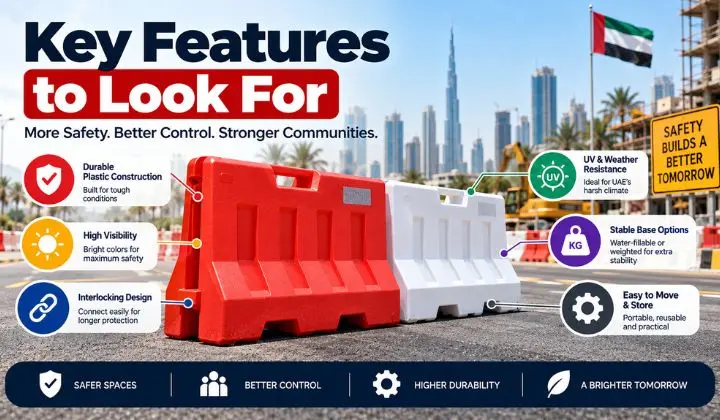
Look for a barrier made from material suitable for its intended environment. Outdoor applications may require UV resistance, weather resistance, and good resistance to normal site handling.
Do not judge durability only from the word “heavy-duty” in a product description. Ask for the actual material and technical information when the project has demanding requirements.
High Visibility and Reflective Markings
A barrier should be easy to identify. High visibility colors can make a temporary boundary clear during the day, while reflective strips or markings can improve visibility in low-light conditions.
This is especially useful for roadwork and areas where vehicles operate after dark.
Stability and Base Design
A barrier’s base plays a major role in how well it stays in position. Wide or weighted bases can provide better stability, while some products use water or another approved ballast system.
For outdoor use, consider wind, ground conditions, nearby vehicle movement, and how the barriers will be connected.
Interlocking and Modular Design
An interlocking system allows individual units to be connected into a longer barrier line. This can make temporary layouts easier to install and change.
Before buying, check how the units connect and whether the connection remains secure during normal site use.
Portability and Storage
If barriers need to be moved often, portability becomes important. Features such as handles, foldable parts, stackable designs, or lighter construction can make transportation and storage easier.
For large projects, also consider how many units need to be transported and where they will be stored when they are not in use.
Plastic Barriers vs Concrete and Metal Barriers
Plastic, concrete, and metal barriers can all be used to control access or separate areas, but they are not designed for exactly the same situations. The right choice depends on whether you need something temporary, movable, highly stable, or designed for a specific impact requirement.
| Factor | Plastic Barriers | Concrete Barriers | Metal Barriers |
| Weight | Generally easier to move | Very heavy | Varies by design |
| Installation | Usually quick | More difficult to relocate | Usually moderate |
| Mobility | High | Low | Moderate to high |
| Temporary use | Very suitable | Less convenient | Suitable |
| Storage | Easier for many designs | Requires more space/equipment | Depends on design |
| Reusability | High | High, but difficult to move | High |
| Common applications | Roadwork, safety, parking and access control | Heavy-duty separation | Construction, security and long-term control |
One advantage of plastic is that many systems can be moved and reused when a project layout changes. This makes them useful for temporary traffic control, construction areas, parking management, and events.
Concrete may be a better choice where substantial mass is required, while metal systems can suit applications that need a rigid structure or longer-term installation.
There is no universal “best” barrier. A standard plastic barrier should also not be treated as a vehicle crash barrier unless the particular product has the required testing and rating. Always match the barrier to the actual safety requirement of the site.
How Much Do Plastic Road Barriers Cost in the UAE?
The plastic road barriers price in the UAE can vary considerably because barriers are available in different designs, sizes, materials, and configurations.
Instead of looking for one fixed price, buyers should compare the features that affect the total cost.
What Affects Plastic Barrier Price?
Several factors can change the final price of a barrier:
- Barrier type and design
- Overall dimensions
- Plastic material and construction
- Base and stability system
- Water-fillable or ballast design
- Reflective markings and visibility features
- Quantity required
- Customization or branding
- Delivery location and requirements
For example, a simple lightweight barrier for an indoor area may cost less than a large plastic water filled barrier designed for an outdoor work zone.
Bulk orders can also have different pricing from small quantities. Delivery is another factor worth checking, especially when a project needs a large number of barriers across Dubai, Abu Dhabi, Sharjah, or another UAE location.
If you are comparing plastic road barriers for sale, don’t compare price alone. Check the dimensions, weight, material, stability, visibility, connection system, and intended application first.
A lower-priced product may not be the right choice if it does not meet the needs of your site.
How to Choose a Plastic Barrier Supplier in the UAE
Finding a plastic barrier supplier in UAE is easy. Finding one that can provide the right product for your project requires a little more checking.
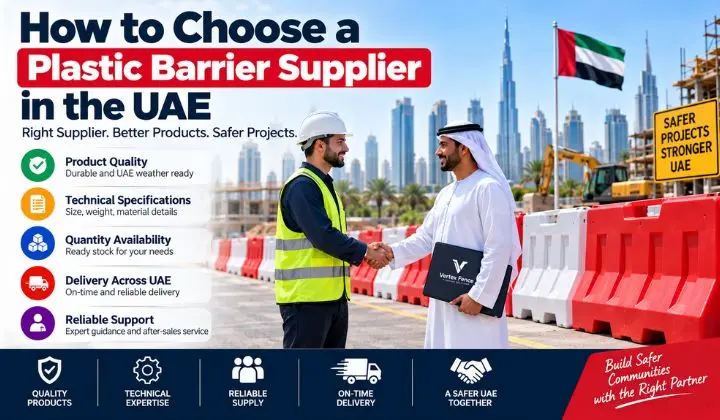
Before placing an order, ask the supplier these questions:
1. Does the barrier match the application?
Tell the supplier where the barriers will be used. A roadwork project, construction site, parking area, and pedestrian zone may require different designs.
2. What are the exact specifications?
Ask for the product’s dimensions, weight, material, base design, and connection method. This helps you avoid choosing a product based only on a product photo.
3. Is it suitable for outdoor use?
For outdoor UAE projects, check whether the product is designed to handle UV exposure, heat, weather, and normal site conditions.
4. How stable is the barrier?
Ask whether the barrier is weighted, water-fillable, interlocking, or designed with a particular base system. Stability requirements will depend on the site.
5. Is it easy to transport and store?
If the barriers will be moved between work areas, portability can save time and labor. For larger projects, storage requirements should also be considered.
6. Can the supplier handle your quantity?
A small order and a large construction project have different supply needs. Confirm stock or production availability and expected delivery before committing to a project schedule.
7. Can you get technical information?
A reliable supplier should be able to provide clear product information rather than vague claims about quality or strength.
For businesses looking for plastic road barriers suppliers in UAE, these checks can make it easier to compare suppliers based on the actual needs of the project.
Vertex Fence can be considered when sourcing barrier solutions in the UAE, but the final product should always be selected according to the project’s application and technical requirements.
Frequently Asked Questions
Can plastic barriers be used outdoors in the UAE heat?
Yes, many plastic barriers are designed for outdoor use, but their suitability depends on the material and construction. For UAE conditions, check UV resistance, weather resistance, and the manufacturer’s recommended operating environment before buying.
A barrier exposed to direct sunlight for long periods should be selected specifically for outdoor conditions rather than assuming every plastic product will perform the same way.
Can plastic barriers be connected to create a longer barrier line?
Yes, many plastic traffic barriers have interlocking or connecting systems that allow several units to form one continuous line. This is useful for roadwork, construction zones, pedestrian routes, and temporary restricted areas.
The connection design varies between products, so check how the units lock together and whether the system is suitable for your planned layout.
How do you keep plastic barriers stable on site?
Stability depends on the barrier design, base, surface, connections, and outdoor conditions. Some barriers use a wide or weighted base, while certain models can be filled with water to increase their weight after positioning.
For exposed outdoor areas, also consider wind and ground conditions. Do not assume that adding weight is appropriate for every product; follow the supplier’s instructions for the specific barrier.
Can plastic barriers be reused for different projects?
Yes, many temporary plastic barriers can be moved and reused when they are still in good condition. This is one reason they are useful for construction, maintenance, parking, and event applications where layouts often change.
Before reusing them, check for cracks, damaged connectors, worn bases, or missing reflective markings. Proper cleaning and storage can also help keep reusable barriers in better condition.
What should I check before ordering plastic barriers for a project?
Start with the application, then check the required barrier type, dimensions, weight, visibility, stability, material, and quantity. Also consider the surface, outdoor exposure, storage space, and how often the barriers need to be moved.
For larger projects, ask for technical specifications and confirm delivery requirements before ordering. This helps ensure that the barriers you receive are suitable for the actual site rather than simply matching the product name.
Choose the Right Plastic Barriers for Your UAE Project
The right plastic barrier depends on what you need it to do. Roadwork may require a highly visible and stable plastic road barrier, while a parking area may need a portable option for access control. Construction and industrial sites may require stronger separation, while events often benefit from lightweight and easy-to-move pedestrian or crowd-control systems.
Before buying, focus on five basic questions:
- Where will the barrier be used?
- What does it need to separate or control?
- What size and weight are suitable?
- How much stability and visibility are required?
- Can the supplier provide the right quantity and specifications?
Taking these points into account makes it easier to compare plastic barriers for sale and choose a product based on actual site requirements rather than price alone.
For projects in the UAE, choosing a suitable barrier also means considering the local outdoor environment, traffic conditions, pedestrian movement, and the specific safety requirements of the site.
Whether you need barriers for roadwork, construction, parking, pedestrian control, or a temporary event, start with the application and then work backward to the right design, dimensions, stability, and features. That approach gives you a barrier solution that is practical for the job and easier to manage throughout the project.