
 Fences
 Gates
 Signage & Boards
 Car Parking Shades
 Block and Foundation
 Spare Parts
Hoarding Fence in UAE: Types, Designs, Uses & Benefits

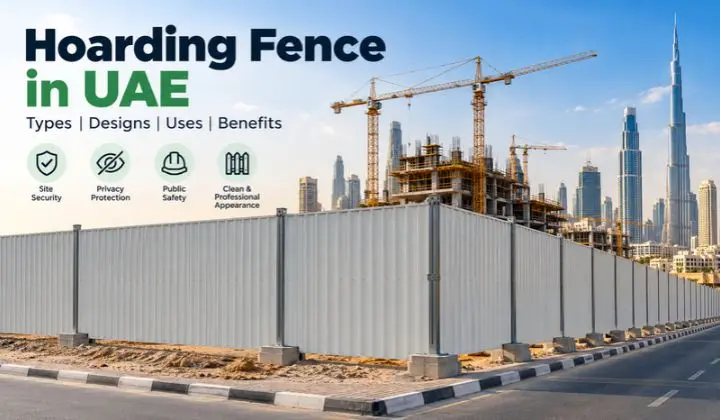
A construction site needs more than workers and building materials. It also needs proper protection to keep the work area separate from public spaces. A hoarding fence helps create this boundary by covering the site, limiting unauthorised access and improving safety around the project.
In the UAE, hoarding fences are commonly used at building sites, commercial developments, road projects and renovation areas. They are available in different materials, including corrugated metal, PVC panels and timber hoarding. The right option depends on the project duration, site conditions, required privacy and local authority requirements.
This guide explains the main types of hoarding fences, their designs, system components and practical uses. It also covers important points to consider before selecting a site hoarding fence for your project.
What Is a Hoarding Fence?
A hoarding fence is a solid or mostly covered barrier installed around a construction site, renovation area or other restricted work zone. Unlike an open mesh fence, it blocks most direct views into the site and helps separate construction activities from nearby roads, buildings and pedestrian areas.
A construction hoarding fence can be made from metal sheets, PVC panels, timber or other suitable materials. It is usually supported by posts, braces and base supports to keep the panels stable.

The main purpose is to provide site security, privacy protection and a clear boundary around the work area. Some businesses also use printed panels to display project information, company names or approved promotional designs.
What Is the Difference Between Hoarding and Fencing?
The main difference is the level of coverage and visibility. A traditional fence may use wire mesh or open bars, allowing people to see through it. Hoarding usually uses solid panels to block views and provide more privacy.
For example, a chain-link fence may be suitable for marking a boundary around an open storage area. A solid temporary hoarding fence is often more suitable for a busy construction site where privacy and visual separation are important.
Types of Hoarding Fences Used in the UAE
Different projects need different materials. Before choosing a hoarding fence in UAE, consider how long the barrier will remain in place, the surrounding environment and the level of protection required.
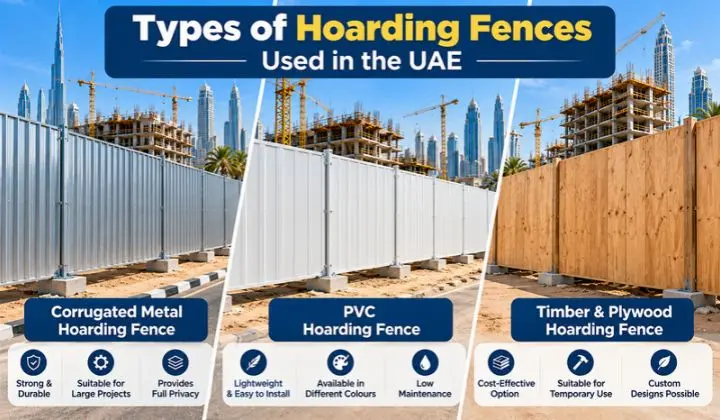
1. Corrugated Metal Hoarding Fence
A corrugated metal hoarding fence uses shaped metal sheets fixed to a supporting frame. The ridges in the sheets give them shape and help form a solid boundary around the site.
This option is commonly considered for construction projects that need a covered perimeter. Metal panels can provide privacy, resist everyday outdoor exposure when properly protected and be removed when the project is complete.
Important factors include sheet thickness, coating, support spacing and the quality of the fixing system. These details affect the panel’s performance, so buyers should check the actual specifications instead of assuming that every metal hoarding system is the same.
2. PVC Hoarding Fence
A PVC hoarding fence uses solid PVC panels to create a covered site boundary. It can be a useful choice when appearance, panel handling and customisation are important.
Some systems use GI support pipes, runners and base supports to hold the panels in place. PVC panels may also be available in different colours, depending on the supplier and product range.
Before selecting this option, check the panel quality, fixing method, outdoor suitability and support design. You should also confirm whether the system meets the requirements of your project.
3. Timber and Plywood Hoarding
Timber and plywood hoarding uses wooden boards or sheets fixed to a supporting frame. It can be considered for temporary work areas, renovation projects and sites where a simple covered barrier is required.
Its performance depends on the quality of the wood, sheet thickness, weather protection and installation. Exposure to moisture can affect timber and plywood, so regular inspection and suitable maintenance are important.
Hoarding Fence Designs and Panel Options
The design of a hoarding system affects its appearance, privacy and installation. A suitable hoarding fence design should match the project layout and provide enough support for the selected panels.
Common options include:
- Solid hoarding panels: These create a covered boundary and reduce direct visibility into the work area.
- Continuous hoarding systems: Panels are joined to form a more uniform boundary with fewer visible gaps.
- Discontinuous hoarding systems: Separate panel sections are installed with supporting posts or frames between them.
- Printed hoarding panels: These display approved project details, company branding or promotional graphics.
- Custom-colour panels: These help match the fence with a project’s visual requirements.
When comparing hoarding fence panels, check their dimensions, material, thickness, finish and fixing arrangement. Panel size alone does not confirm that a system is suitable for a particular site.
Key Components of a Hoarding Fence System
A hoarding fence is not just a row of panels. Its support structure is equally important because it helps hold the panels in position and maintain the boundary.
The main components may include:
- Hoarding fence panels: The solid sheets that create the visible barrier.
- GI support pipes and posts: These provide the main support for the panels.
- Horizontal runners: These connect support points and help hold the panels in position.
- Diagonal braces: These provide additional support where the system design requires them.
- Concrete support blocks: These can act as bases for certain temporary fencing systems.
- Clamps and couplings: These connect pipes, braces and other parts of the structure.
- Access gates: These provide controlled entry for workers, vehicles and authorised visitors.
The exact components depend on the hoarding system and site conditions. For example, a temporary modular system may use removable supports, while another project may require a different foundation or anchoring arrangement.
For a suitable hoarding fence system, make sure the panels, supports and connections are designed to work together. Choosing strong panels without checking their supporting structure can lead to an unsuitable installation.
Common Uses of Hoarding Fences in the UAE
A hoarding fence can be used for different types of projects where a clear and secure boundary is needed. The material and design may change depending on the location, project size and expected duration.
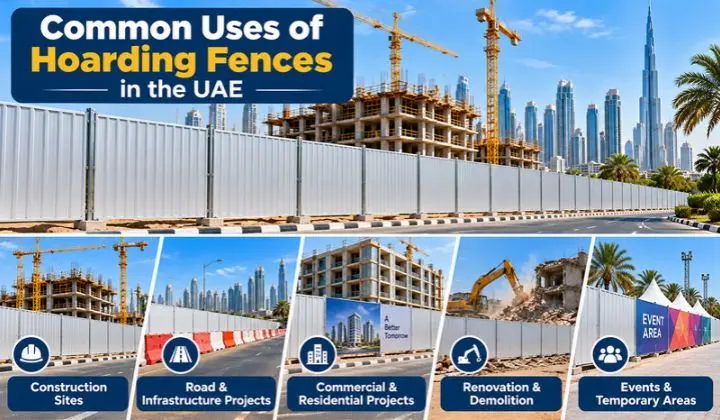
Common applications include:
Construction and Building Sites
Construction companies use hoarding fencing for construction sites to separate active work areas from roads, footpaths and nearby properties. Solid panels help limit public visibility and reduce direct access to the work zone.
Road and Infrastructure Projects
Roadworks, utility installations and infrastructure projects may need temporary barriers around excavation and equipment areas. A suitable temporary site hoarding helps identify restricted areas and protect people passing nearby.
Commercial and Residential Developments
Shopping centres, offices, residential buildings and property developments may use hoarding around their construction areas. Printed panels can also display project names and approved branding.
Renovation, Demolition and Events
Renovation and demolition work can create dust, noise and falling-material risks. Hoarding helps separate these activities from public spaces. Similar barriers may also be used around selected event areas, depending on the safety and access requirements.
Benefits of Installing a Hoarding Fence
A properly selected hoarding system offers more than a boundary around a construction project. It can improve site organisation and help manage risks.
- Better site security: Solid panels make it harder for unauthorised people to enter the work area.
- Privacy: They reduce direct views of construction activities, equipment and stored materials.
- Public safety: A properly designed and maintained barrier helps separate pedestrians from active work areas.
- Visual appearance: Clean panels create a more organised appearance around the project.
- Project branding: Approved printed designs can display company details and development information.
- Flexible use: Some modular systems can be dismantled and reused when their condition and design allow it.
Remember that a hoarding fence does not replace site security staff, warning signs, traffic management or other required safety measures. It is one part of a wider site protection plan.
How to Choose the Right Hoarding Fence for Your Project
Choosing the right system requires more than comparing panel prices. You should consider the project conditions and how the complete structure will perform.
1. Consider the Project Duration
For a short-term project, a removable or modular system may be practical. Long-term projects may need materials and finishes that are suitable for extended outdoor exposure.
2. Compare Materials
Metal, PVC and timber panels have different features. Compare their durability, appearance, maintenance needs and suitability for the project before making a decision.
3. Check Panel Dimensions and Height
The required height and panel size depend on the site layout and applicable authority requirements. Do not select dimensions only because they are commonly used by another contractor.
4. Review Wind Exposure and Support Design
Solid panels can catch wind, so the complete structure needs proper consideration. Ask about wind load, support spacing, anchoring, base arrangements and structural design. A qualified professional should assess the system where required.
5. Compare Installation and Maintenance Needs
Consider access to the site, ground conditions, transportation, installation time and future maintenance. A low panel price may not mean a lower overall project cost.
Hoarding Fence Installation: Key Steps
Proper installation is important for the stability and safety of a hoarding system. The exact method depends on its design, materials and site conditions.
- Site inspection and preparation: Check the ground, site boundaries, nearby roads, underground services and access requirements.
- Measuring and marking: Mark the approved fence line and identify gate locations.
- Installing supports: Set up the required posts, bases, foundations or anchoring arrangements according to the approved design.
- Fixing the panels: Attach the panels using the specified clamps, fasteners and support system.
- Installing access gates: Provide suitable entry points for authorised workers and vehicles.
- Final inspection: Check connections, alignment, support stability, gaps and any visible damage.
Do not rely on panel weight alone to keep the structure stable. Support arrangements should be suitable for the ground and expected environmental conditions.
UAE Hoarding Fence Requirements and Safety Considerations
Before installing a hoarding fence in UAE, check the rules of the relevant municipality, development authority and project owner. Requirements can differ by emirate, location and project type.
For example, Dubai Development Authority Circular 331 specifies corrugated steel hoarding, white paint, no logos or artwork, and a minimum height of 2 metres within its jurisdiction. It also includes conditions about the hoarding’s position and relevant approvals. These details should not be treated as a nationwide rule for every UAE project.
Abu Dhabi City Municipality has also highlighted the need for temporary fence permits, structural soundness and periodic maintenance. It has warned against unsafe or deteriorated fencing that could affect pedestrians and neighbouring properties.
Before installation, consider these points:
- Local authority approval: Confirm whether a permit or approval is required.
- Required dimensions: Check the approved height, boundary position and permitted layout.
- Structural stability: Make sure the design considers wind exposure and suitable supports.
- Public safety: Keep pedestrian routes and nearby buildings protected.
- Maintenance: Inspect the panels, connections and support structure regularly.
- Access control: Provide suitable gates and prevent unauthorised entry.
For projects in Dubai, Abu Dhabi, Sharjah and Ajman, confirm the applicable requirements with the relevant authority before ordering materials. A design approved for one location may not automatically be suitable for another.
How Much Does a Hoarding Fence Cost in the UAE?
The hoarding fence price in the UAE depends on the material, total length, required height and installation conditions. There is no single price that applies to every project.
The main cost factors include:
- Material: Metal, PVC and timber systems have different material and manufacturing costs.
- Panel dimensions: Larger panels or special sizes may affect the overall quotation.
- Support structure: Posts, pipes, braces, concrete blocks and fixing accessories add to the system cost.
- Installation: Labour, ground preparation and access conditions can affect installation expenses.
- Transportation: Delivery distance and site access may change the final cost.
- Project duration: Rental periods, maintenance and dismantling may affect the total budget.
When comparing hoarding fence costs, ask suppliers to separate material, delivery, installation, rental and removal charges. This makes quotations easier to compare.
Rental vs Purchase: Which Option Is Better?
Rental can be suitable for short-term projects where the fence will only be needed for a limited period. Purchasing may be more practical for contractors who regularly use hoarding systems across different projects.
Compare the total rental cost with the purchase price, storage requirements, maintenance and expected reuse before deciding.
If you are searching for a hoarding fence supplier in Dubai, request a detailed quotation and confirm the available materials, specifications, delivery arrangements and installation services. Vertex Fence provides fencing solutions for project requirements; confirm the exact product specifications and availability before placing an order.
Hoarding Fence vs. Temporary Fencing: What’s the Difference?
Both systems help create boundaries around restricted areas, but their structure and purpose can differ.
| Feature | Hoarding Fence | Open Temporary Fence |
| Structure | Mostly solid panels | Usually mesh or open panels |
| Visibility | Limits direct views | Allows people to see through |
| Privacy | Higher visual privacy | Limited privacy |
| Common use | Construction and renovation sites | Events and general site boundaries |
| Branding | Solid panels can support printed designs | Branding options may be limited |
A hoarding system may be more suitable when privacy and visual screening are important. Open temporary fencing may work better when visibility and quick boundary setup are the main requirements. The final choice should match the project’s safety plan and local rules.
Frequently Asked Questions
What Information Should You Provide When Requesting a Hoarding Fence Quote?
Provide the site location, total fence length, required height, preferred material and expected project duration. Also mention whether you need delivery, installation, access gates, rental or removal. These details help suppliers prepare a more accurate quotation.
Can Hoarding Fences Be Installed on Uneven Ground?
Yes, some systems can be installed on uneven ground, but the support design may need adjustments. A site assessment helps identify level differences, drainage issues and suitable base arrangements. The installation should follow an approved design rather than using improvised supports.
How Are Entry and Exit Points Managed in a Hoarding Fence?
Access points are usually provided through dedicated gates for workers, vehicles and authorised visitors. Their size and position should match site operations. Gates should also be properly secured and included in the project’s access-control plan.
How Often Should a Construction Hoarding Fence Be Inspected?
Inspection frequency should follow the project safety plan and applicable authority requirements. The responsible team should also check the fence after strong winds, accidental impacts or other events that could affect its condition. Look for loose connections, damaged panels, corrosion and unstable supports.
Can a Hoarding Fence Be Relocated to Another Construction Site?
Some modular hoarding systems can be dismantled and moved to another site. Before reuse, inspect the panels, posts, braces and connections for damage or wear. The new site may also need a different support design or approval, so the old installation plan should not automatically be reused.