
 Fences
 Gates
 Signage & Boards
 Car Parking Shades
 Block and Foundation
 Spare Parts
Gabion Wall Guide: Design Details, Baskets & Retaining Wall Ideas

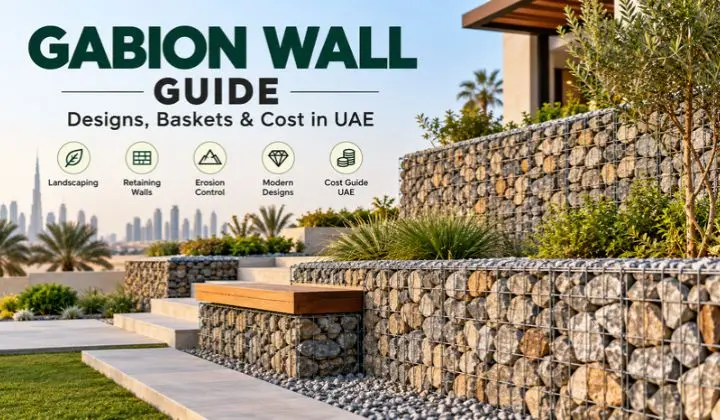
A gabion wall is a structure made from wire mesh baskets filled with stones or other suitable rock. The baskets are connected to form a wall that can be used for landscaping, soil support, erosion control, and decorative features. The wire mesh holds the stones in place, while the weight of the filled baskets helps the wall remain stable.
A gabion wall can allow water to pass through the spaces between the stones. This can reduce water pressure behind certain types of walls when the system is designed and installed correctly. However, good drainage alone does not guarantee stability. The foundation, soil, wall height, loads, and water conditions must also be considered.
Common Uses in Landscaping, Retaining Walls and Erosion Control
Gabion walls have several practical uses:
- Retaining walls: Support soil on sloped land, gardens, and some road or site boundaries.
- Erosion control: Help protect selected slopes, channels, and riverbanks from soil loss when properly designed.
- Garden boundaries: Create strong, textured boundaries around outdoor spaces.
- Decorative walls: Add a natural stone finish to gardens, entrances, and landscape features.
- Architectural features: Provide stone-filled screens, seating features, and selected exterior design elements.
The right application depends on the site and the purpose of the wall. A short decorative wall has different design needs from a tall wall holding back soil.
Types of Gabion Walls and Their Uses
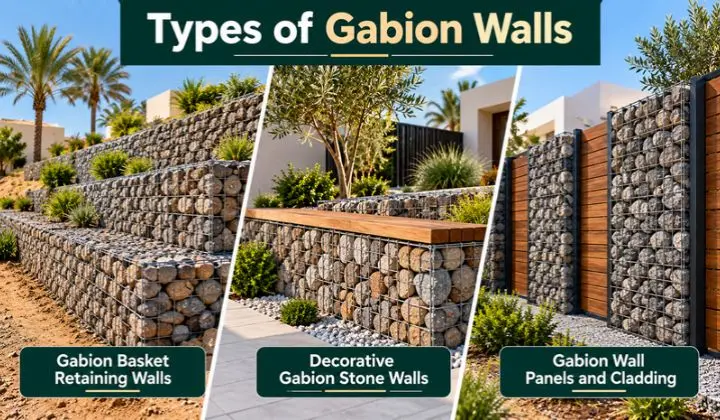
Gabion Basket Retaining Walls
A gabion basket retaining wall uses connected wire baskets filled with stone to hold back soil. Its weight helps resist the pressure of the soil behind it. The base, wall profile, drainage, and foundation must be suitable for the expected loads.
For a retaining wall, the design should consider wall height, soil strength, groundwater, nearby structures, and any traffic or building loads close to the top. Tall walls and walls supporting important structures need assessment by a qualified engineer.
Decorative Gabion Stone Walls and Garden Boundaries
Decorative gabion stone walls are used to divide outdoor areas, frame garden beds, and create visual features. The stones may be selected by colour, shape, and texture to match the surrounding landscape.
For a clean finish, choose stones that are larger than the mesh openings and suitable for the basket design. Very small stones may escape through the mesh, while poorly graded or weak stones may affect the appearance and durability of the wall.
Gabion Wall Panels and Cladding Systems
Gabion wall panels can be used for selected screening and architectural applications. Some systems are designed as self-supporting baskets, while others are cladding or façade systems that require separate structural support and approved fixing details.
These systems are not interchangeable. Before choosing a panel, check its intended use, mesh specification, stone weight, support system, and installation instructions. A decorative panel should not be assumed to work as a retaining wall.
Gabion Wall Designs, Pictures and Ideas
Modern Garden and Landscape Designs
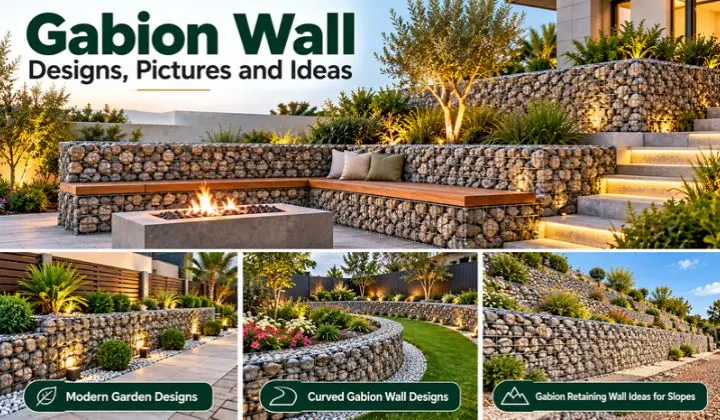
A modern gabion wall design can combine natural stone with metal, concrete, plants, or timber. Dark stones can create contrast with light paving, while lighter stones can suit bright outdoor spaces. The final look depends on stone colour, stone size, basket depth, and the pattern created during filling.
Use project photographs to compare finishes, but check that the example suits your intended use. A low garden feature may look similar to a retaining wall, even though it may not be designed to support soil pressure.
Curved Gabion Wall Designs
A curved gabion wall design can follow a garden path, border a seating area, or fit a rounded landscape feature. Curves need suitable basket dimensions, connections, and a carefully planned layout. Some projects may use shorter basket sections to create a smooth curve.
Avoid forcing standard baskets into a shape they were not designed to take. The proposed curve should be checked against the basket manufacturer’s guidance and the structural needs of the wall.
Gabion Retaining Wall Ideas for Slopes
A gabion retaining wall design for a slope may use stepped levels, a battered wall face, or several lower walls instead of one tall wall. The best option depends on the available space, soil conditions, drainage, and the height of the ground to be retained.
A stepped appearance does not automatically make a wall safe. The complete slope and all wall levels may need to be assessed together, especially where water, buildings, driveways, or neighbouring land are involved.
Gabion Wall Baskets, Mesh Panels and Stone Materials
Welded Mesh vs Woven Mesh Gabion Baskets
Welded mesh gabions use wires joined at their crossing points. They often have a regular shape and a neat appearance, which can suit decorative walls and some engineered applications when the product is properly specified.
Woven mesh gabions use wire woven into a flexible mesh. Some woven systems can adjust to small movements, but performance depends on the mesh type, wire properties, connections, and design.
Neither option is best for every project. Compare the intended use, basket dimensions, wire diameter, mesh openings, coating, expected loads, and manufacturer’s technical information before making a choice.
Wire Coatings, Basket Sizes and Mesh Openings
The wire coating helps protect a gabion basket from corrosion. Common options include galvanized wire and products with additional polymer coatings. The correct specification depends on the exposure conditions, expected service life, and the manufacturer’s tested product details.
In the UAE, heat, humidity, irrigation water, and coastal salt exposure may affect material selection. For coastal or other demanding sites, ask the supplier for corrosion-resistance information suitable for the actual location rather than relying on a general claim that the mesh is rust-proof.
Basket size and mesh opening size also matter. The basket must suit the wall layout, while the openings must retain the selected stone. Internal diaphragms, ties, and connections help the basket maintain its shape when installed according to the product instructions.
Choosing the Right Stone Fill
Stone fill affects a gabion wall’s appearance, weight, and long-term performance. Suitable fill is normally durable and sized to stay inside the mesh. Angular stones can interlock well, while rounded stones may create a different appearance and packing pattern.
Common choices include granite, basalt, limestone, and other suitable local stone. The right option depends on stone strength, weather exposure, availability, colour, and project specifications.
Do not select stone based on colour alone. Confirm its size, durability, cleanliness, and compatibility with the basket. For large projects, ask for a sample or inspect the proposed stone before ordering.
Gabion Wall Details and Structural Requirements
Basket Dimensions, Internal Dividers and Connections
A typical gabion system includes wire mesh panels, connection wires or approved fasteners, internal dividers, and stone fill. These parts work together to hold the basket in shape. The required components depend on the basket design and the manufacturer’s instructions.
A gabion wall detail drawing should show the basket dimensions, mesh type, wire coating, connections, internal dividers, stone size, and how the wall meets the ground. For retaining walls, it should also show the proposed wall profile, drainage details, foundation, and relevant site levels.
Foundation Preparation, Wall Batter and Drainage
The foundation must provide suitable support for the wall. Depending on the site, preparation may involve removing weak soil, levelling the base, and providing a properly compacted granular layer or another engineered foundation solution. The correct method depends on ground conditions and design requirements.
A wall may be built with a slight backward slope, known as wall batter, where the design calls for it. Drainage and filter materials may also be required to manage water and reduce soil movement through the stone fill. The details must suit the soil and water conditions.
There is no single foundation depth or wall-width rule that is safe for every gabion wall. A retaining wall’s design should be checked for sliding, overturning, bearing pressure, settlement, and overall slope stability where relevant.
Soil Conditions, Loads and Wall Stability
The stability of a gabion retaining wall depends on more than the weight of its stones. Soil type, groundwater, wall geometry, foundation strength, nearby loads, and construction quality all affect performance.
A driveway, building, pool, or vehicle route close to a retaining wall can add pressure that must be considered in the design. If the wall is tall, supports a slope, or sits near a structure or public area, obtain a site-specific design from a qualified engineer.
Gabion Wall Construction: Step-by-Step Installation
Site Preparation and Foundation Setup
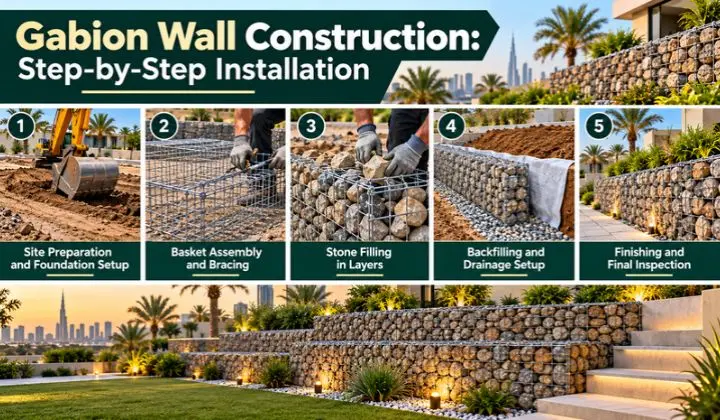
Start by checking the wall layout, levels, access, ground conditions, and drainage plan. Remove unsuitable material and prepare the foundation according to the approved design. Confirm the basket dimensions and stone supply before assembly begins.
Basket Assembly, Bracing and Stone Filling
Assemble the baskets on a suitable surface and connect the panels using the specified fasteners or lacing. Fit the required internal dividers and bracing. Fill the baskets in controlled layers, placing visible stones carefully where appearance matters and distributing the fill to help prevent bulging.
Do not overfill or leave connections loose. Keep checking the basket’s shape and follow the manufacturer’s installation instructions. The mesh and connections must be suitable for the stone weight and intended application.
Backfilling, Finishing and Final Inspection
Where the wall retains soil, place the specified filter and drainage materials before backfilling. Use suitable backfill and compact it in controlled layers without damaging the baskets. Check connections, mesh condition, wall alignment, and drainage details before the work is accepted.
For a structural retaining wall, installation should follow the approved drawings and required site inspections. A finished appearance alone does not prove that the wall is structurally safe.
Gabion Wall Design Calculation and Material Planning
Calculating Wall Dimensions and Stone Volume
For an initial estimate, calculate the wall’s approximate volume. For a simple rectangular section:
Volume = Length × Height × Depth
For example, a wall section that is 5 metres long, 1 metre high, and 0.5 metres deep has a geometric volume of 2.5 cubic metres. This is a basic planning figure, not a final stone order. Actual basket layout, internal dividers, voids between stones, and the supplier’s filling guidance affect the quantity required.
Estimating Basket Quantities and Stone Requirements
Count baskets based on the selected module sizes and the approved wall layout. Estimate stone quantities using the basket dimensions and supplier guidance, allowing for the actual filling method and any project-specific requirements.
For irregular, curved, stepped, or engineered retaining walls, use the detailed layout rather than a simple rectangular estimate. Structural design calculations must also account for soil and water forces, foundation conditions, and relevant loads; stone volume alone cannot establish wall safety.
Gabion Wall Cost and Price in the UAE
Factors Affecting Gabion Wall Prices
The gabion wall cost in the UAE depends on the wall’s dimensions, basket type, wire coating, stone selection, installation requirements, and site access. A small decorative garden wall usually has different cost requirements from a retaining wall that must support soil.
The main factors include:
- Basket materials: Mesh type, wire thickness, coating, and basket size.
- Stone fill: Stone type, size, colour, and local availability.
- Ground preparation: Excavation, levelling, foundation work, and soil removal.
- Installation labour: Assembly, bracing, stone placement, and backfilling.
- Transport and access: Delivery distance, equipment needs, and access to the work area.
- Engineering requirements: Site surveys, design drawings, and inspections where needed.
Material, Stone, Labour and Transportation Costs
When comparing a gabion wall price, check what each quotation includes. One supplier may quote only the empty baskets, while another may include stones, delivery, installation, and groundwork.
Ask suppliers to separate material and labour costs where possible. Confirm whether the quotation includes foundation preparation, drainage materials, backfill, waste removal, and any required engineering work. This makes it easier to compare offers fairly.
There is no single price that applies to every gabion wall project in the UAE. Request a quotation based on your location, wall dimensions, chosen materials, and site conditions instead of relying on a general online estimate.
What to Include When Requesting a Project Quote
To help suppliers prepare an accurate quote, provide:
- The wall’s approximate length, height, and depth.
- Photos of the site and surrounding ground.
- Your preferred stone colour and finish.
- Whether the wall is decorative or will retain soil.
- Your location and any access restrictions.
- Any available drawings or engineering details.
Vertex Fence can use these project details as a starting point when discussing fencing and outdoor project requirements. Confirm the availability of the specific gabion products or services before requesting a quotation.
Advantages, Disadvantages and Lifespan of Gabion Walls
Main Benefits of Gabion Wall Systems
Gabion walls offer several useful features when the design and materials suit the project.
- Water drainage: Spaces between stones allow water to pass through the wall, although filters and drainage details may still be necessary.
- Natural appearance: Stone colours and textures can suit gardens, pathways, and outdoor spaces.
- Flexible construction: Some gabion systems can accommodate small movements better than rigid walls, depending on their design.
- Material choice: Different suitable stones and basket finishes provide several design options.
- Multiple applications: Gabions can be used for selected retaining, erosion-control, boundary, and decorative projects.
Limitations, Maintenance and Durability
Gabion walls also have limitations. They can require a large footprint, particularly when a retaining wall needs a wide base. The stone baskets are heavy, so transporting and placing them can be difficult on sites with restricted access.
Wire corrosion is another concern, especially where materials face coastal salt, moisture, or unsuitable chemicals. Poor assembly, undersized stones, damaged mesh, or inadequate foundations can also affect performance.
The lifespan of a gabion wall depends on the wire specification, coating, stone quality, site exposure, drainage, design, and maintenance. Avoid promising a fixed service life without supporting product information and site conditions. Inspect the mesh, connections, drainage, and visible signs of movement from time to time.
Gabion Wall vs Other Retaining Wall Systems
Gabion Wall vs Concrete Retaining Wall
A gabion wall uses stone-filled wire baskets, while a concrete retaining wall relies on a concrete structure designed to resist soil pressure. Each option has different space, appearance, construction, and engineering requirements.
| Feature | Gabion wall | Concrete retaining wall |
| Appearance | Natural stone texture | Solid, uniform surface or finished cladding |
| Water movement | Water can pass through stone voids; filters and drainage may still be needed | Usually requires designed drainage behind the wall |
| Space | May need a wider base | Some designs can use less space |
| Construction | Basket assembly and stone placement | Formwork for concrete units, reinforcement where required, and curing for cast-in-place walls |
| Main design concerns | Basket strength, wall mass, foundation, and stability | Structural strength, reinforcement where required, foundation, and drainage |
The best choice depends on the site, design goals, available space, budget, and required structural performance. Neither system is automatically suitable for every project.
Gabion Walls vs Other Common Retaining Wall Options
Other options include segmental retaining wall blocks, reinforced soil systems, and natural stone walls. Segmental blocks may suit a planned modular layout, while reinforced soil systems may be useful for larger engineered slopes. Natural stone walls can provide a traditional finish but require suitable construction and design.
Compare the full installed cost, expected maintenance, available space, drainage needs, appearance, and engineering requirements before choosing a system.
Choosing the Right Wall for Your Project
For a low decorative boundary, appearance and basket specifications may be the main concerns. For a wall that supports soil, stability, drainage, foundation strength, and nearby loads become much more important.
A suitable choice should meet the project’s practical needs rather than being selected on price alone. Ask the supplier or engineer to explain the limits of the proposed system before work begins.
Choosing Gabion Walls for UAE Conditions
Corrosion Protection in Coastal and Humid Areas
Coastal air and salt exposure can increase the risk of wire corrosion. For sites near the sea or in other demanding environments, check the wire coating, product specifications, and corrosion-resistance information.
Do not assume that all galvanized or polymer-coated products offer the same protection. Select a product rated for the expected exposure and follow the manufacturer’s handling and installation guidance.
Drainage, Heat Exposure and Material Durability
UAE projects may face high temperatures, intense sunlight, occasional heavy rain, and irrigation water. Stone and wire products should be suitable for their intended outdoor use, and drainage should be planned around the actual site.
Where water can collect behind a wall, provide the drainage and filter system required by the design. Check the condition of nearby soil and avoid directing roof or surface runoff towards a retaining wall unless the system has been designed to manage it.
Selecting Suitable Materials and Professional Installation
Before choosing a gabion system, confirm the basket specifications, stone size, wire protection, connection method, and installation requirements. For retaining walls, also check the foundation, soil conditions, groundwater, and loads near the wall.
Tall walls, walls supporting buildings or driveways, and walls near public areas should receive appropriate engineering assessment. Local approval or permit requirements may also apply, depending on the site and project.
Frequently Asked Questions
Can Different Stone Colours Be Mixed in the Same Gabion Wall?
Yes. Different stone colours can create contrast, patterns, or a more natural appearance. Choose stones that meet the basket’s size and durability requirements, and plan the colour arrangement before filling the baskets.
How Can You Prevent Gabion Baskets from Bulging After Installation?
Use the correct basket specifications, internal dividers, ties, and bracing. Fill the baskets evenly in layers and follow the manufacturer’s instructions. Bulging can result from poor assembly, uneven filling, unsuitable stone sizes, or excessive loads.
Can Existing Stones or Suitable Construction Materials Be Reused in Gabion Baskets?
Sometimes. Reused stones may be suitable if they are durable, clean, correctly sized, and compatible with the basket design. Do not assume that broken concrete, bricks, or mixed construction waste are suitable. Confirm the material requirements with the designer or supplier before using reclaimed fill.
What Should You Check When Inspecting Gabion Baskets After Installation?
Check for damaged mesh, loose connections, visible bulging, missing stones, drainage problems, and signs of settlement or movement. If the wall retains soil and shows unusual movement or damage, arrange a professional inspection rather than making repairs without understanding the cause.
Can Gabion Walls Be Designed to Match a Property’s Existing Exterior Materials?
Yes. Stone colour, texture, basket depth, and layout can be selected to complement paving, walls, landscaping, and other exterior finishes. Ask for stone samples or photographs of completed projects before confirming the final design.
Final Thoughts
A well-planned gabion wall can serve a practical purpose while adding natural stone texture to an outdoor space. The key is to select suitable baskets, wire protection, and stone fill, then plan the foundation, drainage, and installation around the site.
For decorative projects, focus on appearance, dimensions, and material quality. For retaining walls, give equal attention to soil conditions, water management, wall stability, and professional design. Comparing complete project quotations and checking the specifications before ordering can help you make a more informed decision.