
 Fences
 Gates
Gates Signage & Boards
 Car Parking Shades
 Block and Foundation
 Spare Parts
Best Concrete Block for Heavy Weight Construction | Complete Guide

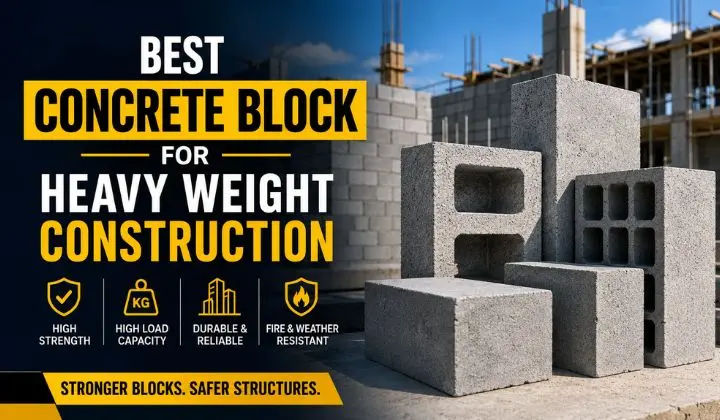
The best concrete block for heavy weight construction is one that offers high compressive strength, excellent load-bearing capacity, and long-term durability. For most structural projects, solid concrete blocks and reinforced concrete blocks are the preferred choice because they can handle heavy loads safely. The right block depends on your project type, wall design, and required strength.
If you’re building a warehouse, factory, retaining wall, foundation, or commercial building, choosing the wrong block can reduce structural performance and increase maintenance costs. This guide explains how to choose the right heavyweight concrete blocks, compares different block types, and helps you make the right decision for your project.
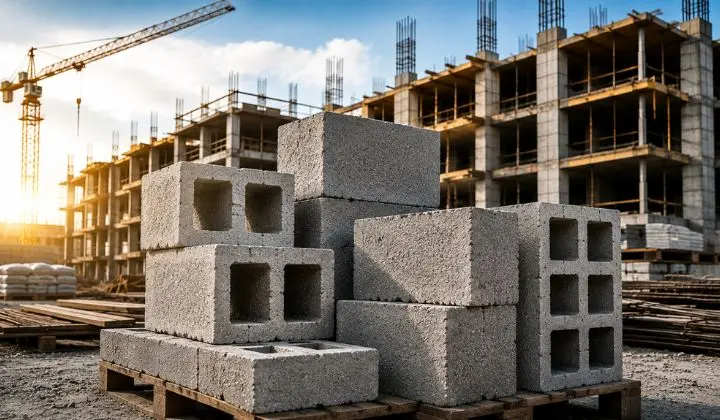
Why Heavyweight Concrete Blocks Are Best for Heavy Construction
Heavy construction projects need materials that can carry high structural loads without cracking or losing strength over time. This is where heavyweight concrete blocks perform better than lightweight alternatives.
Instead of looking only at block size or price, builders should focus on three important factors.
- Compressive Strength
- Density
- Structural Stability
These factors decide how much load a wall can safely support.
What Makes a Concrete Block Strong?
Not every concrete block is designed for heavy construction. A block becomes suitable for structural work when it has the right combination of strength, density, and quality manufacturing.
Compressive Strength
Compressive strength tells you how much pressure a block can handle before it fails. Higher strength blocks are commonly used in:
- Commercial buildings
- Warehouses
- Factories
- Foundations
- Retaining walls
For heavy structural work, always choose blocks that meet the required building standards instead of selecting blocks based only on price.
Density
The density of a block directly affects its strength.
High-density concrete masonry units (CMU) contain more compact material, making them stronger and more durable than lightweight options.
Dense blocks are commonly used for:
- Industrial buildings
- Boundary walls
- Infrastructure projects
- Structural walls
Load-Bearing Capacity
A block’s load-bearing capacity depends on more than its weight.
It is affected by:
- Compressive strength
- Block density
- Mortar
- Grout
- Steel reinforcement
- Wall design
This is why engineers never judge a block by its weight alone.
Long-Term Durability
Heavy construction is a long-term investment.
Quality structural concrete blocks resist:
- Cracking
- Moisture
- Fire
- Weather damage
This reduces maintenance costs and increases the life of the building.
Quick Comparison
| Factor | Why It Matters |
| Compressive Strength | Supports heavy structural loads |
| Density | Improves durability and stability |
| Load-Bearing Capacity | Helps walls carry more weight safely |
| Fire Resistance | Improves building safety |
| Weather Resistance | Extends building life |
Types of Concrete Blocks for Heavy Weight Construction
Choosing the right block is just as important as choosing the right design. Each block type is made for different construction needs.
Solid Concrete Blocks
Solid concrete blocks are the strongest option for heavy construction. Their high density and excellent structural stability make them suitable for projects that carry continuous loads.
They are best for:
- Foundations
- Load-bearing walls
- Retaining walls
- Industrial buildings
- Commercial buildings
Best Choice
If maximum strength is your priority, solid blocks are usually the safest option.
Hollow Concrete Blocks
Many people think hollow concrete blocks are weak, but that’s not always true.
When reinforced with steel rebar and grout, they can safely support heavy structural loads while reducing the overall building weight.
They are commonly used for:
- Structural walls
- Commercial buildings
- Boundary walls
- Multi-storey projects
Best Choice
Choose reinforced hollow blocks when you need a balance between strength and reduced structural weight.
Dense Concrete Blocks
Dense concrete blocks contain more compact material than standard blocks.
This gives them:
- Higher durability
- Better sound insulation
- Better fire resistance
- Improved bearing capacity
They perform well in demanding construction environments.
Ideal applications include:
- Warehouses
- Factories
- Infrastructure projects
- Heavy-duty boundary walls
Reinforced Concrete Blocks
For projects carrying very high loads, reinforced concrete blocks provide the highest level of structural support.
These blocks use vertical reinforcement , horizontal reinforcement , and grout-filled cores to increase strength.
They are commonly used in:
- High-rise buildings
- Industrial facilities
- Retaining walls
- Heavy structural foundations
Comparison Table
| Block Type | Strength | Best For |
| Solid Concrete Blocks | ⭐⭐⭐⭐⭐ | Foundations & Load-Bearing Walls |
| Hollow Concrete Blocks | ⭐⭐⭐⭐ | Reinforced Structural Walls |
| Dense Concrete Blocks | ⭐⭐⭐⭐⭐ | Warehouses & Industrial Projects |
| Reinforced Concrete Blocks | ⭐⭐⭐⭐⭐ | Heavy Structural Construction |
If your project requires reliable RCC Blocks for boundary walls or structural applications, choose products that meet quality standards and are suitable for your project’s load requirements.
How Much Weight Can a Concrete Block Hold?
There isn’t one fixed answer because the load-bearing capacity of a concrete block depends on several factors. A block with higher compressive strength and proper reinforced masonry can support much more weight than a standard hollow block.
Instead of asking, “How much weight can this block hold?”, ask:
- Is it a solid concrete block or hollow concrete block?
- Is it reinforced with steel rebar?
- What is the block’s compressive strength?
- Is the wall designed for structural loads?
These factors determine the actual performance of the block.
Factors That Affect Load Capacity
Compressive Strength
The higher the compressive strength, the more pressure a block can safely handle. This is one of the first specifications engineers check before selecting a block.
Block Density
High-density blocks provide better structural integrity because they contain more compact material. Dense blocks are commonly used in heavy-duty construction.
Reinforcement
Adding steel rebar, grout, and bond beams increases the strength of a wall and helps distribute loads evenly.
Wall Design
A well-designed load-bearing wall can safely carry more weight than individual blocks. Wall height, thickness, and load distribution all affect overall performance.
Building Standards
Quality blocks manufactured according to ASTM C90 or similar building codes provide more reliable strength and consistent performance.
Quick Reference Table
| Factor | Impact on Strength |
| Compressive Strength | Very High |
| Density | High |
| Steel Reinforcement | Very High |
| Mortar & Grout | Medium |
| Wall Design | Very High |
| Construction Quality | High |
How to Choose the Best Concrete Block for Your Project
The best block depends on the type of construction. Using the wrong block can increase maintenance costs and reduce the building’s lifespan.
Residential Construction
For villas and homes, solid concrete blocks are a reliable option for foundations and load-bearing walls, while reinforced hollow blocks work well for structural walls.
Commercial Buildings
Office buildings, schools, hospitals, and shopping centres need blocks with high load-bearing capacity and long-term durability. Dense concrete blocks and reinforced concrete blocks are commonly used for these projects.
Industrial Projects
Factories and warehouses carry heavy equipment and continuous loads. High-density structural concrete blocks provide the strength needed for these demanding environments.
Retaining Walls
Retaining walls face constant soil pressure. Solid concrete blocks with proper reinforced masonry offer better stability and durability.
Boundary Walls
Boundary walls should resist weather, impact, and long-term wear. High-quality cement blocks or reinforced masonry blocks are a dependable choice.
Foundation Walls
Foundations support the entire building. Choose blocks with high compressive strength, low water absorption, and proven structural performance.
Project Recommendation Table
| Project Type | Recommended Block |
| Residential Home | Solid Concrete Block |
| Commercial Building | Dense Concrete Block |
| Warehouse | Reinforced Concrete Block |
| Factory | Dense Concrete Block |
| Foundation | Solid Concrete Block |
| Retaining Wall | Solid Concrete Block |
| Boundary Wall | Reinforced Hollow Concrete Block |
Heavyweight vs Lightweight Concrete Blocks
Choosing between heavyweight and lightweight blocks depends on your project’s structural requirements.
Heavyweight blocks are built for strength, while lightweight blocks focus on easier handling and better insulation.
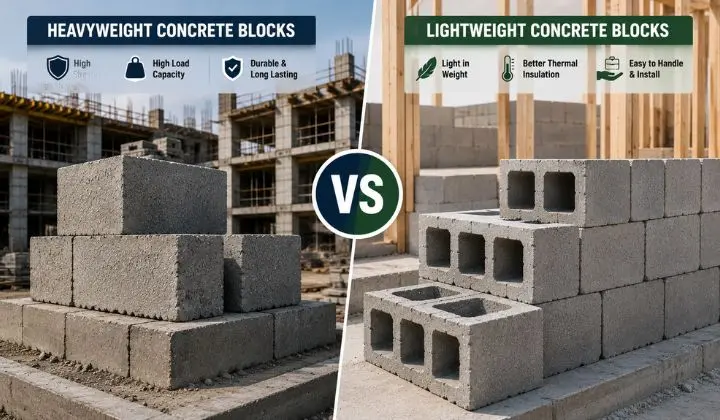
Comparison Table
| Feature | Heavyweight Concrete Blocks | Lightweight Blocks |
| Load Capacity | Excellent | Moderate |
| Compressive Strength | High | Lower |
| Durability | Excellent | Good |
| Fire Resistance | Excellent | Good |
| Thermal Insulation | Good | Excellent |
| Best Use | Structural Walls & Foundations | Partitions & Non-Load-Bearing Walls |
Which One Should You Choose?
Choose heavy-duty concrete blocks when your project involves:
- Heavy structural loads
- Warehouses
- Commercial buildings
- Foundations
- Retaining walls
- Industrial construction
Choosing lightweight blocks only when reducing structural weight or improving insulation is the main goal.
Concrete Block Sizes, Weight & Strength Explained
Block size affects installation speed, material usage, and structural performance. Selecting the right size improves both construction quality and project efficiency.
Common Concrete Block Sizes
| Block Type | Typical Application |
| Standard Concrete Masonry Unit (CMU) | Residential & Commercial Walls |
| Solid Block | Foundations & Structural Walls |
| Hollow Block | Reinforced Structural Walls |
| Dense Block | Warehouses & Industrial Buildings |
Why Block Weight Matters
A heavier block is not always stronger.
The actual performance depends on:
- Concrete mix
- Density
- Block dimensions
- Manufacturing quality
- Reinforcement
Always review the manufacturer’s technical specifications instead of judging quality by weight alone.
Expert Tips for Buying Heavyweight Concrete Blocks
Choosing the right heavyweight concrete blocks is not just about finding the lowest price. A small mistake during selection can increase repair costs and reduce the life of your building.
Use this checklist before buying.
Heavyweight Concrete Block Buying Checklist
✔ Check the compressive strength for your project.
✔ Choose the correct concrete block sizes based on your structural drawings.
✔ Make sure the blocks have consistent dimensions and a smooth finish.
✔ Ask whether the blocks meet recognised building codes and quality standards.
✔ Buy from experienced construction material suppliers with a good reputation.
✔ Compare durability and quality before comparing prices.
Common Buying Mistakes
Many construction problems start because the wrong block is selected.
Avoid these common mistakes:
Buying Only on Price
Cheap blocks may save money today, but they often lead to cracks, repairs, and higher maintenance costs later.
Ignoring Block Quality
Always inspect the concrete masonry units (CMU) before purchasing. Uneven sizes or damaged edges can affect wall alignment and strength.
Choosing the Wrong Block Type
Using lightweight concrete blocks for heavy structural work can reduce overall building performance. Match the block type with the project’s structural requirements.
Skipping Technical Specifications
Always check the block’s density, compressive strength, and intended application before placing an order.
If you’re comparing different Fence Suppliers in UAE, look for suppliers that provide quality-tested products, technical guidance, and reliable after-sales support instead of focusing only on the lowest price.
Why Heavyweight Concrete Blocks Perform Better in UAE’s Climate
Construction materials in the UAE must perform well under high temperatures and demanding weather conditions. This makes choosing durable building materials even more important.
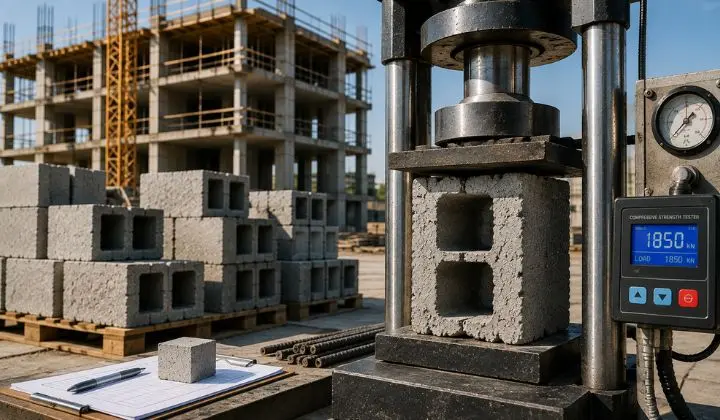
High Heat Resistance
Quality heavy-duty concrete blocks maintain their strength even in hot weather, making them suitable for residential, commercial, and industrial projects.
Better Moisture Resistance
Low water absorption helps protect walls from moisture-related damage and improves the long-term durability of the structure.
Excellent Fire Resistance
One of the biggest advantages of structural concrete blocks is their natural fire resistance. This improves building safety and supports modern construction requirements.
Long-Term Value
Although high-quality blocks may cost more initially, they usually reduce maintenance and repair costs over the life of the building. For long-term projects, quality is often more economical than choosing the cheapest option.
FAQs
How do you identify a high-quality concrete block before buying?
Check the block for uniform dimensions, smooth edges, high compressive strength, and low visible damage. Also, ask the supplier if the blocks meet recognised quality standards and are suitable for your project.
Which concrete block is better for warehouse and factory construction?
Warehouses and factories usually require dense concrete blocks or reinforced concrete blocks because they provide better structural stability and can support heavy operational loads over time.
Can heavyweight concrete blocks reduce long-term maintenance costs?
Yes. High-quality heavyweight concrete blocks resist cracking, weather damage, and moisture better than low-quality alternatives. This helps reduce repair work and extends the building’s service life.
What should you check before choosing a concrete block supplier in the UAE?
Compare product quality, manufacturing consistency, technical support, delivery reliability, and compliance with recognised standards. A trusted supplier should also help you choose the right block for your application.
Are heavyweight concrete blocks worth the higher cost?
In most structural projects, yes. Their higher strength, durability, and lower maintenance requirements often provide better long-term value than cheaper blocks that may need repairs or replacement sooner.
Conclusion
Choosing the Best Concrete Block for Heavy Weight Construction is about more than selecting the heaviest block. The right choice depends on compressive strength, load-bearing capacity, density, project requirements, and overall construction quality.
For foundations, warehouses, retaining walls, factories, and commercial buildings, solid concrete blocks, dense concrete blocks, and reinforced concrete blocks remain the most reliable options. Selecting the right block from the beginning improves structural safety, reduces maintenance costs, and increases the lifespan of the building.
If you’re looking for a trusted Best Fence Manufacturer in UAE, choose a company that provides high-quality concrete products, consistent manufacturing standards, and expert support to help you select the right solution for your project. Vertex Fence is committed to supplying reliable construction products that meet the needs of residential, commercial, and industrial developments.