
 Fences
 Gates
Gates Signage & Boards
 Car Parking Shades
 Block and Foundation
 Spare Parts
Best Type of Fencing for Horses: Safe & Durable Options for Every Horse Farm

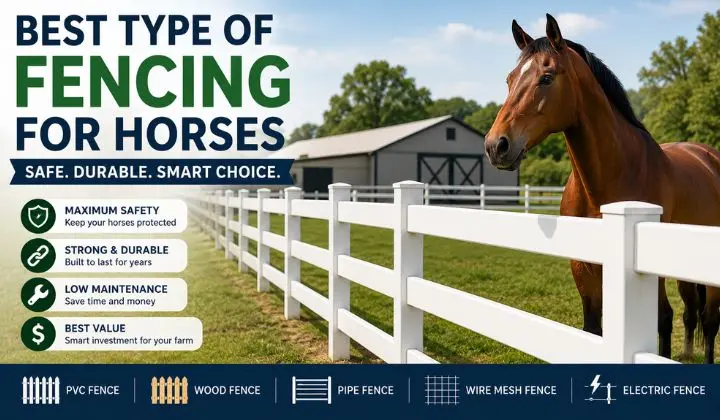
Choosing the best type of fencing for horses is one of the most important decisions for any horse owner. A good horse fence does much more than create a boundary. It protects your horses, keeps them safely inside the horse pasture, and reduces the risk of injuries caused by weak or unsafe fencing.
Today, there are many horse fencing options available, including PVC Horse Fence, Wood Fence, Wire Mesh Fence, Pipe Fence, and Electric Horse Fence. Each option has different strengths, maintenance needs, and costs. The right choice depends on your horse breed, property size, budget, and local weather conditions.
A well-planned horse fencing system should provide excellent horse safety, clear fence visibility, long-term durability, and reliable horse containment. It should also be easy to maintain and strong enough to handle daily pressure from active horses.
In this guide, you’ll learn how to choose the best horse fencing materials, compare the most popular fencing options, avoid common mistakes, and find a solution that keeps your horse farm safe for years.
What Is the Best Type of Fencing for Horses?
The best type of fencing for horses depends on your property and your horses’ needs. For most owners, PVC Horse Fence and Wire Mesh Fence are the best choices because they offer excellent horse protection, high visibility, strong durability, and lower maintenance than many traditional fencing materials.
If you want a fence that is safe, long-lasting, and easy to maintain, PVC fencing is an excellent option. If you have a large horse pasture or horse grazing area, a properly installed Wire Mesh Fence provides strong horse containment while allowing horses to move comfortably.
There is no single fence that fits every situation. The best solution depends on your horses’ behavior, your budget, your property’s layout, and how much maintenance you are willing to do.
What Makes a Good Horse Fence?
A good horse fence should protect your horses every day without creating new risks. Before choosing any horse fencing type, it is important to understand the features that make a fence safe, durable, and practical.
Safety & Horse Protection
Safety should always come first. Horses can run, kick, lean, or accidentally bump into a fence. A quality horse fence should have smooth surfaces, strong rails, and secure fence posts that reduce the chance of injury.
Avoid fencing with sharp edges or damaged parts because they can cause cuts and serious injuries. A safe horse enclosure should help protect both young and adult horses while giving them enough space to move naturally.
Visibility
Good fence visibility is just as important as strength. Horses need to clearly see the fence, especially when running or playing in the horse paddock.
Solid rails, bright colors, and clearly visible fencing materials help prevent collisions. Thin wires without visible markers are harder for horses to notice and may increase the risk of accidents.
Strength & Durability
A reliable horse fencing system should handle daily use and changing weather without losing its strength. Materials with high durability, good weather resistance, and strong UV resistance usually last much longer and require fewer repairs.
The quality of the fence rails, fence posts, and installation also affects the overall lifespan of your fencing. Even the best materials will not perform well if they are installed incorrectly.
Maintenance Requirements
Every horse fence needs regular care, but some materials require much less work than others. Choosing a low-maintenance fence can save both time and money over the years.
Inspect your fence line, gate, and wire mesh regularly for loose parts, damage, or wear. Small repairs made early can prevent expensive replacements later and keep your horses safe.
Cost & Long-Term Value
Many horse owners focus only on the purchase price, but long-term value is more important. A fence with higher upfront costs may last much longer and need fewer repairs, making it the better investment.
When comparing horse fencing materials, consider installation, maintenance, expected fence lifespan, repair costs, and overall performance. A durable fence often provides better value than a cheaper option that needs frequent maintenance.
Best Types of Fencing for Horses
There is no single horse fence that works for every property. The best option depends on your horse breed, horse behavior, budget, property size, and maintenance expectations. Below are the most popular horse fencing types and where each one performs best.
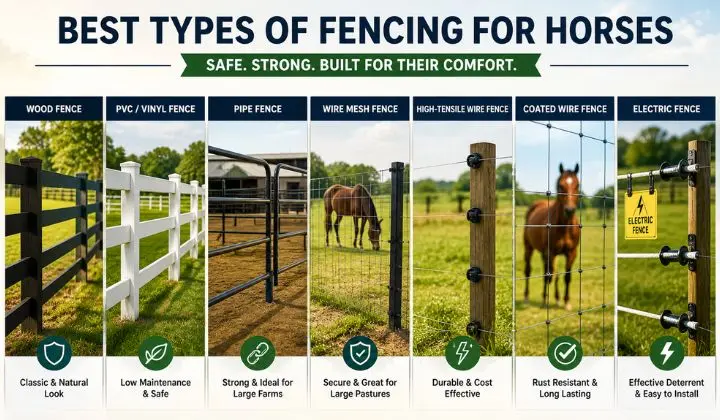
Wood Fence
A Wood Fence is one of the oldest and most trusted horse fencing options. It has wide boards that are easy for horses to see, reducing the chance of collisions. Many horse owners also like its natural appearance because it gives a traditional look to a horse farm.
However, wood needs regular maintenance. Rain, sunlight, insects, and moisture can cause the boards to crack, warp, or rot over time. Loose nails and broken boards should be repaired immediately because they can become a safety hazard.
Pros
- Excellent visibility
- Traditional appearance
- Easy to repair
- Strong when properly installed
Cons
- High maintenance
- Can rot or crack
- Requires painting or staining
Best For: Small to medium horse farms where appearance is important.
PVC / Vinyl Fence
A PVC Horse Fence, also known as a Vinyl Horse Fence, is one of the safest choices for modern horse properties. It has smooth rails without sharp edges, helping reduce the risk of injuries if a horse leans or bumps against the fence.
Unlike wood, PVC does not rot, rust, or attract insects. It offers excellent weather resistance, UV resistance, and long-term durability. Although the upfront cost is higher, it usually requires less maintenance, making it a cost-effective investment over time.
Pros
- Excellent horse safety
- Very low maintenance
- Long fence lifespan
- High visibility
- Resistant to harsh weather
Cons
- Higher installation cost
- Damaged rails usually need replacement instead of repair
Best For: Owners looking for a long-lasting and low-maintenance fence.
Pipe Fence
A Pipe Fence is built using heavy-duty steel rails, making it one of the strongest fencing options available. It is commonly used on professional riding schools, breeding facilities, and large horse farms because it can handle heavy use.
The fence provides excellent horse containment and lasts for many years with proper maintenance. However, installation should always be done correctly because poor welding or weak posts can reduce its strength.
Pros
- Extremely strong
- Long-lasting
- Suitable for large horses
- Low maintenance
Cons
- Higher cost
- Professional installation required
Best For: Large equestrian centers and breeding farms.
Wire Mesh Fence
A Wire Mesh Fence is one of the most practical choices for large horse pastures and horse grazing areas. Modern mesh fencing is designed to reduce the risk of horses getting their heads or legs caught while still providing strong security.
Choosing the correct mesh size is important. Smaller openings improve horse protection, while strong posts keep the fence line stable for years.
Pros
- Excellent horse containment
- Good visibility
- Durable
- Suitable for large properties
Cons
- Incorrect mesh size may increase injury risk
- Professional installation recommended
Best For: Large horse pastures and open grazing land.
High-Tensile Wire Fence
A High-Tensile Wire Fence uses strong high-tensile wire stretched between secure fence posts. It is durable and requires fewer repairs than many traditional wire systems.
Because thin wire is harder for horses to see, visible rails or markers should always be added. This improves fence visibility and reduces accidental contact.
Pros
- Long lifespan
- Strong
- Cost-effective for large properties
- Low maintenance
Cons
- Lower visibility without markers
- Proper tension is essential
Best For: Large farms where long fence lines are required.
Coated Wire Fence
A Coated Wire Fence combines the strength of steel wire with a protective coating that improves both safety and durability. The coating helps prevent rust while making the wire more visible to horses.
This fencing works well in different climates and requires less maintenance than bare wire.
Pros
- Better horse safety
- Rust resistant
- Weather resistant
- Longer lifespan
Cons
- More expensive than standard wire fencing
Best For: Horse owners who want extra durability without choosing solid rail fencing.
Electric Fence
An Electric Horse Fence acts as a psychological barrier instead of a physical one. Horses quickly learn to respect the fence after experiencing a safe, low-voltage shock.
It should not be the only fencing system used for valuable horses or areas close to public roads. Most experts recommend using it as a secondary barrier together with a PVC Horse Fence or Wire Mesh Fence.
Pros
- Affordable
- Easy to install
- Ideal for temporary grazing
- Helps prevent fence damage
Cons
- Requires regular power checks
- Not suitable as the only barrier in every situation
Best For: Temporary paddocks and rotational grazing.
Horse Fencing Comparison: Safety, Cost, Durability & Maintenance
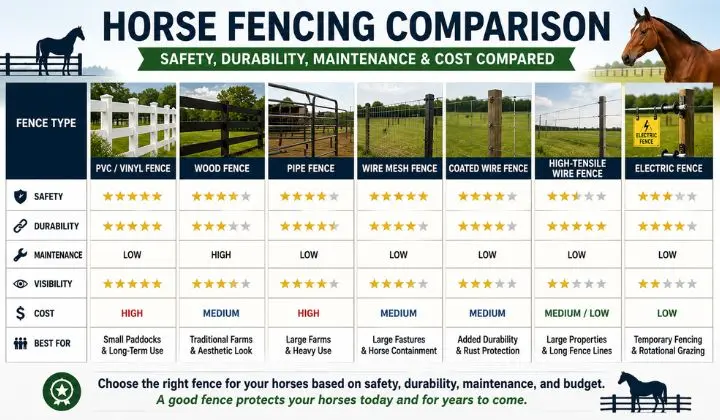
| Fence Type | Safety | Durability | Maintenance | Cost | Best For |
| PVC / Vinyl Fence | ⭐⭐⭐⭐⭐ | ⭐⭐⭐⭐⭐ | Low | High | Long-term horse safety |
| Wire Mesh Fence | ⭐⭐⭐⭐⭐ | ⭐⭐⭐⭐☆ | Low | Medium | Large pastures |
| Pipe Fence | ⭐⭐⭐⭐☆ | ⭐⭐⭐⭐⭐ | Low | High | Professional horse farms |
| Wood Fence | ⭐⭐⭐⭐☆ | ⭐⭐⭐☆☆ | High | Medium | Traditional farms |
| Coated Wire Fence | ⭐⭐⭐⭐☆ | ⭐⭐⭐⭐☆ | Low | Medium | Extra durability |
| High-Tensile Wire Fence | ⭐⭐⭐☆☆ | ⭐⭐⭐⭐⭐ | Low | Medium | Long fence lines |
| Electric Fence | ⭐⭐⭐☆☆ | ⭐⭐⭐⭐☆ | Low | Low | Temporary grazing |
Which Horse Fence Is Best for Different Situations?
The best type of fencing for horses is not the same for every property. A fence that works well for a small horse paddock may not be the right choice for a large horse pasture. Before making a decision, think about your horses, land size, budget, and long-term maintenance.
Best for Horse Farms
For large horse farms, a Pipe Fence or Wire Mesh Fence is often the best solution. Both provide excellent horse containment, strong durability, and reliable performance for daily use. They can safely manage multiple horses while requiring less maintenance than traditional fencing.
Best for Small Paddocks
If you have a small horse paddock, a PVC Horse Fence is an excellent choice. It offers high visibility, smooth rails, and strong horse protection. It also gives your property a clean and professional appearance while requiring very little maintenance.
Best for Large Pastures
Large horse pastures need fencing that can cover long distances without becoming difficult to maintain. A quality Wire Mesh Fence supported by strong fence posts is a practical option because it combines safety, strength, and cost-effectiveness.
Adding an Electric Horse Fence as a secondary barrier can also help keep horses away from the main fence and reduce damage.
Best Low-Maintenance Option
If you want a fence that requires very little work throughout the year, PVC Horse Fence is one of the best investments. It does not rust, rot, or require painting. With regular fence inspection, it can provide many years of reliable performance.
Best Budget-Friendly Choice
If your budget is limited, a Coated Wire Fence or a properly installed High-Tensile Wire Fence can provide a good balance between cost and performance. However, make sure the fence has good visibility to reduce the risk of injuries.
Horse Fencing Options to Avoid
Not every fencing material is suitable for horses. Some options may seem affordable at first, but they can increase the risk of injuries and higher repair costs later.
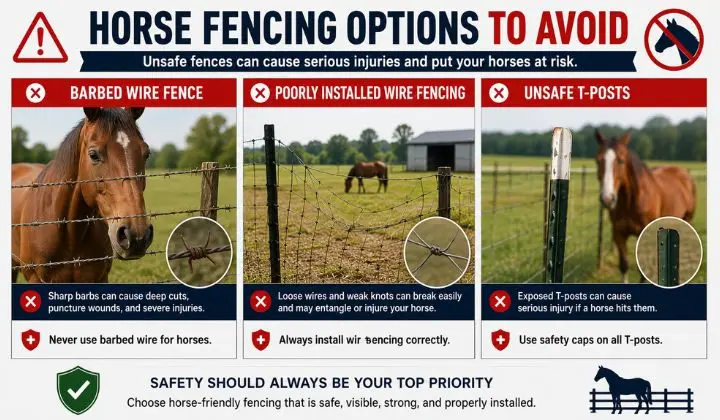
Barbed Wire
Barbed Wire should never be used for horse fencing. Horses can panic, run into the fence, and suffer deep cuts or serious injuries. Even calm horses may accidentally get caught in the sharp barbs.
Poorly Installed Wire Fencing
A Wire Fence that is loose, damaged, or incorrectly installed can become dangerous. Sagging wires and weak fence posts reduce horse safety and increase maintenance costs.
Unsafe T-Posts
Steel T-posts without protective caps can cause serious injuries if a horse bumps into them. If T-posts are used, they should always be covered with approved safety caps and installed correctly.
Common Horse Fencing Mistakes to Avoid
Even the best horse fencing materials cannot perform well if they are installed incorrectly. Avoiding these mistakes will improve horse welfare, reduce repair costs, and extend your fence lifespan.
Choosing the Wrong Fence Height
A fence that is too low allows horses to jump over it, while one that is too high increases unnecessary costs. Choose the fence height based on your horse’s size and breed.
Ignoring Visibility
Thin wires without visible markers are difficult for horses to see. Always choose fencing that offers good fence visibility.
Incorrect Post Spacing
Poor spacing between fence posts weakens the entire horse fencing system. Proper post placement improves stability and long-term durability.
Delaying Fence Repairs
Small cracks, damaged rails, or loose wires should never be ignored. Early repairs help maintain horse protection and prevent more expensive problems later.
Skipping Regular Inspections
Many owners only inspect their fence after damage occurs. Regular fence inspection helps identify problems before they become safety risks.
How to Choose the Right Horse Fence
Choosing the right horse fence starts with understanding your property’s needs. Think about the number of horses, available space, climate, and maintenance budget before making a final decision.
If you own energetic horses, choose fencing with excellent visibility and strong horse containment. For larger farms, durability and easy maintenance should be top priorities. Weather conditions also matter because fencing exposed to intense sun, heavy rain, or strong winds should offer excellent UV resistance and weather resistance.
Working with the Best Fence Suppliers in UAE can help you select the right fencing solution for your property. Experienced suppliers can recommend materials that match your budget while providing long-term horse safety, reliable performance, and professional installation.
Horse Fence Maintenance Tips
Choosing the best type of fencing for horses is only the first step. Regular maintenance keeps your horse fence safe, extends its fence lifespan, and reduces expensive repairs. A well-maintained fence also protects your horses by preventing accidents caused by loose rails, damaged posts, or broken wires.
Here are a few simple maintenance practices every horse owner should follow:
Inspect Your Fence Regularly
Walk around your horse pasture or horse paddock at least once a month. Check for loose fence posts, broken rails, damaged wire mesh, rust, or leaning sections. Finding small problems early helps prevent major repairs later.
Keep the Fence Line Clear
Remove weeds, bushes, and fallen branches growing along the fence line. Overgrown plants can hide damage, trap moisture, and shorten the life of your fencing materials.
Tighten Loose Components
Loose bolts, screws, rails, or wires reduce the strength of your horse fencing system. Tighten or replace worn hardware before it becomes a safety issue.
Clean PVC and Vinyl Fences
If you have a PVC Horse Fence, wash it occasionally with water and mild soap. This removes dirt and keeps the fence looking clean without affecting its weather resistance.
Protect Wooden Fences
A Wood Fence should be painted or sealed when needed. This helps prevent rot, moisture damage, and insect attacks while increasing its durability.
Test Electric Fences
If you use an Electric Horse Fence, check the voltage regularly. Remove grass or vegetation touching the wire because it can reduce performance.
Expert Recommendation
Every horse property is different, but safety should always be your top priority. A fence should not only keep your horses inside the property but also reduce the risk of injuries while lasting for many years.
For most horse owners, a PVC Horse Fence offers the best combination of horse safety, visibility, durability, and low maintenance. If you manage a larger horse pasture, a professionally installed Wire Mesh Fence can provide excellent horse containment while remaining cost-effective.
If you need expert guidance or a custom fencing solution, working with the Best Fence Manufacturer in UAE can help you choose materials that match your property, climate, and budget. Professional installation also improves long-term performance and reduces future maintenance costs.
At Vertex Fence, we recommend selecting fencing based on your horses’ behavior, property size, and long-term goals rather than choosing the cheapest option. Investing in quality materials today can save money while providing better protection for your horses in the future.
Frequently Asked Questions
Can horses damage PVC fencing?
Yes, but it is uncommon when high-quality PVC Horse Fence is installed correctly. PVC fencing is designed to handle normal pressure from horses and usually returns to its original shape after minor impacts.
How much space should be left between horse fence posts?
The ideal spacing depends on the fencing material and terrain. Most professional installations follow the manufacturer’s recommendations to provide maximum strength and long-term durability.
What color fencing is easiest for horses to see?
White PVC fencing and other light-colored fences usually provide the best visibility. Clear visibility helps horses recognize boundaries and reduces the risk of collisions.
Can one fence type be used for different horse breeds?
Yes. However, larger or more active horse breeds may require stronger fencing with additional support. Choosing the correct fence height and material improves horse protection for every breed.
How often should horse fencing be inspected?
Inspect your horse fence at least once every month and always after storms or strong winds. Regular inspections help identify loose rails, damaged posts, or worn sections before they become serious problems.
Does the UAE climate affect the lifespan of horse fencing?
Yes. High temperatures, strong sunlight, and occasional sandstorms can affect fencing materials over time. Choosing products with excellent UV resistance and weather resistance helps improve long-term performance in the UAE.
Conclusion
The best type of fencing for horses depends on your property’s layout, budget, and the needs of your horses. While there is no one-size-fits-all solution, the right fence should always provide excellent horse safety, strong horse containment, long-lasting durability, and clear visibility.
For most horse owners, PVC Horse Fence is the best choice because it combines safety, low maintenance, and long service life. Wire Mesh Fence is another excellent option for large horse pastures, while Pipe Fence remains a reliable solution for commercial farms and equestrian facilities.
Before making your final decision, compare different horse fencing materials, consider long-term maintenance costs, and choose a solution that will protect your horses for years to come. A well-designed fencing system is not just a property boundary, it is an investment in the safety, health, and well-being of your horses.