 Fences
 Gates
 Signage & Boards
 Car Parking Shades
 Block and Foundation
 Spare Parts
7 Key Benefits of GI Pipes for Fencing and Construction

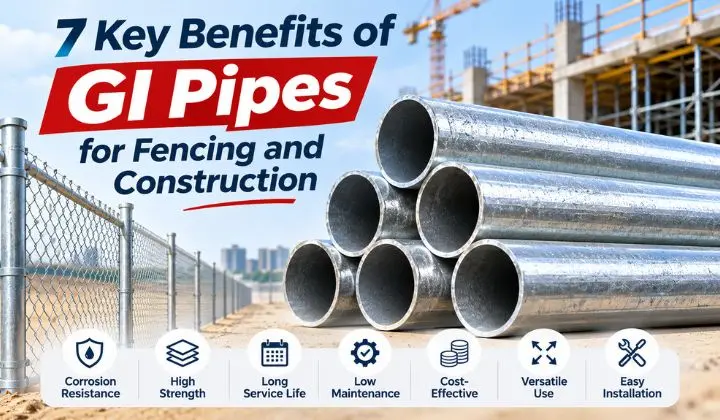
GI pipes are widely used in construction, fencing, agriculture and other outdoor projects because they combine the strength of steel with the protection of a zinc coating. This makes them a practical choice for applications where pipes are exposed to moisture, changing weather and regular use.
The main benefits of GI pipes include corrosion resistance, good structural strength, lower maintenance needs and long-term value. However, their performance depends on factors such as pipe dimensions, steel quality, zinc coating and installation conditions.
For fencing projects, GI pipes can serve as fence posts, horizontal supports and backstay supports. Choosing the right pipe helps create a stable fence structure that can handle the expected site conditions.
What Are GI Pipes and How Does Galvanization Work?
GI stands for Galvanized Iron, but most modern GI pipes are made from steel coated with zinc. This protective layer helps reduce direct contact between the steel and the surrounding environment.
The zinc coating is important because ordinary steel can develop rust when exposed to water and oxygen. Galvanization helps protect the metal and improves its suitability for many outdoor applications.
How Hot-Dip Galvanization Works
In hot-dip galvanization, prepared steel is dipped into molten zinc. The zinc forms a protective coating over the steel surface. The finished pipe is then cooled and inspected.
This process creates two types of protection:
- Barrier protection: The zinc layer separates the steel from moisture and oxygen.
- Sacrificial protection: Zinc corrodes before the exposed steel in many conditions, helping protect small damaged areas around the coating.
The level of protection depends on the coating quality, thickness, environment and condition of the finished pipe.
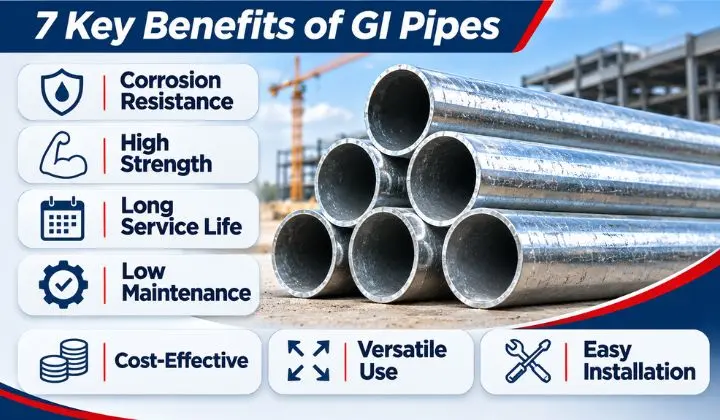
7 Key Benefits of GI Pipes
1. Excellent Corrosion and Rust Resistance
One of the main advantages of galvanized pipes is their ability to resist corrosion. The zinc coating acts as a protective layer between the steel and the surrounding environment.
This makes galvanized steel pipes useful in outdoor fencing, construction frameworks and other installations exposed to rain or humidity. However, GI pipes are not completely rustproof. Deep scratches, damaged coatings and harsh environmental conditions can increase the risk of corrosion.
2. High Mechanical and Structural Strength
GI pipes use steel as their base material, which provides useful mechanical strength and structural strength for many applications.
Their load-bearing capacity depends on the steel grade, pipe diameter, wall thickness and overall design. In fencing systems, properly selected pipes can support fence panels and help maintain the structure’s stability.
Galvanization protects the surface; it does not automatically make the base steel stronger.
3. Long Service Life in Suitable Conditions
A good-quality GI pipe can provide a long service life when it has a suitable zinc coating and is used in the right environment.
Its durability depends on moisture, pollution, salt exposure, coating thickness and maintenance. A pipe installed in a dry inland location may experience different conditions from one used near the sea.
For this reason, there is no single lifespan that applies to every GI pipe or project.
4. Lower Maintenance Requirements
GI pipes generally need less frequent surface protection than uncoated mild steel pipes because their zinc coating provides corrosion protection.
Regular inspection is still important. Look for damaged coatings, rust spots, loose connections and areas where water may collect. Early repairs can help prevent further damage and support a longer service life.
5. Cost-Effective for Long-Term Projects
The initial price of a GI pipe may be higher than some uncoated steel alternatives. However, its protective coating can reduce the need for frequent painting and corrosion-related repairs.
This can make GI pipes a cost-effective option when the full project cost is considered. Buyers should compare the pipe’s quality, coating, dimensions, expected service conditions and maintenance needs rather than choosing only by purchase price.
6. Versatility Across Different Applications
GI pipes are used in several industries because they combine steel strength with corrosion protection. Common applications include:
- Construction: Structural supports, frameworks and selected building installations.
- Fencing: Fence posts, support pipes and perimeter fencing systems.
- Agriculture: Irrigation-related structures and greenhouse frameworks.
- Industrial projects: Equipment supports and general structural applications.
- Infrastructure: Selected outdoor installations and utility support structures.
These different GI pipe applications make them useful for projects with different requirements.
7. Easy Fabrication and Installation
GI pipes can be cut, drilled and joined using suitable tools and methods. Their availability in different diameters and wall thicknesses also helps contractors select products for different project needs.
However, cutting and welding can damage the zinc coating. Welding galvanized steel can also release hazardous zinc-containing fumes. Proper ventilation, suitable protective equipment and safe welding procedures are essential. Damaged coating should be repaired using an appropriate method after fabrication.
What Are the Common Uses of GI Pipes?
The purpose of GI pipes depends on their size, thickness, material quality and intended application.
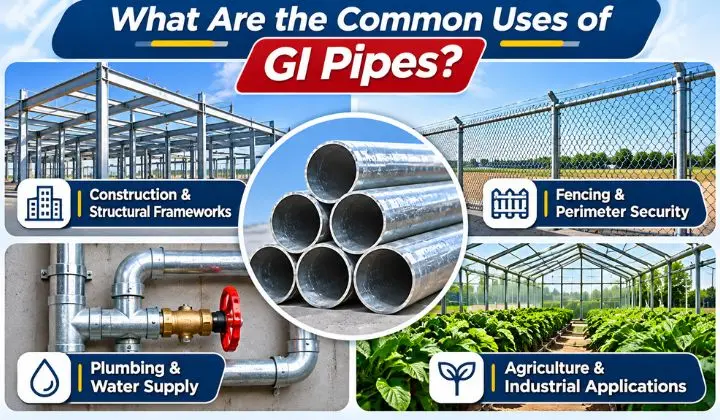
Construction and structural frameworks: GI pipes can be used in selected support structures, railings, frames and outdoor installations where corrosion protection is needed.
Fencing and perimeter security: They are commonly used as fence posts and support members in residential, commercial and construction-site fencing.
Plumbing and water supply: GI pipes have been used in water distribution systems. However, their suitability depends on water quality, local regulations and the condition of the internal zinc coating. They are not automatically the best choice for every plumbing system.
Agriculture and industry: They can support greenhouse structures, irrigation-related installations and selected industrial frameworks.
How Are GI Pipes Used in Fencing Systems?
GI pipes are important components in many fencing systems. They provide support for fence panels and help transfer structural forces towards the ground.
GI Fence Posts and Horizontal Support Pipes
GI fence posts are installed vertically to support the fencing panels. Horizontal fence support pipes connect the posts and help hold the panels in position.
The correct pipe dimensions and spacing depend on fence height, panel weight, wind exposure and installation requirements.
Temporary Construction Fencing
Temporary construction fencing is used to control site access and separate working areas from public spaces. GI pipes can provide support for these panels when selected according to the fence design and site conditions.
Backstay Supports, GI U-Channels and Clamp Couplers
Backstay supports help provide additional stability to fence posts, especially where wind exposure or panel height creates extra structural demands.
Other useful components include GI U-channel supports and clamp couplers, which help connect and secure fencing parts. Concrete foundation blocks provide a stable base for suitable temporary fencing systems.
The correct combination of posts, braces, clamps and foundations is important. A strong pipe alone cannot guarantee a stable fence.
What Are the Different Types of GI Pipes?
GI pipes may be classified by wall thickness and weight under particular standards. For example, some Indian pipe standards use the following categories:
- Light Class A: A lighter pipe category for applications with suitable lower-duty requirements.
- Medium Class B: A medium-weight category for general applications.
- Heavy Class C: A heavier category with greater wall thickness than the lighter categories under the relevant standard.
These classifications are not universal. Always check the applicable standard, dimensions and manufacturer specifications before selecting a pipe for a project.
How to Choose the Right GI Pipe for Your Project
Choosing the right GI pipe is important for safety, durability and project performance. A pipe that works for a small fence may not be suitable for a large commercial or industrial installation. Consider these factors before purchasing.
Pipe Diameter and Wall Thickness
Check the pipe diameter, outside dimensions and pipe wall thickness before selecting a GI pipe. Larger dimensions or thicker walls may provide greater capacity in some designs, but the correct choice depends on the expected loads and structural calculations.
For fencing, consider the fence height, panel weight and distance between support posts. These details help determine the pipe size needed for the installation.
Steel Grade and Zinc Coating Thickness
Check the steel grade and zinc coating thickness in the product specifications. The steel grade affects the pipe’s mechanical properties, while the zinc coating helps protect its surface from corrosion.
Do not assume every GI pipe has the same coating quality. Ask the supplier for product details, applicable standards and inspection records.
Structural Loads and Project Requirements
For fencing, consider fence height, panel weight, wind exposure, post spacing, bracing and foundation design. A solid fence panel can experience greater wind pressure than an open design.
Pipe selection should match the actual structural requirements rather than relying on thickness alone. For larger installations, a qualified professional should assess the complete fence structure.
Environmental Conditions and Quality Inspection
Consider humidity, moisture, pollution, coastal exposure and possible contact with corrosive materials. Inspect the surface for bare patches, damaged coating, uneven finishes and visible defects.
For larger projects, request manufacturer documentation and relevant quality test reports. These checks help you understand what you are buying.
Are GI Pipes Suitable for the UAE Climate?
GI pipes can be suitable for many UAE construction and fencing applications, but local environmental conditions must be considered. Heat, humidity and coastal salt exposure can affect the condition of metal products over time.
Performance in Heat and Humidity
High temperatures do not automatically make GI pipes unsuitable. However, moisture and humidity can contribute to corrosion, especially when the protective coating is damaged.
Proper material selection, good installation practices and regular inspection help reduce these risks.
Coastal Areas and Salt Exposure
Coastal locations can be more challenging because salt in the air can increase the rate of corrosion. Coastal corrosion may become a concern when pipes are exposed to salty moisture for long periods.
For these locations, pay extra attention to zinc coating quality, suitable protective systems and regular inspections. A coating suitable for an inland project may not provide the same level of protection in a coastal environment.
Protecting GI Pipes from Outdoor Corrosion
Use suitable protective measures for the project’s environment. Inspect exposed surfaces, repair damaged coating and avoid installation details that trap water inside or around the pipes.
These simple steps can help maintain the condition of outdoor fencing and support structures.
GI Pipes vs Other Materials: Which Is Better?
No single material is best for every project. The right choice depends on strength, corrosion exposure, cost and intended use.
GI Pipe vs PVC Pipe
GI pipe vs PVC pipe is mainly a comparison between metal strength and lightweight plastic construction.
GI pipes are generally more suitable for applications requiring metal support and structural strength. PVC pipes are lightweight and do not rust, making them useful for many plumbing and water distribution applications.
The better option depends on the intended use. For structural fencing supports, GI pipes are generally more suitable than ordinary PVC pipes.
GI Pipe vs MS Pipe
GI pipe vs MS pipe compares galvanized steel with uncoated mild steel. Both can provide steel-based strength, but GI pipes have a zinc coating that helps reduce corrosion.
MS pipes may need suitable painting or another protective system when used outdoors. GI pipes are often a practical choice where corrosion protection is important.
GI Pipe vs Tubular Steel
A tubular steel product is a hollow steel section that may be round, square or rectangular. GI pipe usually refers to a round galvanized steel pipe, although galvanized hollow sections are also available.
The choice depends on section shape, dimensions, steel grade, coating and structural requirements. Square or rectangular sections may suit some structural designs, while round pipes may suit other applications.
GI Pipe vs Stainless Steel
Stainless steel offers strong corrosion resistance in many environments, but it usually costs more than standard galvanized steel.
GI pipes can be a cost-effective option for many general outdoor applications. Stainless steel may be more suitable where the environment or hygiene requirements justify the higher cost.
GI Pipe vs Aluminium
Aluminium is lighter than steel and naturally forms a protective oxide layer. GI pipes generally provide a different balance of weight, strength and cost.
For fencing, the choice should consider panel design, structural loads, installation conditions and the required service life.
What Are the Limitations of GI Pipes?
Despite their advantages, GI pipes have some limitations. Understanding them helps buyers select the right material and avoid problems during installation.
- Coating damage: Scratches and damaged zinc layers can expose the steel to corrosion.
- Harsh environments: Heavy salt exposure or aggressive conditions can shorten coating life.
- Weight: Steel pipes may require more effort to transport and install than lightweight alternatives.
- Fabrication precautions: Cutting and welding require proper safety measures and suitable coating repair.
- Application limits: Not every GI pipe is suitable for every pressure, temperature or structural requirement.
For better results, choose pipes according to the project specifications and environmental conditions.
Frequently Asked Questions
Can GI Pipes Be Used for Both Temporary and Permanent Fencing?
Yes. GI pipes can be used in both temporary and permanent fencing, provided their dimensions, coating and structural design match the project. Temporary fencing may use removable support systems, while permanent installations need foundations and connections designed for long-term conditions.
What Happens If the Zinc Coating on a GI Pipe Gets Damaged?
Damaged zinc coating exposes the steel underneath to moisture and oxygen, increasing the risk of rust. Small damaged areas should be inspected and repaired using a suitable zinc-rich repair coating or an approved repair method.
How Can You Check the Quality of a GI Pipe Before Buying?
Check its dimensions, wall thickness, surface finish and zinc coating. Ask the supplier for product specifications, applicable standards and relevant inspection or test reports. Avoid selecting pipes based only on appearance or price.
Can GI Fence Posts Corrode Inside the Pipe?
Yes. Water can enter an open pipe and become trapped inside, creating conditions for internal corrosion. Suitable post caps, drainage details and correct installation can help reduce this risk.
Does a Thicker GI Pipe Always Make a Fence Stronger?
No. Wall thickness is only one factor. Pipe diameter, steel grade, post spacing, fence height, wind exposure, bracing and foundation design also affect overall fence stability. The complete fencing system must be considered.
Conclusion
The main benefits of GI pipes include corrosion protection, useful structural strength, lower maintenance needs and versatility across construction and fencing applications. Their zinc coating helps protect the steel, making them a practical choice for many outdoor projects.
However, good performance depends on choosing the correct pipe dimensions, coating quality and installation method. Environmental conditions, especially coastal exposure in the UAE, should also be considered.
For fencing projects, the right combination of GI posts, support pipes, backstays, clamps and foundations is essential. Vertex Fence provides GI fencing solutions and related support components for projects that require a practical and durable fencing system.
Choose materials according to your site conditions and project requirements for better long-term performance.