
 Fences
 Gates
 Signage & Boards
 Car Parking Shades
 Block and Foundation
 Spare Parts
What Is a Sand Fence? Types, Uses & UAE Guide

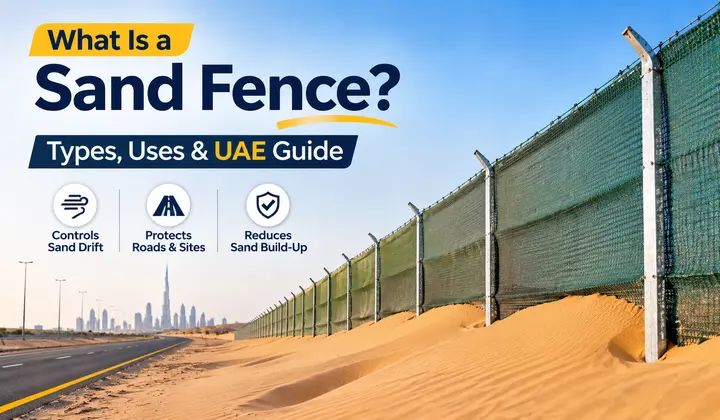
Strong winds can carry loose sand across roads, construction sites and open land in the UAE. Over time, this sand can block access routes, reduce road visibility and collect around buildings and outdoor equipment. These problems can increase cleaning and maintenance work, especially in exposed areas.
A sand fence helps manage this movement by changing airflow and encouraging loose sand to settle in a planned area. Depending on its design, a sand barrier fence can help protect highways, railway corridors, construction projects and industrial sites.
However, not every fencing system serves the same purpose. Mesh barriers help control wind-blown sand, while camel fences mainly control animal movement. Understanding these differences helps project owners choose the right sand fencing system for their site.
What Is a Sand Fence and Why Is It Used in the UAE?
A sand fence is a barrier designed to manage the movement of wind-blown sand. It usually consists of mesh, netting or wire supported by posts. Many designs allow some air to pass through their openings instead of blocking the wind completely.
As wind passes through the barrier, its speed can decrease near the fence. This encourages some moving sand to settle instead of travelling further.
In the UAE, a sand control fence can help manage sand movement around:
- Highways and roads: Helps reduce sand build-up near road edges and driving lanes.
- Construction sites: Controls drifting sand around access routes and working areas.
- Railway corridors: Helps protect exposed transport infrastructure.
- Solar farms: Manages sand accumulation around equipment and access areas.
- Industrial facilities: Helps reduce sand movement towards selected outdoor areas.
A sand fence cannot prevent every sand-related problem. Its performance depends on its design, position, surrounding conditions and maintenance.
How Does a Sand Fence Control Drifting Sand?
A sand drift fence works by changing airflow near the ground. This can reduce the wind’s ability to carry loose sand and encourage particles to settle around the barrier.
It Changes Wind Speed
When wind reaches a porous barrier, some air passes through its openings while the rest moves around and over it. This changes airflow and can reduce wind speed near the fence.
The amount of open space in the barrier is called fence porosity. It plays an important role in how a porous sand fence performs.
Moving Sand Begins to Settle
Wind carries sand particles along the ground and through the air. When airflow slows down, it may carry fewer particles. Some sand then settles near the barrier.
This process is known as sand deposition. It explains how a sand trapping fence helps manage drifting sand.
Sand Collects in a Planned Area
Over time, sand may build up around the fence. This can reduce the amount reaching a protected location.
However, excessive sand accumulation can cover part of the barrier and affect its performance. Regular inspection helps identify when the fence needs attention.
A sand fence does not stop all drifting sand. Strong winds, changing wind directions and poor placement can reduce its effectiveness.
Types of Sand Fencing Systems Used in UAE
Different projects need different types of sand fencing systems. The right option depends on whether the main purpose is to trap sand, protect a boundary or control animal movement.
HDPE Mesh Sand Barrier Fence
An HDPE mesh sand barrier uses perforated high-density polyethylene netting. Its openings allow controlled airflow while helping reduce wind speed near the barrier.
This type of sand barrier system may suit selected roadside, construction and open-land applications. Check the mesh opening size, UV protection and weather resistance before choosing it for long-term outdoor use.
Galvanized Wire Sand Fence
A galvanized wire fence uses steel wire protected by a zinc coating. This coating helps protect the metal against corrosion during outdoor exposure.
Depending on its design, the system may use mesh or a supported wire arrangement. Its ability to trap sand depends on the actual openings and structure. Not every galvanized wire fence works as a windbreak.
PVC-Coated Sand Fencing
A PVC-coated wire fence has a protective plastic layer over its metal wire. This adds another layer of protection against outdoor exposure and can improve the appearance of the fencing.
Its suitability depends on the coating quality, wire material and site conditions. Check the product specifications before choosing this option.
Camel Fence or Sand Animal Fence
A camel fence, also called a sand animal fence, mainly controls the movement of camels and other large animals. It commonly uses horizontal tensioned wires supported by posts.
Some suppliers use the terms sand fence and camel fence together, but they do not always describe the same product. A mesh windbreak helps manage airflow and sand movement, while a camel fence provides a physical boundary.
Sand Fence Design and Specifications: What Should You Consider?
The performance of a sand fence design depends on more than its material. Height, opening size, porosity, support structure and positioning all affect how the barrier works.
Fence Height and Ground Clearance
Fence height affects the area where the barrier can influence airflow and where sand may collect. A higher fence is not automatically better. Its height should suit the wind conditions, expected sand build-up and support structure.
Ground clearance also matters. An unsuitable gap may allow sand to pass underneath the barrier.
Mesh Size and Opening Percentage
The openings in a mesh determine how much air can pass through it. This is closely linked to fence porosity.
The correct opening size depends on the intended application, wind exposure and sand movement. A suitable design balances airflow, sand trapping and wind pressure.
Wire Diameter and Material Coating
Wire diameter affects the strength of a wire-based system. The coating also matters because outdoor fencing faces exposure to heat, moisture and dust.
Compare the wire specifications, coating type and maintenance requirements before selecting a material.
Post Spacing and Structural Support
Posts support the fencing and help it withstand wind forces. Their material, spacing, foundations and fixings should match the fence height and expected loads.
A weak support structure can lead to leaning posts, loose mesh or damaged sections. A suitable sand fence system must account for the complete structure, not just the mesh or wire.
Wind Direction and Fence Orientation
Wind direction is one of the most important factors in sand fence design. A barrier placed without considering the main direction of sand movement may not protect the intended area effectively.
A site assessment should identify prevailing winds, exposed ground and locations where sand regularly collects.
Where Are Sand Fences Used in the UAE?
A sand fencing system can support different projects where wind-blown sand creates ongoing problems.
Highways and Roadside Areas
Sand can collect along road edges and move across driving lanes during windy conditions. A properly positioned sand barrier fence can help manage this movement and reduce repeated sand build-up in selected areas.
Railway and Transport Corridors
Open railway routes may face sand movement from nearby desert land. Sand drift control measures can help protect exposed sections and reduce the need for repeated sand removal.
Construction and Infrastructure Projects
Construction sites often have exposed soil and open access routes. Temporary or permanent sand barriers can help manage drifting sand around working areas and site entrances.
Solar Farms and Industrial Facilities
Large open facilities may face sand accumulation around outdoor equipment, access roads and boundary areas. A suitable sand control fence can help manage sand movement where site conditions allow.
Farms and Desert Boundary Areas
Some projects need fencing to control animal movement as well as protect property boundaries. In these situations, a camel fence or another animal barrier may be more suitable than a porous windbreak.
Sand Fence Installation in UAE: Process and Site Requirements
Good sand fence installation starts with understanding the site. The fence must suit the ground, wind exposure and purpose of the project.
Site Inspection and Wind Assessment
First, identify where the sand comes from, which direction it usually travels and which areas need protection. Check the ground conditions and available installation space as well.
Selecting Materials and Support Posts
Choose suitable mesh, wire, posts and fixings according to the expected conditions. For outdoor use, consider corrosion protection and resistance to UV exposure.
Ground Preparation and Foundations
The ground must provide suitable support for the posts. Foundation requirements depend on soil conditions, fence height and expected wind loads.
Fence Positioning and Installation
Position the barrier according to the site’s wind patterns and protection requirements. Correct tension, alignment and support help reduce the risk of damage.
Before preparing a quotation, measure the planned fence line and record gates, slopes and obstacles. Our guide to measuring a site for fence installation explains what information to collect before planning a fencing project.
Final Inspection
After installation, check the posts, mesh, fixings and overall alignment. Prepare a maintenance plan, especially for locations with regular strong winds.
Sand Fence Maintenance in UAE: How to Keep It Effective
Heat, dust, strong winds and sand accumulation can affect outdoor fencing over time. Regular sand fence maintenance helps identify problems before they become more serious.
Important checks include:
- Posts and supports: Look for leaning posts, loose fittings and damaged foundations.
- Mesh and wire: Check for tears, broken sections, loose wires and damaged connections.
- Protective coatings: Inspect galvanized and PVC-coated materials for damage or corrosion.
- Sand accumulation: Check whether collected sand covers too much of the barrier.
- After strong winds: Inspect the fence for movement, structural damage and loose fixings.
Maintenance needs depend on the material, site exposure and amount of sand movement.
How to Choose the Right Sand Fence for Your Project
Choosing the right sand fence UAE solution starts with identifying the problem you want to manage. A system designed to trap wind-blown sand may not suit animal containment.
Consider these points before making a decision:
- Define the purpose: Decide whether you need sand trapping, animal control or boundary protection.
- Assess wind conditions: Understand the main wind direction and areas where sand collects.
- Select suitable materials: Compare HDPE mesh, galvanized wire and PVC-coated options.
- Check design specifications: Consider fence height, porosity, mesh openings and support requirements.
- Plan for maintenance: Choose a system that you can inspect and maintain under local site conditions.
- Request a technical assessment: Share site details and project requirements before confirming the final design.
Vertex Fence provides fencing supply and installation services across the UAE. For a sand-control project, confirm the required system and technical specifications before selecting a product or arranging installation.
Conclusion: Choosing the Right Sand Fence in UAE
Drifting sand can create challenges for roads, construction sites, industrial facilities and other exposed areas across the UAE. A well-planned sand fence can help manage this movement by slowing airflow and encouraging sand to settle in selected locations. The best solution depends on the project’s purpose, wind direction, material choice, fence design and maintenance needs. Understanding the difference between a mesh sand barrier and a camel fence also helps prevent the wrong system from being selected.
Before starting a project, assess the site and confirm the required specifications. The right design can make sand management more practical and reduce repeated maintenance work.
Frequently Asked Questions About Sand Fences
What Is the Difference Between a Sand Fence and a Camel Fence?
A sand fence is generally designed to manage wind-blown sand by changing airflow and encouraging sand to settle. A camel fence mainly acts as a physical boundary to control animal movement.
How Far Should a Sand Fence Be Installed from a Road?
There is no single distance that works for every road. The correct position depends on wind direction, available land, road layout, expected sand movement and local project requirements.
Does a Sand Fence Stop Sand Completely?
No. A sand fence helps reduce and manage drifting sand, but strong winds can still carry particles beyond the barrier. Its performance depends on suitable design, placement and maintenance.
How Long Does a Sand Barrier Fence Last in Desert Conditions?
Its service life depends on the material, coating, installation quality and exposure to wind and heat. Regular inspections can help identify damage and extend the useful life of the system.
Can a Sand Fence Be Installed in Areas with Strong Winds?
Yes, but the design must account for wind pressure and ground conditions. Suitable posts, foundations, materials and structural support are important for exposed locations.