
 Fences
 Gates
 Signage & Boards
 Car Parking Shades
 Block and Foundation
 Spare Parts
Camel Fence in UAE: Uses, Specifications & Benefits

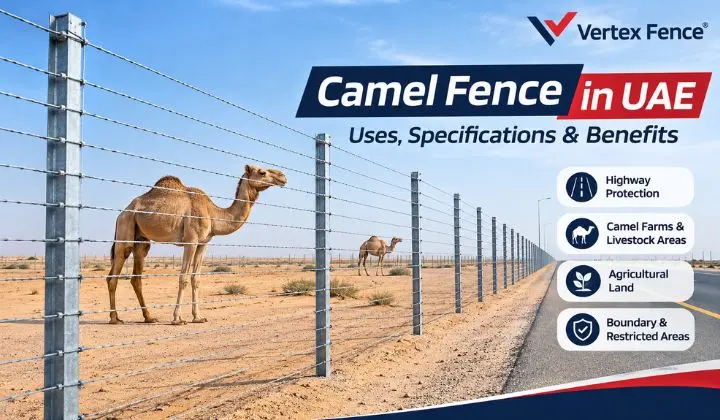
Camel fencing plays an important role in protecting highways, farms, and open land across the UAE. Camels can move across large areas, and their movement near busy roads can create serious safety risks. A properly designed camel fence helps control animal movement and creates a clear boundary between roads, livestock areas, and nearby land.
A suitable fencing system must handle outdoor conditions, animal pressure, and long-term exposure to heat and moisture. This is why many projects use high-tensile galvanised steel wire, strong support posts, and protective zinc coatings.
However, not every camel fence has the same design. Its height, wire arrangement, post spacing, and materials depend on the location and purpose of the project. This guide explains camel fence systems, their specifications, common uses, and the main points to consider before choosing one in the UAE.
What Is a Camel Fence and How Does It Work?
A camel fence is a strong wire fencing system designed to control camel movement and protect roads, farms, and other restricted areas. It usually consists of several horizontal steel wires fixed to vertical support posts. The number of wires and their spacing depend on the required fence design.
Unlike a basic boundary fence, camel fencing must consider the size, strength, and behaviour of the animals it needs to contain. A weak structure or unsuitable wire arrangement may not provide reliable protection.
Main Components of a Camel Fence
A typical camel fencing system may include the following components:
- Line posts: These support the horizontal wires along straight sections of the fence.
- Intermediate posts: These provide additional support between main structural posts.
- Straining posts: These help maintain wire tension over longer fence sections.
- Corner posts: These provide support where the fence changes direction.
- End posts: These secure the wire system at the starting and ending points.
- Bracing posts: These help support straining and corner posts against pulling forces.
- Dropper bars: These help maintain the required arrangement and spacing between horizontal wires.
Each component has a specific job. The correct combination helps the fence remain stable and maintain its intended shape.
How Does Camel Fencing Control Animal Movement?
A camel fence creates a physical barrier using multiple horizontal wires. The wire arrangement reduces open gaps and makes it harder for animals to pass through the boundary.
The fence also needs suitable post strength and wire tension. If the wires become loose or the posts move, gaps may develop. These problems can reduce the fence’s ability to control animal movement.
For this reason, wire spacing, fence height, and post positioning should be selected according to the animals, ground conditions, and project requirements.
Types of Camel Fence Systems
Camel fencing is available in different designs. The right option depends on whether the project needs a highway barrier, livestock boundary, or general land enclosure.
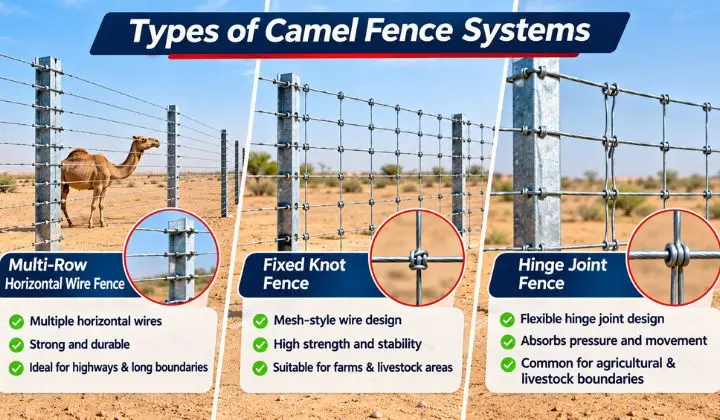
1. Multi-Row Horizontal Wire Camel Fence
This is a common design for highway and desert boundary projects. It uses several horizontal wires fixed between steel posts. Some published configurations use 16 horizontal wire rows, while others use different arrangements.
The main benefit is its simple structure, which can cover long distances. Its design can also be adjusted according to the required height, wire spacing, and site conditions.
2. Fixed Knot Fence
A fixed knot fence uses vertical and horizontal wires joined with strong knots. This creates a mesh-style structure that can help contain different livestock animals.
It is often considered for farms, open fields, and livestock enclosures. The wire strength, mesh openings, and overall height should match the animals and the project’s needs.
3. Hinge Joint Fence
A hinge joint fence connects horizontal and vertical wires through flexible joints. This design allows some movement when pressure is applied to the fence.
It is commonly used for agricultural and livestock boundaries. However, its suitability for camel containment depends on its construction, wire strength, spacing, and installation quality.
Camel Fence Specifications and Technical Details
The specifications of a camel fence affect its strength, stability, and service life. Buyers should check the complete technical design instead of selecting a fence only by its price or appearance.
There is no single specification that applies to every camel fencing project in the UAE. The correct design depends on the site, purpose, ground conditions, and required level of protection.
Wire Diameter and Material
Many camel fence systems use high-tensile galvanised steel wire because it offers good strength for outdoor fencing applications.
A wire diameter of 3.15 mm appears in some published multi-row camel fence configurations. Other systems may use different wire sizes depending on their design.
Important wire details include:
- Wire diameter: The thickness of the steel wire.
- Tensile strength: The amount of pulling force the wire can withstand before breaking.
- Steel type: High-tensile or other specified steel grades.
- Surface protection: The coating used to protect the wire against corrosion.
These details should be confirmed in the supplier’s technical specification.
Fence Height and Number of Wire Rows
Fence height determines how much of the boundary is covered. Some published camel fence designs use heights of around 2 metres or 2.5 metres, but the required height depends on the project.
The number of horizontal wire rows also affects the size of the openings between wires. A design with 16 rows is one available configuration, not a universal requirement.
Posts, Spacing and Support Structure
Steel posts hold the fence in position and support the tension created by the horizontal wires.
Some designs use SHS steel posts (Square Hollow Section), while others use IPE steel sections. Intermediate, straining, corner, and end posts may have different sizes because they carry different loads.
Post spacing must also be selected carefully. For example, a 7.5-metre span appears in some published designs, but actual spacing should follow the approved project specification and site conditions.
Galvanisation and Corrosion Protection
Outdoor fencing needs protection against rust, especially when exposed to moisture, soil contact, and changing weather conditions.
Hot-dip galvanisation applies a zinc coating to steel components to help protect them against corrosion. Electro-galvanising is another coating method, but the coating process and protection level can differ.
For UAE projects, buyers should check the specified coating method, zinc coating requirements, and relevant quality documents before placing an order.
Common Applications of Camel Fencing in UAE
Camel fencing is used in different outdoor projects where animal movement needs to be controlled. Its design should match the location and the risks that the fence is expected to manage.
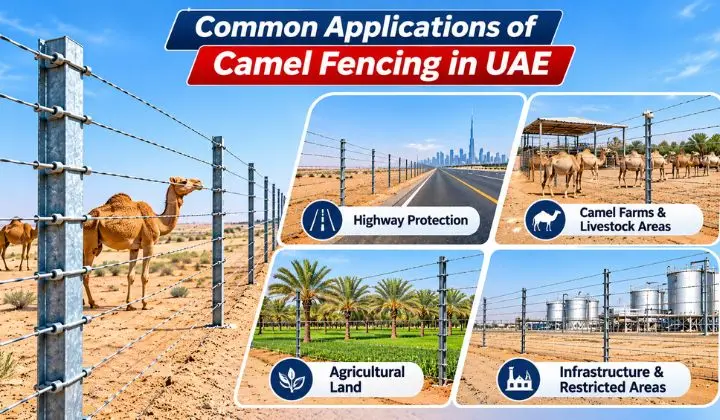
Highway and Desert Road Protection
Camels moving onto busy roads can create dangerous situations for drivers and animals. A properly planned highway camel fence helps create a physical boundary along roads and reduces the chance of animals entering restricted road areas.
Camel Farms and Livestock Enclosures
Camel farms need secure boundaries to manage animal movement and separate different areas. A suitable fence can help define grazing spaces, access points, and restricted sections.
Agricultural Land and Open Boundaries
Farm owners may use camel fencing to protect crops, control livestock movement, and mark property boundaries. The wire arrangement should be selected according to the animals and the level of protection required.
Infrastructure and Restricted Areas
Fencing may also be used around selected infrastructure sites, utility areas, and other restricted locations. In these projects, the fence design should consider access control, site layout, and any additional safety requirements.
Camel Fence Installation: Key Steps and Requirements
Proper installation is important for the strength and stability of a camel fence. Even good-quality materials may not perform well if the posts are poorly positioned or the wires are not tensioned correctly.
The installation method depends on the fence design, soil conditions, project length, and site requirements.
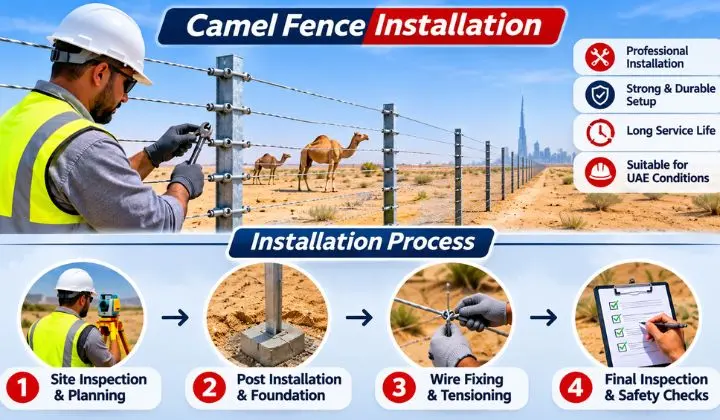
1. Site Inspection and Ground Preparation
The first step is to inspect the installation area. The team should check the ground level, soil condition, slopes, access points, and total boundary length.
For desert locations, loose or sandy soil may require special attention when planning post foundations. The installation plan should also identify corners, gates, and changes in the fence direction.
2. Post Positioning and Foundation Installation
After preparing the site, workers mark the positions of intermediate, straining, corner, and end posts.
Posts must be properly aligned and secured. Their foundation depth and support method should depend on soil conditions, fence height, and the loads expected on the structure.
3. Wire Fixing and Tensioning
Once the posts are in position, horizontal wires are attached according to the approved design. Each wire must have suitable tension to reduce sagging and maintain the required spacing.
Wire tensioning should be controlled carefully. Excessive tension can place unnecessary pressure on posts and connections, while loose wires may create unwanted gaps.
4. Final Inspection and Safety Checks
The final inspection should cover:
- Post alignment and stability
- Wire tension and spacing
- Secure wire connections
- Corner and end-post support
- Damaged galvanised coating
- Gates and access points
These checks help identify installation problems before the fence is put into use.
Camel Fence Panels vs Traditional Wire Fencing
When searching for camel fence panels, buyers should understand that not every camel fencing system uses ready-made panels.
Some systems use prefabricated wire mesh panels, while highway camel fences often use multiple horizontal wires connected to steel posts. These designs have different structures and installation requirements.
Galvanised Wire Mesh Panels
Galvanised wire mesh panels are manufactured in fixed or customised sizes. They can be useful for smaller enclosures, selected farm areas, and projects that need separate panel sections.
Their dimensions, mesh openings, wire thickness, and support frames should match the intended application.
Traditional Horizontal Wire Fencing
Traditional camel fencing uses horizontal steel wires fixed between support posts. It is commonly considered for long boundaries and highway applications.
This system can be planned around different site lengths and layouts. However, it requires suitable posts, wire tensioning, and proper structural support.
Which Option Should You Choose?
The right choice depends on the project.
- Choose mesh panels when the design requires separate framed sections.
- Consider horizontal wire fencing for long boundaries where a post-and-wire structure is suitable.
- Check animal size, required fence height, ground conditions, and maintenance needs before making a decision.
A supplier should review the site and technical requirements before recommending a system.
Camel Fence Price in UAE: What Affects the Cost?
The camel fence price in UAE depends on more than the cost of steel wire. Every project has different dimensions, materials, ground conditions, and installation needs.
For this reason, it is better to request a project-based quotation instead of relying on a general price estimate.
1. Wire Quality and Material Specifications
Wire diameter, tensile strength, steel quality, and galvanisation affect the material cost. A heavier or specially specified wire may increase the overall price.
2. Fence Height and Number of Wire Rows
A taller fence or one with more horizontal wire rows usually requires additional materials. The total fence length also has a direct effect on the quantity of wire and support posts needed.
3. Posts, Foundations and Accessories
Post size, steel section, bracing, dropper bars, concrete foundations, and other accessories can change the project cost.
Ground conditions may also affect foundation work. For example, difficult or loose soil may require a different installation approach.
4. Transportation and Installation Costs
Delivery distance, site access, labour, equipment, and installation requirements can all affect the final quotation.
When comparing offers, check whether the price includes materials, transportation, foundations, installation, and any additional accessories.
Camel Fence vs Stock Proof Fence vs Chain Link Fence
These fencing systems may look similar in purpose, but they have different structures and uses. Choosing the right one depends on the type of boundary and the level of protection required.
| Feature | Camel Fence | Stock Proof Fence | Chain Link Fence |
| Main design | Multiple horizontal wires | Knotted wire mesh | Interlinked wire mesh |
| Common applications | Highways and camel boundaries | Farms and livestock areas | Commercial and general boundaries |
| Structure | Steel posts and tensioned wires | Horizontal and vertical wires | Mesh fabric and support posts |
| Design flexibility | Project-specific | Available in different mesh designs | Available in different mesh sizes |
Which Fencing System Is Best for Your Project?
A camel fence may be suitable for long road boundaries and areas where camel movement needs to be controlled.
A stock proof fence may be a better option for general livestock containment, depending on animal size and mesh design.
A chain link fence is often considered for commercial properties, compounds, and general perimeter protection.
The best option should be selected according to the project’s purpose, site conditions, and technical requirements rather than appearance alone.
Camel Fence Maintenance and Inspection
Regular inspection helps maintain the condition and performance of a galvanised camel fence. Although galvanised steel provides corrosion protection, outdoor fencing still needs attention over time.
Check Wire Tension and Connections
Inspect horizontal wires for sagging, damage, or loose connections. Loose wires should be corrected according to the manufacturer’s instructions.
Inspect Posts and Foundations
Check intermediate, straining, corner, and end posts for movement, bending, or damage. Also inspect the surrounding ground for erosion or signs of foundation movement.
Check Galvanised Coating and Corrosion
Look for damaged zinc coating, exposed steel, and signs of rust. Any repairs should follow suitable coating and maintenance procedures.
The inspection frequency should depend on site conditions, weather exposure, and the project maintenance plan.
How to Choose the Right Camel Fence Supplier in UAE
Choosing a reliable camel fence supplier in the UAE is important for getting a system that meets your project requirements. Buyers should review the supplier’s technical knowledge, material quality, and ability to understand the site.
Consider these points before making a decision:
- Technical specifications: Ask for wire diameter, tensile strength, fence height, post dimensions, and wire spacing.
- Material quality: Check the steel grade and galvanisation details.
- Project customisation: Confirm whether the fence can be designed for your required length, layout, and ground conditions.
- Installation support: Ask about installation methods, foundations, and quality checks.
- Quotation details: Make sure the quotation clearly lists materials, accessories, delivery, and installation costs.
Vertex Fence can be included in your project research when comparing fencing solutions and discussing your requirements. Always confirm the available product specifications and services before placing an order.
Frequently Asked Questions About Camel Fence
Why Is Camel Fencing Commonly Used Along UAE Highways?
Camel fencing helps create a boundary between highways and nearby desert or open land. It is designed to reduce the risk of camels entering road areas, which can help improve safety for drivers and animals.
What Is the Difference Between Camel Fence and Sand Fence?
The term camel fence generally refers to fencing designed for animal containment and boundary protection. Sand fence usually refers to a barrier designed to control windblown sand and reduce sand movement. Despite the similar names, they serve different purposes.
Can Camel Fencing Be Installed on Uneven Desert Terrain?
Yes, camel fencing can be planned for uneven terrain, but the installation design must account for slopes, soil conditions, and changes in ground level. Post positioning, foundations, and wire alignment may need adjustments after a site inspection.
Can Camel Fencing Be Customised for Different Project Lengths and Layouts?
Yes. A camel fence system can be designed around different project lengths, boundary shapes, fence heights, wire rows, and post arrangements. The final configuration should be based on site conditions and the required level of protection.
What Information Should I Provide When Requesting a Camel Fence Quotation?
Provide the project location, approximate fence length, required height, intended application, site layout, and installation requirements. If you have preferred wire specifications or drawings, share those too. This information helps the supplier prepare a more accurate quotation.