
 Fences
 Gates
 Signage & Boards
 Car Parking Shades
 Block and Foundation
 Spare Parts
Bamboo Fencing: Privacy Fence Ideas, Designs & Benefits

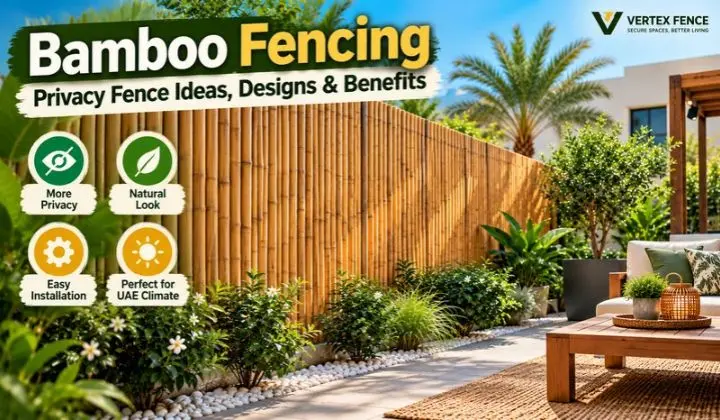
Bamboo fencing is a popular choice for people who want a natural look and more privacy in their outdoor spaces. It can be used in gardens, on balconies, around patios, and as a cover for an existing fence. Its natural colour and simple design can make an outdoor area feel warmer and more inviting.
However, bamboo fencing is not the best choice for every property. Its lifespan depends on the material quality, weather exposure, installation method, and maintenance. In the UAE, strong sunlight, high temperatures, humidity, and wind are important factors to consider before buying a fence.
This guide explains the main bamboo fence designs, installation options, privacy levels, and other practical details. It will help you decide whether bamboo is suitable for your property or whether another fencing material would be a better long-term choice.
What Is Bamboo Fencing?
Bamboo fencing is a screen or fence made from natural bamboo poles, thin bamboo reeds, or prepared bamboo panels. The pieces are usually held together with wire or another fixing system. Some products come in rolls that can be attached to an existing fence or suitable support structure.
A bamboo privacy fence can help block direct views from nearby homes, neighbouring gardens, or outdoor walkways. The level of privacy depends on how closely the bamboo pieces are placed together.
People commonly use outdoor bamboo fencing for:
- Garden boundaries and decorative screens
- Balcony and patio privacy
- Covering an old or unattractive fence
- Screening outdoor seating areas
- Adding a natural look to pergolas and garden features
Bamboo fencing is mainly a screening and decorative option. It should not be treated as a strong security barrier unless the complete fence system has been designed and tested for that purpose.
Types of Bamboo Fencing
Different bamboo products suit different spaces. Before choosing one, check its dimensions, construction, fixing method, and expected use.
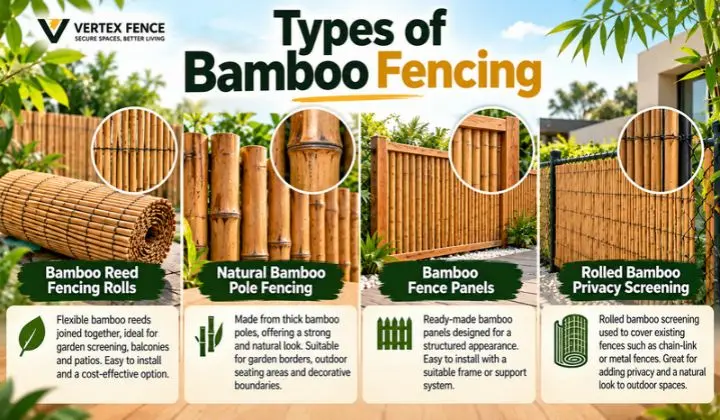
1. Bamboo Reed Fencing Rolls
Bamboo reed fencing is made from thin bamboo reeds joined together to form a flexible screen. It is often sold as a roll, which makes it useful for covering long sections of an existing fence.
It can work well for garden screening, balconies, and patios. However, small gaps may remain between the reeds, so privacy can vary by product.
2. Natural Bamboo Pole Fencing
Natural bamboo pole fencing uses thicker bamboo canes placed side by side. It creates a more noticeable natural look than a thin reed screen.
This style may suit garden borders, outdoor seating areas, and decorative boundaries. Check how the poles are joined and supported, as thicker bamboo does not automatically mean the complete fence is stronger.
3. Bamboo Fence Panels
Bamboo fence panels are ready-made sections designed for installation in a suitable frame or support system. They can be useful when you want a more structured appearance rather than a flexible roll.
Before purchasing panels, confirm their height, width, weight, and fixing requirements. Also check whether the frame and support posts are included in the price.
4. Rolled Bamboo Privacy Screening
Rolled bamboo fencing is often used to improve the appearance of an existing chain-link, metal, or wooden fence. The screen is attached to the supporting fence rather than acting as a complete boundary structure on its own.
This option can be practical when the existing fence is in good condition. A damaged or weak support fence should be repaired before adding a new screen.
Is Bamboo Fencing a Good Choice?
Bamboo fencing can be a good choice when your main goals are privacy, decoration, and a natural outdoor appearance. It is also useful when you want to improve an existing fence without replacing the entire structure.
Benefits of Bamboo Fencing
- Natural appearance: Bamboo adds a warm, natural look to gardens and patios.
- Flexible use: Many roll products can be fitted to suitable existing fences.
- Privacy screening: Closely spaced bamboo pieces can reduce direct views into outdoor spaces.
- Decorative value: Bamboo can work with plants, wooden furniture, and garden features.
- Different styles: Rolls, poles, and panels offer several design choices.
The final result depends on the product and installation. For example, a loosely arranged screen may provide less privacy than a tightly fitted panel.
Bamboo is also not automatically maintenance-free. Natural material can fade, split, or deteriorate when exposed to outdoor conditions for long periods.
Bamboo Fence Design Ideas for Outdoor Spaces
The right bamboo fence design should match the space, privacy level, and amount of weather exposure. Here are a few practical ideas.
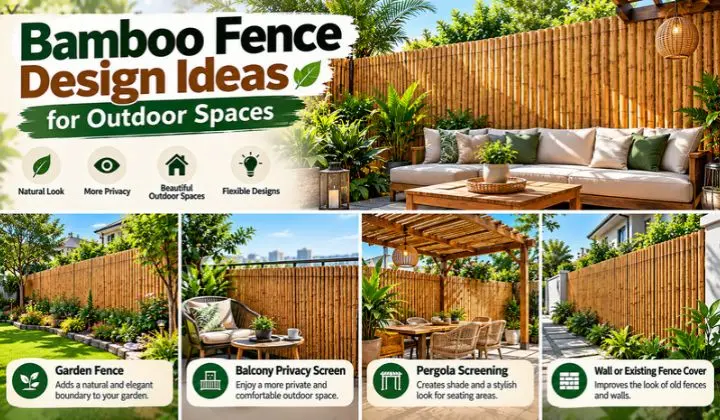
1. Bamboo Garden Fence
A bamboo garden fence can create a clear visual boundary around a garden or planting area. Pairing bamboo with shrubs and climbing plants can help the fence blend into the landscape.
For a boundary exposed to strong wind, make sure the supporting structure is secure before adding the screen.
2. Balcony and Patio Privacy Screen
A bamboo privacy screen can make a balcony or patio feel more private without changing the whole outdoor layout. Measure the railing carefully and choose a screen that can be secured safely.
In apartment buildings, check the building rules before installation. The screen must not create an unsafe wind load or interfere with the railing.
3. Bamboo Screening for Pergolas
Bamboo screening can add shade and a natural look to a pergola or outdoor seating area. It may be used along selected sides to reduce direct views while keeping the space open.
Do not assume that a bamboo screen provides full sun protection. The actual shade depends on the spacing, thickness, and arrangement of the material.
4. Covering an Existing Fence or Wall
A bamboo fence screening roll may improve the appearance of an old chain-link or wooden fence. It can also be used in front of a suitable wall to create a softer outdoor look.
Before installation, inspect the existing structure and choose fixing points that can safely support the added material.
For more outdoor fencing ideas, compare the available materials, installation needs, and expected maintenance before making a decision.
Is Bamboo Fencing Suitable for the UAE Climate?
Bamboo fencing can be used outdoors in the UAE, but its performance depends on the product quality, location, and care. A screen in a sheltered courtyard may face different conditions from one installed on an exposed rooftop or garden boundary.
Heat and Direct Sunlight
Strong sunlight can cause natural bamboo to fade, dry out, or develop surface cracks over time. The rate of change depends on the bamboo, its finish, and how much direct sunlight it receives.
Ask the supplier whether the product is intended for outdoor use and whether a suitable protective treatment is recommended.
Humidity and Moisture
Humidity, rain, standing water, and poor airflow can affect natural bamboo. Where possible, keep the bottom edge away from areas where water collects and allow air to move around the screen.
Do not assume that every bamboo product is waterproof or resistant to pests. Check the product specifications before buying.
Wind Exposure
Wind is an important consideration for outdoor screens, especially on balconies, rooftops, and exposed boundaries. A tightly fitted screen can catch wind, which places extra force on the fixing points and supporting structure.
Choose suitable fasteners and supports for the location. For high or exposed installations, seek advice from a qualified installer rather than relying on the bamboo screen alone.
Maintenance in UAE Conditions
To help keep bamboo fencing in better condition:
- Inspect the screen and fixings regularly.
- Remove dust and dirt using a method suitable for the product.
- Check for loose wires, broken reeds, and split poles.
- Keep the material away from standing water.
- Use a protective treatment only if the manufacturer recommends it.
These steps can help identify problems early, but they cannot guarantee a specific lifespan.
How to Install Bamboo Fencing
The installation method depends on whether you have a roll, individual poles, or ready-made panels. Many bamboo fence installation projects use an existing fence as the support, while others need a suitable frame or posts.
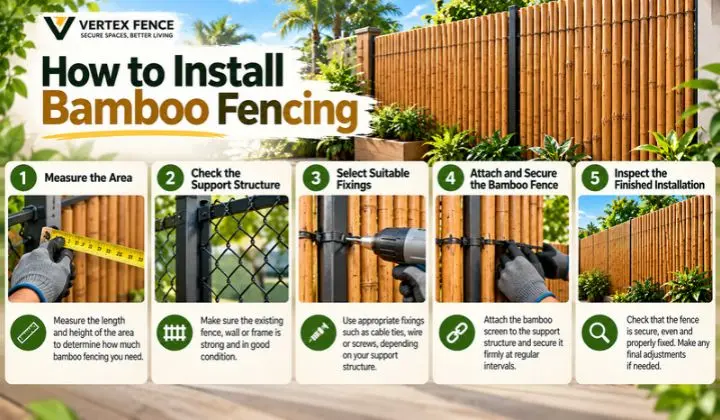
Step 1: Measure the Area
Measure the total length and required height. For a roll, check the product dimensions and calculate how many rolls are needed. Allow extra material if the design requires overlap or cutting.
Step 2: Check the Supporting Structure
Inspect the existing chain-link fence, metal frame, wooden fence, or wall. Repair loose sections and damaged supports before attaching the bamboo.
For masonry walls, use a fixing system suitable for the wall material and the expected load.
Step 3: Select Suitable Fixings
Depending on the product and support, suitable options may include outdoor-rated cable ties, wire, brackets, or screws. The correct choice depends on the materials, exposure, and manufacturer’s instructions.
Avoid using weak or unsuitable fasteners simply because they are easy to install.
Step 4: Attach and Secure the Screen
Position the bamboo evenly and secure it at suitable points along the supporting structure. Keep the screen aligned and avoid leaving loose sections that can move in the wind.
Follow the product instructions for fixing spacing and edge finishing.
Step 5: Inspect the Finished Installation
Check the screen for movement, sharp wire ends, gaps, and loose connections. Recheck the fixings after installation and inspect them regularly, especially after strong winds.
Important: A bamboo screen attached to a fence does not automatically make that fence stronger or more secure. The existing structure must be suitable for the additional load.
How Long Does Bamboo Fencing Last?
There is no single lifespan that applies to all bamboo fencing products. Its durability depends on the bamboo quality, protective treatment, installation method, and exposure to sunlight, wind, and moisture.
A screen in a sheltered courtyard may last longer than one installed on an exposed rooftop or garden boundary. Before buying, check the manufacturer’s stated lifespan and warranty for the specific product. Do not rely on a general lifespan estimate for every type of bamboo fence.
Signs That Bamboo Fencing Needs Attention
Inspect your fence regularly for these warning signs:
- Bamboo pieces that are cracked, split, or broken
- Fading or damaged surface finishes
- Loose wires, ties, or brackets
- Soft or deteriorating sections
- Gaps that reduce privacy
Repair loose fixings early to help prevent further movement. If the bamboo has become weak or the supporting structure is damaged, replacing the affected section may be safer than continuing to use it.
How to Maintain Bamboo Fencing
Good maintenance can help keep a bamboo screen in better condition.
- Remove dust and dirt with a cleaning method suitable for the product.
- Check the fixing points after strong winds.
- Keep bamboo away from areas where water collects.
- Look for signs of insect damage or surface deterioration.
- Apply a protective treatment only if the manufacturer recommends it.
Regular care can help identify problems early, but it cannot prevent all weather-related damage.
Bamboo Fencing Cost in the UAE
The cost of a bamboo fence in the UAE depends on its size, material, quality, and installation requirements. A small reed roll may cost less than a set of large panels or a complete fence system.
Prices also vary between suppliers. When comparing bamboo fence prices, check the product dimensions, material specifications, delivery charges, and whether installation materials are included.
What Affects Bamboo Fence Prices?
Consider these factors before choosing a product:
- Height and length: Larger screens require more material.
- Material type: Reed rolls, thick bamboo poles, and prepared panels may have different prices.
- Quality and treatment: Outdoor suitability and protective finishes can affect the cost.
- Fixings and support: Brackets, posts, frames, and fasteners may be sold separately.
- Installation: Labour costs depend on the area, access, and condition of the existing structure.
A product with a low purchase price may still need extra support materials or installation work. Compare the total project cost instead of looking at the product price alone.
Bamboo Fencing Rolls vs Panels: Which Is More Cost-Effective?
Bamboo fence rolls can be practical for covering long, straight sections of an existing fence. They are flexible and can often be cut to fit the area, subject to the manufacturer’s instructions.
Bamboo fence panels may suit projects that need a more structured appearance. However, panels may require a suitable frame or posts.
Neither option is always cheaper. Your final cost depends on the amount of material needed, the supporting structure, and the installation method.
How to Estimate the Cost of a 10-Metre Fence
Start by measuring the fence’s length and height. For a straight section that is 10 metres long and 1.5 metres high, the required coverage area is:
Coverage area = Length × Height
10 metres × 1.5 metres = 15 square metres
Next, check the usable dimensions of the product you plan to buy. For rolls, calculate how many are needed to cover the full length and height. Round up to whole rolls and allow for any required overlap or cutting waste.
Add the cost of fasteners, support materials, delivery, and installation labour if required. This gives you a more realistic estimate than multiplying the fence area by a product’s advertised price alone.
For an accurate UAE budget, compare current supplier listings and request a quote for your exact measurements.
What Are the Disadvantages of Bamboo Fencing?
Bamboo fencing offers a natural appearance and useful screening, but it also has limitations. Understanding these drawbacks can help you choose a suitable material for your property.
Weathering and Maintenance
Natural bamboo can fade, crack, split, or deteriorate after repeated outdoor exposure. Protective treatments may help, but their effectiveness depends on the product and the conditions where it is installed.
Gaps and Limited Privacy
Some reed rolls have visible gaps that allow people to see through the screen from certain angles. If privacy is your main goal, check the spacing between the reeds or poles before buying.
Limited Security
Bamboo screening is generally better suited to privacy and decoration than to security. It should not replace a properly designed security fence where strong physical protection or access control is required.
Additional Installation Requirements
Some installations need a suitable frame, stronger fasteners, or repairs to the existing fence. These extra requirements can increase the total project cost.
If you want a long-term boundary, improved security, or lower maintenance, compare bamboo with metal and PVC fencing before making a final decision.
Bamboo Fencing vs Metal and PVC Fencing
The best fencing material depends on your needs, budget, and outdoor conditions. Bamboo may be suitable for decorative screening, while metal or PVC may better suit other projects.
| Feature | Bamboo Fencing | Metal Fencing | PVC Fencing |
| Appearance | Natural and warm | Modern or industrial styles | Clean and uniform |
| Privacy | Depends on gaps and design | Depends on the fence design | Solid panels can provide strong visual privacy |
| Maintenance | May need regular inspection and treatment | Depends on metal type and protective coating | Usually simple cleaning |
| Weather performance | Depends on quality and exposure | Depends on material and finish | Depends on product quality and outdoor suitability |
| Security | Mainly for screening and decoration | Can suit security when properly designed | Often suitable for boundaries and privacy |
| Installation | Often attached to a suitable support | May require posts, foundations, or a frame | Depends on the panel and post system |
Which Fence Is Best for Your Property?
Choose bamboo when you want a natural look and a decorative privacy screen, and you are prepared to inspect and maintain it.
Consider metal fencing when strength, boundary definition, or security is a priority. PVC may suit you if you prefer a uniform finish and straightforward cleaning.
For UAE properties, compare product specifications, warranty terms, installation requirements, and maintenance needs, not just the initial price. Vertex Fence offers fencing solutions worth comparing when considering alternatives to natural screening. Check the relevant product details to confirm which option fits your project.
Frequently Asked Questions
Can bamboo fencing be installed without drilling holes into a boundary wall?
Yes, in some cases. A bamboo roll may be attached to an existing fence or a suitable freestanding frame, avoiding direct drilling into the wall. The support must be stable and suitable for the added load. The best method depends on the screen, location, and wind exposure.
Can bamboo fencing be cut to fit around corners, gates and uneven boundaries?
Many bamboo rolls can be cut to fit a space, but the result depends on how the reeds or poles are connected. Cutting may leave exposed edges or loosen the material, so follow the manufacturer’s instructions and secure the cut ends properly. Ready-made panels may need a different approach.
How can you stop a bamboo privacy screen from rattling or coming loose in strong winds?
Check the existing fence, fixing points, and screen edges. Replace loose or damaged fasteners with suitable outdoor-rated fixings, and make sure the supporting structure is secure. Do not rely on extra cable ties alone if the fence itself is weak. Exposed locations may need a different screen or professional installation advice.
Can bamboo fencing be installed on a balcony railing in an apartment?
It may be possible if the railing and screen are compatible, but safety comes first. The screen must be secured properly, must not weaken or obstruct the railing, and must not create an unsafe wind load. Check building management rules and local requirements before installation.
Should you buy bamboo fencing by roll size or by the total area you need to cover?
Start with the length and height of the area, then compare those measurements with the product’s usable coverage. Roll dimensions alone may not account for overlap, cutting waste, or the way the screen is attached. Calculate the required number of rolls and include fixings and support materials in your budget.
Conclusion
Bamboo fencing can be a useful way to add privacy and a natural look to a garden, balcony, or patio. The right choice depends on the product’s construction, the condition of the support structure, the amount of wind and sunlight it will face, and the maintenance you are prepared to do.
Before buying, measure the area, check the product dimensions, confirm outdoor suitability, and compare the full installation cost. If you need a strong boundary or long-term security, compare bamboo with metal and PVC options before making your final decision.
The goal is not simply to choose an attractive fence. It is to choose a solution that fits your space, budget, and practical needs.