
 Fences
 Gates
Gates Signage & Boards
 Car Parking Shades
 Block and Foundation
 Spare Parts
What Is Perimeter Fencing? Types, Benefits & Uses Explained

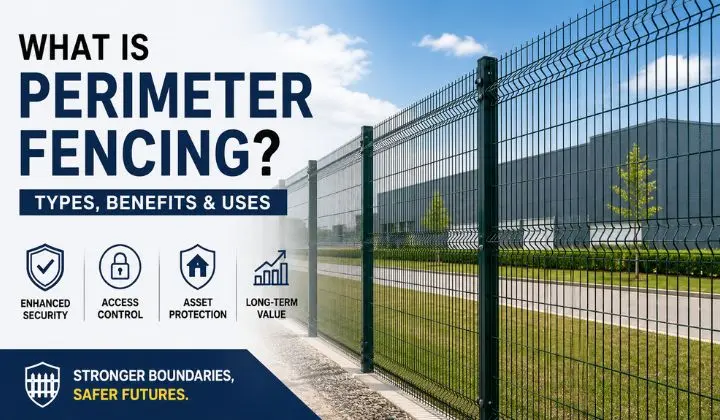
Whether you own a warehouse, factory, commercial building, construction site, or home, protecting your property is always a priority. This is where perimeter fencing plays an important role. It creates a clear boundary around your property, helps prevent unauthorized access, and improves overall site security.
A well-designed perimeter fence is more than just a physical barrier. It is the first step in a complete security strategy that helps protect assets, people, and valuable equipment. Modern fencing systems can also work with CCTV, access control, security gates, and surveillance systems to provide stronger protection.
What Is Perimeter Fencing?
Perimeter fencing is a security fence installed around the outside edge of a property to create a protected boundary. It acts as a physical security barrier that helps deter intruders, detect threats, and delay intrusion before someone reaches important buildings or restricted areas.
Unlike a simple decorative fence, a perimeter security fence is designed to improve perimeter protection by reducing the risk of trespassing, theft prevention, and vandalism. It also creates a clear property boundary while allowing owners to manage controlled access for people and vehicles.
From homes to large industrial facilities, perimeter fencing is one of the most effective ways to improve asset protection and maintain a safe environment.
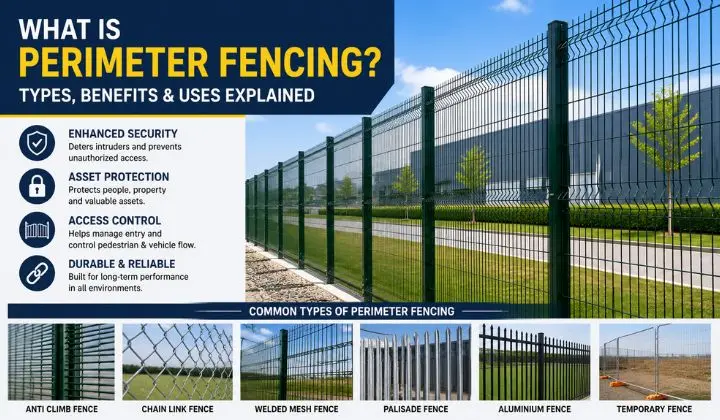
What Is a Perimeter Fence?
A perimeter fence is the fence that surrounds the outer boundary of a property. Its main purpose is to separate private property from public areas while increasing security fencing around the site.
A quality security fence is built using strong materials such as galvanized steel, powder coated steel, or heavy-duty mesh panels. Depending on the property’s needs, it can also include security gates, vehicle barriers, bollards, and motion sensors for additional protection.
Unlike ordinary fencing, perimeter fences are built to resist climbing, cutting, and forced entry.
What Is the Purpose of Perimeter Fencing?
The main purpose of perimeter fencing is to protect people, property, and valuable assets.
It creates the first line of defense by helping to:
- Prevent unauthorized access
- Reduce theft
- Reduce vandalism
- Control pedestrian access
- Control vehicle access
- Improve site security
- Define property boundaries
- Enhance security
For businesses, it also helps protect equipment, inventory, vehicles, and employees. For homeowners, it adds privacy while making the property safer.
Instead of reacting to security problems after they happen, perimeter protection helps stop many threats before they become serious.
How Does Perimeter Fencing Work?
A perimeter fence works by creating a strong outer barrier around a property.
First, it acts as a visible obstacle that discourages unwanted visitors. This visual deterrent alone can stop many people from attempting to enter the property.
Second, it slows down anyone trying to climb, cut, or damage the fence. This delay gives security staff or monitoring systems more time to respond.
Finally, many modern fencing systems are combined with:
- CCTV
- Access control
- Intrusion detection
- Motion sensors
- Security lighting
- Security cameras
Together, these systems create multiple layers of protection instead of relying on a fence alone.
Where Is Perimeter Fencing Used?
One of the biggest advantages of perimeter fencing is that it can be installed almost anywhere. Different properties have different security needs, but the goal remains the same: create a safe and secure boundary.
Below are the most common places where security fencing is used.
Industrial Facilities
Large industrial facilities often store expensive machinery, raw materials, and valuable products.
A strong industrial fencing solution helps improve operational safety, reduces the risk of theft, and protects restricted production areas.
Many factories also combine fencing with access control systems and surveillance for better security.
Commercial Properties
Shops, office buildings, retail centers, and business parks need reliable commercial fencing to protect employees, visitors, and business assets.
A secure perimeter also helps control parking areas and delivery entrances while improving overall site protection.
Warehouses
A warehouse often contains high-value inventory that attracts thieves.
Installing perimeter fencing around warehouses helps secure property, limits unauthorized entry, and protects loading areas.
This is why warehouses commonly use anti climb fencing, welded mesh fence, or chain link fence systems.
Construction Sites
Construction sites change every day, making them vulnerable to theft and accidents.
Temporary fencing creates a safe work area while protecting equipment, workers, and visitors. It also helps meet safety requirements by creating a visible safety barrier around the project.
Residential Properties
Homeowners also benefit from perimeter fencing.
A secure fence adds privacy, keeps children and pets safe, and discourages unwanted visitors.
Many residential properties choose aluminium fencing because it offers a clean appearance with low maintenance.
Schools & Public Facilities
Schools, parks, hospitals, sports facilities, and government buildings all require controlled access.
A well-planned perimeter security system helps protect students, staff, visitors, and public property while improving overall safety.
Common Types of Perimeter Fencing
Choosing the right fence depends on your property’s security requirements, budget, and environment. Below are the most widely used types of perimeter fencing.
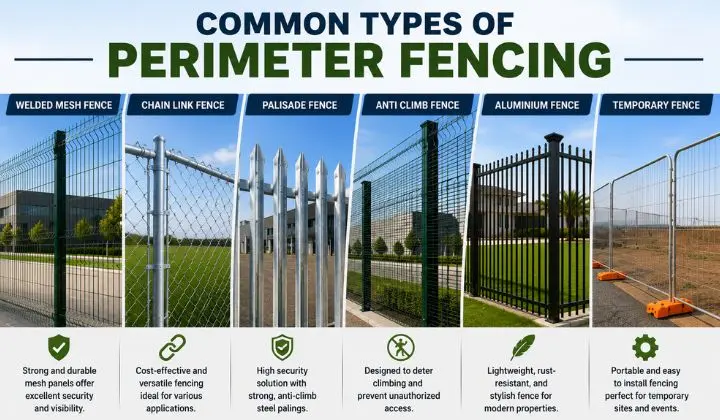
Anti Climb Fence
An anti climb fence is one of the most secure fencing options available.
Its narrow mesh design makes climbing difficult, while the strong steel construction resists cutting and damage. This type of fencing is widely used around data centers, utility stations, power plants, airports, and government facilities.
It is an excellent choice when maximum perimeter security is required.
Chain Link Fence
A chain link fence is one of the most popular and cost-effective fencing solutions.
It provides good visibility, allows airflow, and is suitable for commercial properties, construction sites, sports grounds, and storage areas.
When made from galvanized steel, it offers excellent durability and corrosion resistance.
Welded Mesh Fence
A welded mesh fence combines strength with a modern appearance.
The welded panels create a rigid structure that improves boundary protection while requiring very little maintenance.
This fencing system is commonly used for schools, warehouses, factories, and business parks because it balances security with aesthetics.
Palisade Fence
A palisade fence is built using vertical steel pales with pointed tops.
Its aggressive design makes climbing extremely difficult, making it suitable for railway infrastructure, industrial facilities, utility sites, and other high-security locations.
Aluminium Fence
An aluminium fence is lightweight, rust-resistant, and visually attractive.
It is often installed around homes, villas, commercial buildings, and recreational areas where appearance is as important as security.
The material requires minimal maintenance and performs well in different weather conditions.
Temporary Fence
A temporary fence provides short-term site security for construction projects, outdoor events, roadworks, and emergency situations.
It can be installed and removed quickly while helping control public access and protecting workers and equipment.
Benefits of Perimeter Fencing
Installing the right perimeter fencing offers more than just a clear property boundary. It provides long-term protection, improves daily operations, and helps property owners reduce many common security risks.
Improves Site Security
The biggest benefit of perimeter fencing is stronger site security.
A secure boundary makes it much harder for unauthorized people to enter your property while giving security teams more time to respond.
Prevents Unauthorized Access
A properly installed security barrier helps prevent unauthorized access by clearly separating private property from public areas.
When combined with security gates and access control, it becomes even more effective.
Protects People and Assets
One of the main goals of physical security is to protect assets.
Whether you own a factory, warehouse, office, or home, perimeter fencing helps safeguard equipment, vehicles, inventory, and the people inside the property.
Controls Vehicle and Pedestrian Access
A secure perimeter makes it easier to control vehicle access and control pedestrian access.
Instead of allowing unrestricted movement, designated entry points improve both safety and security.
Enhances Privacy
Many fencing systems also increase privacy by limiting outside visibility.
This creates a safer and more comfortable environment for both residential and commercial properties.
Durable and Cost-Effective
Modern fencing systems built from powder coated steel, galvanized steel, or high-quality metal offer excellent durability with low maintenance costs.
Choosing the right fencing solution is a long-term investment that helps strengthen perimeter protection while reducing future repair expenses.
Perimeter Fence vs Boundary Fence
Many people think a perimeter fence and a boundary fence are the same. While both mark the edge of a property, their purpose and level of protection are different.
A perimeter fence is designed mainly for perimeter security. It helps prevent unauthorized access, deter intruders, and protect assets. It is commonly used around warehouses, factories, commercial properties, and other high-security sites.
A boundary fence, on the other hand, mainly marks the property line. It provides basic separation between two properties but usually offers a lower level of security.
| Feature | Perimeter Fence | Boundary Fence | Wall |
| Primary Purpose | High Security | Property Boundary | Privacy & Security |
| Security Level | High | Basic | Medium to High |
| Access Control | Yes | Limited | Yes |
| Best For | Industrial & Commercial Sites | Residential Boundaries | Homes & Commercial Buildings |
| Visibility | High | Medium | Low |
| Cost | Moderate | Lower | Higher |
If your main goal is site protection, asset protection, and risk management, a perimeter fence is usually the better choice.
How to Choose the Right Perimeter Fence
Not every fencing system is suitable for every property. Choosing the right perimeter fencing depends on your security needs, property type, environment, and budget.
Here are the most important factors to consider before making a decision.
Consider Your Security Requirements
Start by identifying the level of protection your property needs.
For example, a home may only require basic security fencing, while a warehouse or industrial facility often needs stronger solutions such as anti climb fencing or 358 mesh fencing.
If your property stores valuable equipment or sensitive information, choose fencing that helps detect threats, delay intrusion, and enhance security.
Match the Fence to Your Property Type
Different properties require different fencing systems.
- Residential properties often benefit from aluminium fencing because it is attractive and easy to maintain.
- Warehouses and factories usually require welded mesh fence or anti climb fencing for better protection.
- Construction sites commonly use temporary fencing because it is quick to install and remove.
- Commercial properties often combine chain link fencing with security gates for reliable everyday security.
Choosing the right fence improves both safety and long-term value.
Choose the Right Fence Material
The material directly affects strength, maintenance, and lifespan.
Some of the most reliable materials include:
- Galvanized steel – excellent corrosion resistance and long service life.
- Powder coated steel – provides extra protection while improving appearance.
- Aluminium – lightweight, rust-resistant, and ideal for residential projects.
The right material reduces maintenance costs while improving overall durability.
Think About Fence Height and Visibility
Fence height should match the level of security required.
Higher fences make climbing more difficult, while open mesh designs allow security teams and security cameras to monitor the surrounding area more effectively.
A good balance between visibility and protection creates a stronger security solution.
Consider UAE Weather Conditions
The UAE’s high temperatures, humidity, dust, and coastal environments can affect fencing materials over time.
Choosing galvanized steel or powder coated steel helps improve durability because these materials resist rust and harsh weather better than ordinary metal.
This is one reason why many Fence Suppliers in UAE recommend corrosion-resistant fencing systems for long-term performance.
Plan for Maintenance
Every fencing system requires some level of maintenance.
Regular inspections help identify loose fittings, damaged panels, or signs of wear before they become major problems.
Simple maintenance helps improve operational efficiency, extends the fence’s lifespan, and keeps your property protected.
Set a Realistic Budget
The cheapest option is not always the best investment.
Instead of focusing only on the purchase price, consider installation quality, maintenance costs, expected lifespan, and future repairs.
A durable fencing system often provides better long-term value than replacing a cheaper fence every few years.
Frequently Asked Questions
Which Type of Perimeter Fencing Offers the Highest Level of Security?
For high-risk properties, anti climb fencing and 358 mesh fencing are among the most secure options. Their narrow mesh openings make climbing and cutting much more difficult, making them ideal for critical infrastructure, warehouses, airports, and industrial facilities.
What Is the Best Material for Perimeter Fencing?
The best material depends on your environment and security needs. Galvanized steel and powder coated steel are popular choices because they offer excellent strength, corrosion resistance, and long-term durability, especially in demanding outdoor conditions.
How Long Does Perimeter Fencing Typically Last?
A well-installed fence made from high-quality materials can last 20 years or more with proper care. Regular inspections and basic maintenance help extend its lifespan while keeping your property secure.
Does Perimeter Fencing Require Regular Maintenance?
Yes. Although modern fencing systems require relatively little maintenance, periodic inspections are recommended. Checking posts, panels, gates, and protective coatings helps maintain both safety and performance.
Can Perimeter Fencing Be Customized for Different Properties?
Yes. Modern perimeter fencing can be customized for residential homes, commercial buildings, warehouses, factories, schools, and construction sites. The design, height, material, and gate system can all be adjusted to match the property’s specific security requirements.
Conclusion
Perimeter fencing is much more than a simple property boundary. It is an essential part of physical security that helps secure property, protect assets, and prevent unauthorized access across residential, commercial, and industrial environments.
Choosing the right fence depends on several factors, including your property’s security requirements, location, material preferences, maintenance expectations, and budget. Whether you need chain link fencing, welded mesh fence, anti climb fencing, or another security solution, selecting the right system will improve long-term protection and reduce future risks.
If you’re looking for experienced Fence Manufacturer in UAE, choose a company that understands your property’s unique security needs and offers durable fencing systems built for local conditions.
At Vertex Fence, we provide reliable perimeter fencing solutions designed for residential, commercial, and industrial projects. From selecting the right fence type to professional installation, the goal is to deliver long-lasting security that protects your property for years to come.