
 Fences
 Gates
Gates Signage & Boards
 Car Parking Shades
 Block and Foundation
 Spare Parts
Anti-Climb Fences for Residential Communities: Enhanced Security

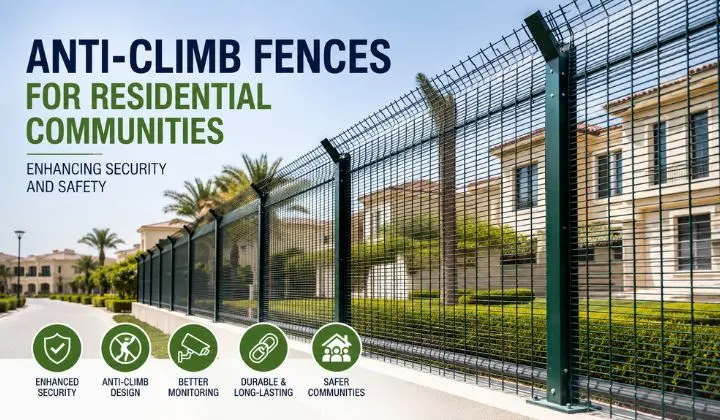
Keeping a residential community safe is not as simple as installing a fence around the property. Today, communities face a wide range of security challenges, from unauthorized access and trespassing to vandalism and property theft. Residents want to feel safe when they walk through shared spaces, children need secure areas to play, and property managers must protect community assets without making the environment look like a fortress.
This is where Anti-Climb Fences have become a preferred solution. Unlike traditional fencing, modern Anti-Climb Fencing is designed to make climbing, cutting, and unauthorized entry much more difficult. At the same time, it maintains visibility, supports CCTV Surveillance, and complements the appearance of modern residential developments.
Whether you manage a gated community, residential compound, apartment complex, or private housing development, investing in the right Perimeter Security system can help reduce risks while improving the overall sense of safety.
You will learn how Anti-Climb Fences work, why they are becoming increasingly popular in residential communities, and how to choose the right fencing solution for long-term protection.
The Growing Security Challenges Facing Residential Communities
Residential communities are designed to provide a comfortable and secure living environment. However, as communities expand and population density increases, security concerns also become more common.
Property managers and homeowners’ associations are under increasing pressure to improve Community Safety while maintaining a welcoming environment for residents and visitors.
Unauthorized Access and Trespassing Risks
One of the biggest concerns for residential communities is Unauthorized Access.
Open boundaries, weak fencing systems, and poorly monitored entry points can make it easier for unwanted individuals to enter a property. Once access is gained, the risks of theft, vandalism, and other security incidents increase significantly.
Many traditional fences were originally installed to define property boundaries rather than provide real security. As a result, they often fail to prevent intruders from climbing over or bypassing the perimeter.
This is why modern communities are investing in stronger Security Barriers that actively discourage intrusion attempts.
Protecting Residents, Visitors and Community Assets
A residential community is more than just homes. It often includes:
- Parks
- Playgrounds
- Swimming pools
- Walking paths
- Community centers
- Parking areas
These shared spaces require protection to ensure the safety of residents and visitors.
Strong Boundary Protection helps reduce security risks while giving residents greater confidence in their surroundings.
For families with children, secure fencing plays an especially important role. Children naturally explore their surroundings, and a properly designed perimeter helps create a safer environment by limiting access to potentially dangerous external areas.
The Importance of Effective Perimeter Security
A fence should do more than mark a property line.
Effective Perimeter Security serves multiple purposes:
- Deters potential intruders
- Supports Security Monitoring
- Creates controlled access points
- Improves emergency response readiness
- Protects residents and property
According to modern security principles, a perimeter works best when it forms part of a larger Security Infrastructure that includes surveillance systems, controlled access points, lighting, and security procedures.
This layered approach provides better protection than relying on a single security measure.
Understanding Anti-Climb Fences and How They Work
Many people have heard of Anti-Climb Fences, but not everyone understands why they are considered one of the most effective forms of Residential Security Fencing.
The answer lies in their design.
What Makes an Anti-Climb Fence Different?
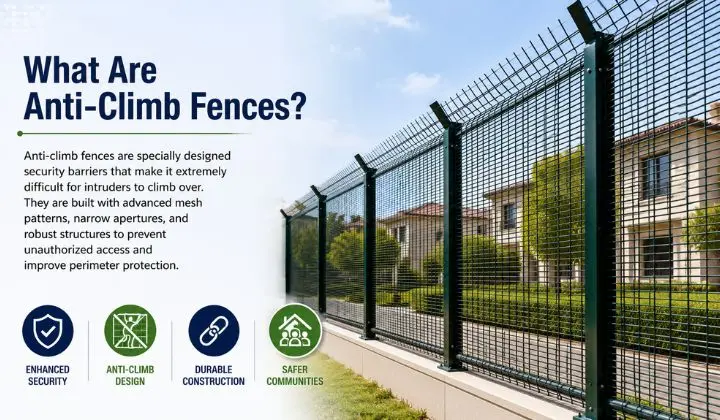
Unlike standard fencing systems, Anti-Climb Fence Systems are specifically engineered to prevent climbing attempts.
Traditional fences often have large openings, horizontal rails, or features that provide convenient footholds. These design weaknesses can make it easier for someone to scale the fence.
By comparison, Anti-Climb Fencing uses carefully designed mesh patterns and structural elements that remove these opportunities.
The result is a fencing solution that offers stronger Intrusion Prevention while maintaining visibility and airflow.
Anti-Climb and Anti-Cut Security Features
One of the defining characteristics of High-Security Fencing is the use of tightly spaced mesh openings.
These Mesh Apertures are intentionally small, making it difficult for a person to place their fingers or feet through the fence.
Key features often include:
- Small mesh openings
- Strong welded construction
- Anti-Cut Design
- Tamper-resistant connections
- Reinforced fence panels
- Heavy-duty support posts
Many advanced systems also use Welded Wire Mesh technology to create a rigid structure that resists cutting, bending, and forced entry attempts.
This combination of features creates a fence that is significantly harder to climb or damage compared to conventional alternatives.
How Anti-Climb Fences Deter Intruders
A strong security system should not only stop intruders it should discourage them from trying in the first place.
This is where Anti-Climb Fences excel.
The narrow mesh pattern immediately signals that the fence is difficult to scale. Unlike traditional fences that provide clear climbing points, anti-climb designs remove the grip points needed for upward movement.
The visible presence of a strong Security Fence Design can also act as a psychological deterrent.
Potential intruders are more likely to avoid a property when they see a well-maintained perimeter that appears difficult to breach.
This combination of physical resistance and visual deterrence makes anti-climb fencing one of the most effective forms of modern Perimeter Protection.
Key Benefits of Anti-Climb Fences for Residential Communities
Choosing the right fencing system is an important investment. Beyond preventing unauthorized access, Anti-Climb Fences offer several benefits that contribute to a safer and more efficient residential environment.
Enhanced Perimeter Protection
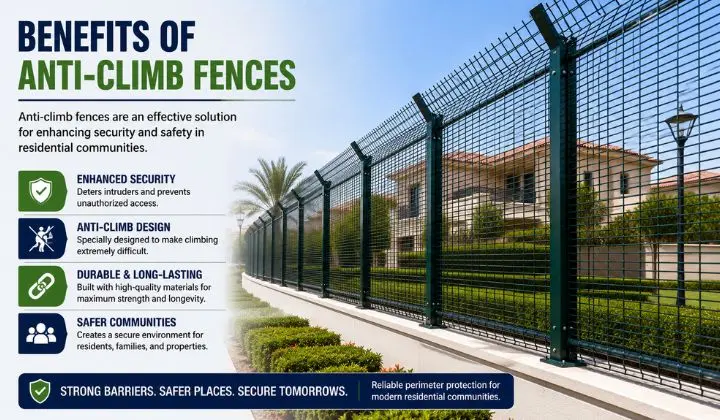
The primary purpose of Anti-Climb Fences is to strengthen Perimeter Security.
Their design makes climbing difficult while reducing opportunities for cutting or tampering. This helps create a stronger first line of defense around the community.
For residential developments, improved perimeter protection means fewer security vulnerabilities and greater control over access points.
Improved Safety for Residents and Visitors
Security is closely connected to quality of life.
Residents feel more comfortable when they know their community is protected by reliable Security Infrastructure.
Effective fencing can help reduce:
- Trespassing
- Property Theft
- Vandalism
- Unwanted access
- Safety concerns around community facilities
This contributes to better Resident Safety and a more secure environment for everyone.
Clear Visibility for CCTV Surveillance
Unlike solid walls, Security Mesh Fence systems allow excellent visibility across the perimeter.
This visibility offers several advantages:
- Better camera coverage
- Improved incident detection
- Easier perimeter inspections
- More effective Perimeter Monitoring
When combined with Security Cameras, anti-climb fencing creates a stronger and more responsive security environment.
This is one reason many security professionals recommend integrating fencing with surveillance technology rather than relying on barriers alone.
Long-Term Durability with Minimal Maintenance
Modern Anti-Climb Fencing is built using durable materials designed for long-term outdoor performance.
Common materials include:
- Galvanized Steel
- Powder-coated steel
- Corrosion-resistant metal components
These materials provide excellent Corrosion Resistance, helping the fence maintain its structural integrity for many years.
Compared to some traditional fencing systems, maintenance requirements are generally lower, resulting in reduced long-term ownership costs.
A Secure Solution Without Compromising Aesthetics
Many residential communities want strong security without creating an aggressive appearance.
Modern Security Fencing solutions are available in a range of designs, colors, and finishes that blend naturally with residential environments.
Property managers no longer have to choose between security and appearance.
With the right design, a fence can support Community Safety while maintaining an attractive and professional look.
Choosing the Right Anti-Climb Fence Design and Materials
Not all anti-climb fences are the same. Selecting the right system requires careful consideration of security requirements, site conditions, and long-term performance expectations.
Selecting the Appropriate Fence Height
Fence height plays a major role in overall security effectiveness.
Higher fences naturally provide greater resistance to climbing attempts, but the ideal height depends on:
- Property size
- Security risks
- Community layout
- Local regulations
A professional site assessment can help determine the most appropriate height for your specific requirements.
Understanding Mesh Design and Security Levels
The mesh pattern directly affects the fence’s ability to prevent climbing.
Smaller openings generally provide stronger Climb Resistance because they limit handholds and footholds.
Many high-security applications use 358 Mesh Fence systems, which feature extremely tight mesh spacing and exceptional strength.
These systems are widely recognized as one of the most effective forms of Security Mesh available today.
The Advantages of Galvanized and Powder-Coated Steel
Material quality has a direct impact on durability.
Most premium Anti-Climb Fence Systems are manufactured from Galvanized Steel and finished with a Powder-Coated Finish.
Benefits include:
- Improved weather resistance
- Enhanced appearance
- Better Corrosion Resistance
- Longer service life
- Lower maintenance requirements
These advantages make them particularly suitable for demanding outdoor environments.
Why 358 Mesh Fencing Is a Popular Security Choice
Among modern High-Security Fencing options, the 358 Mesh Fence has earned a strong reputation.
Its tightly spaced mesh structure provides:
- Superior anti-climb performance
- Excellent visibility
- Strong anti-cut protection
- Reliable long-term durability
For residential communities seeking advanced Perimeter Protection, 358 mesh fencing is often considered one of the most effective solutions available.
Integrating Anti-Climb Fencing with CCTV and Access Control Systems
A fence alone can improve security, but the best results come when it works alongside other security measures. Modern residential communities are increasingly adopting a layered security approach that combines Anti-Climb Fences, Access Control Systems, and CCTV Surveillance.
When these systems work together, they create a stronger and more responsive security environment.
Creating a Layered Security Strategy
Security professionals often recommend multiple layers of protection rather than relying on a single barrier.
A layered strategy may include:
- Anti-Climb Fencing
- Security gates
- Visitor management systems
- Security Cameras
- Security lighting
- Alarm systems
- On-site security personnel
Each layer increases the difficulty of gaining unauthorized access and improves the community’s ability to respond to security incidents.
This approach strengthens the overall Security Infrastructure while reducing vulnerabilities around the perimeter.
Managing Access Points More Effectively
Even the strongest fence becomes less effective if entry points are poorly managed.
Controlled access points help communities regulate who enters and exits the property.
Common solutions include:
- Keycard access systems
- Biometric access systems
- Remote gate controls
- Intercom systems
- Visitor registration systems
By integrating Access Control Systems with anti-climb fencing, communities can better manage traffic while maintaining a secure environment.
This combination is particularly valuable for Gated Communities and large residential developments.
Enhancing Perimeter Monitoring and Response
One of the major advantages of Security Mesh Fence systems is their visibility.
Unlike solid walls that can block sightlines, anti-climb fencing allows security teams and cameras to monitor activity around the perimeter.
This improves:
- Perimeter Monitoring
- Threat detection
- Incident response
- Security investigations
When suspicious activity is detected early, communities can respond faster and reduce the risk of security breaches.
Why Anti-Climb Fences Deliver Long-Term Performance in UAE Conditions
The UAE presents unique environmental challenges for outdoor security systems.
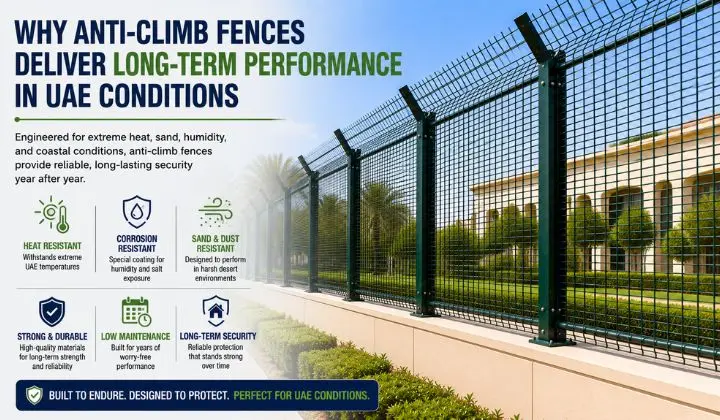
Extreme heat, coastal humidity, sandstorms, and intense sunlight can quickly damage low-quality fencing materials.
This is why selecting the right anti-climb fencing system is essential for long-term performance.
Resistance to Heat, UV Exposure and Corrosion
High temperatures can weaken certain materials over time.
Quality Anti-Climb Fence Systems are designed to withstand:
- High Temperatures
- UV Exposure
- Moisture
- Harsh weather conditions
Premium fencing materials help maintain strength and appearance even after years of outdoor exposure.
Performance in Coastal and High-Temperature Environments
Many residential developments in the UAE are located near coastal areas.
Salt in the air can accelerate metal deterioration if the fence is not properly protected.
This is where Galvanized Steel and Powder-Coated Finish systems provide significant advantages.
Their enhanced Corrosion Resistance helps protect against:
- Salt exposure
- Humidity
- Coastal weather conditions
- Environmental wear
These features make anti-climb fencing suitable for demanding UAE Climate Conditions.
Reducing Long-Term Maintenance Costs
Property managers often focus on installation costs while overlooking long-term maintenance expenses.
Choosing durable materials can significantly reduce:
- Repair costs
- Replacement costs
- Maintenance labor
- Downtime caused by fence damage
This makes anti-climb fencing a practical Security Investment that delivers long-term value.
Anti-Climb Fences vs Traditional Fencing Solutions
Many residential communities still rely on older fencing systems that were not designed for modern security requirements.
Understanding the differences can help decision-makers choose the most effective solution.
Anti-Climb Fences vs Chain Link Fencing
Chain Link Fence systems are commonly used because they are affordable and easy to install.
However, they have several security limitations:
- Larger openings
- Easier to climb
- Lower resistance to cutting
- Reduced deterrent effect
By contrast, Anti-Climb Fences use smaller mesh openings and stronger construction to improve Intrusion Prevention.
Anti-Climb Fences vs Boundary Walls
Boundary walls can provide privacy, but they are not always the best option for security.
Solid walls may:
- Block visibility
- Create hidden areas
- Reduce surveillance effectiveness
Anti-climb fencing provides strong Boundary Protection while maintaining clear visibility for CCTV Surveillance and security patrols.
Which Option Offers Better Long-Term Security?
For many residential developments, anti-climb fencing offers the best balance of:
- Security
- Visibility
- Durability
- Cost-effectiveness
It supports modern Perimeter Security strategies while integrating easily with surveillance and access control systems.
This makes it a preferred choice for communities seeking reliable long-term protection.
Planning a Successful Anti-Climb Fence Installation
Installing an anti-climb fence involves more than selecting panels and posts.
A successful project begins with careful planning.
Assessing Security Requirements
Every community faces different security challenges.
Before choosing a fencing solution, decision-makers should evaluate:
- Site layout
- Security risks
- Access points
- Community size
- Existing security measures
A proper Risk Assessment helps identify the most vulnerable areas and determine the appropriate level of protection.
Identifying Vulnerable Areas Around the Property
Certain areas often require additional attention, including:
- Main entrances
- Parking areas
- Service entrances
- Community facilities
- Open boundary sections
Protecting these locations helps improve overall Perimeter Protection.
Working with an Experienced Fencing Contractor
Installation quality is just as important as fence quality.
A poorly installed fence may develop weak points that reduce security performance.
Working with an experienced contractor helps ensure:
- Proper alignment
- Secure foundations
- Correct panel installation
- Long-term durability
For residential developments seeking professional fencing solutions, companies such as Vertex Fence can help assess site requirements and recommend suitable anti-climb fencing systems based on project needs.
Frequently Asked Questions
How do anti-climb fences compare to chain link fencing in terms of security?
Anti-climb fences provide a much higher level of security than chain link fencing. Their small mesh openings and stronger construction make climbing and cutting significantly more difficult, helping reduce the risk of unauthorized access.
Can anti-climb fences increase property value in residential communities?
A secure community is often more attractive to homeowners and investors. Modern security features, including anti-climb fencing, can improve perceived safety and contribute positively to property value over time.
Are anti-climb fences suitable for playgrounds, parks and shared community spaces?
Yes. Anti-climb fencing is widely used around playgrounds, parks, sports areas, and community facilities because it helps improve safety while maintaining visibility and an attractive appearance.
Do anti-climb fences require frequent maintenance?
No. High-quality anti-climb fences built from Galvanized Steel and protected with a Powder-Coated Finish generally require minimal maintenance. Routine inspections and occasional cleaning are usually enough to keep them in good condition.
What should property managers look for when selecting an anti-climb fencing contractor?
Property managers should consider experience, installation quality, material standards, project portfolio, and long-term support. Choosing a contractor with expertise in Residential Security and Perimeter Security solutions can help ensure better results.
Conclusion
As residential communities continue to face evolving security challenges, the need for stronger and smarter perimeter protection has become more important than ever. Traditional fencing systems may define property boundaries, but they often fall short when it comes to preventing unauthorized access and supporting modern security strategies.
Anti-Climb Fences offer a more effective solution by combining physical protection, visibility, durability, and long-term performance. Their advanced design helps reduce climbing attempts, improve Community Safety, support Security Monitoring, and strengthen overall Perimeter Security.
When combined with Access Control Systems, CCTV Surveillance, and proper site planning, anti-climb fencing becomes a critical part of a complete security strategy. Features such as Welded Wire Mesh, 358 Mesh Fence technology, Anti-Cut Design, Galvanized Steel, and enhanced Corrosion Resistance make these systems suitable for both modern residential developments and challenging UAE Climate Conditions.
For property managers, developers, and homeowners’ associations, investing in a reliable Perimeter Protection Solution is not just about protecting assets. It is about creating a safer environment where residents can live with confidence and peace of mind.
By selecting the right Anti-Climb Fencing system and working with experienced Fence Suppliers in UAE such as Vertex Fence, residential communities can build a stronger, safer, and more secure future for everyone.